Mood changes connected to accumulated psychological stress

 Explains how prolonged stress accumulates over time, how it differs from short-term stress, and why buildup can destabilize emotions. Covers chronic tension, mood shifts, emotional fatigue, stress overload, weaker regulation, and daily mood balance.
- How prolonged stress builds up over time
- Why accumulated stress alters emotional stability
- Connection between chronic tension and mood shifts
- Emotional fatigue caused by long-term pressure
- Stress overload and reduced emotional regulation
- Difference between short-term stress and accumulation
- How ongoing stress affects daily mood balance
When mental strain builds over days, your mood can start shifting in ways that feel sudden or confusing. Small hassles hit harder, patience thins, and joy can feel muted. You might notice more irritability, trouble focusing, or a heavier sense of fatigue even after rest. Paying attention to these patterns is a kind first step toward steadier days and can help you choose small resets before stress takes over.
How prolonged stress builds up over time
Long-lasting pressure usually doesn’t feel intense all at once. It often accumulates through small, repeated demands that keep the body and mind in a “still dealing with it” state. When recovery time is short or inconsistent, stress responses that are meant to be temporary can start to feel like the default setting.
A common pattern is that the original problem becomes less important than the ongoing strain of managing it. People may keep functioning at work or at home, but they do so by pushing through fatigue, skipping breaks, and relying on quick fixes. Over weeks or months, that can shift mood by lowering patience, shrinking emotional bandwidth, and making everyday hassles feel heavier than they used to.
- Repeated triggers without enough reset: Deadlines, caregiving, financial worries, conflict, or health concerns can recur daily. If each day starts before the previous day’s tension has eased, the nervous system stays on alert.
- “Just get through today” coping becomes routine: People may postpone sleep, exercise, meals, or social time. These choices can help short term, but they reduce the resources that normally stabilize mood.
- Stress spreads into more areas of life: A work issue can begin affecting relationships, concentration, and self-care. This spillover makes it harder to find spaces that feel restorative.
- Small problems feel bigger: When mental energy is already taxed, minor setbacks can trigger outsized irritation, sadness, or worry. This isn’t a character flaw; it’s a sign that capacity is depleted.
- More time spent anticipating than solving: Ongoing strain often includes rumination and “what if” thinking. Even when nothing is happening in the moment, the mind rehearses threats, keeping tension active.
- Less flexibility in emotions and behavior: With accumulated stress, people may become more rigid: snapping quickly, withdrawing, procrastinating, or feeling emotionally numb because it takes less effort than staying engaged.
Over time, these patterns can create a loop: stress reduces sleep and recovery, reduced recovery increases sensitivity, and higher sensitivity makes daily life feel more stressful. Mood changes connected to accumulated psychological stress often show up as irritability, low motivation, feeling on edge, or feeling flat, especially when there’s no clear “off switch” for the demands.
Another reason buildup is easy to miss is that people adapt to a higher baseline of tension. They may not notice the gradual shift until a new challenge appears and there’s little reserve left. At that point, the reaction can seem sudden, but it’s usually the result of many small stressors stacking up without enough time, support, or rest to fully recover.
Why accumulated stress alters emotional stability
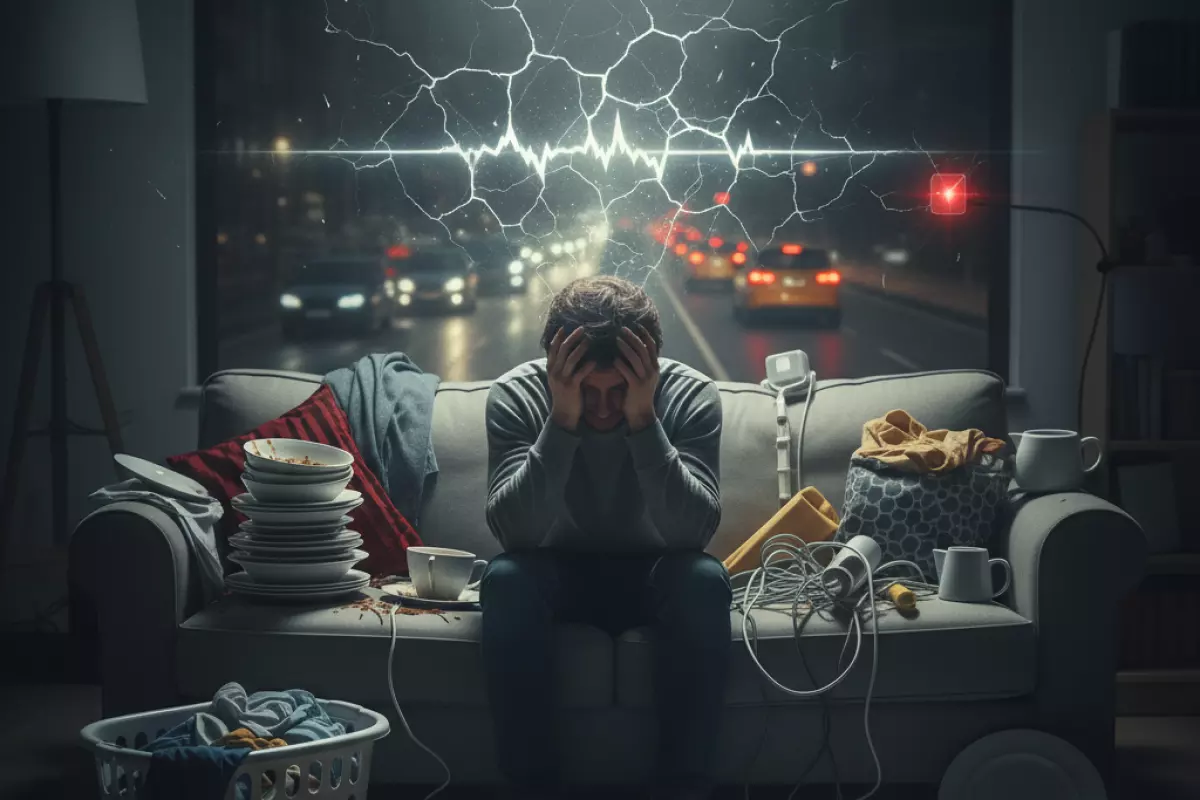
When pressure keeps stacking up without enough recovery, the mind and body start operating in a more “reactive” mode. Small problems feel bigger, patience runs shorter, and emotions can swing faster because the system that normally helps you pause, evaluate, and respond has less spare capacity.
Ongoing strain also changes what feels “normal.” If you spend days or weeks bracing for the next demand, your baseline tension rises. That can make everyday events—traffic, a delayed reply, a messy kitchen—feel like the last straw, even when each issue is minor on its own.
- Your stress response stays switched on longer. Instead of returning to calm after a challenge, the body remains keyed up. This can show up as restlessness, irritability, or feeling “wired but tired,” which makes emotional reactions more intense.
- Thinking becomes more threat-focused. Under chronic pressure, the brain prioritizes scanning for problems. People often notice more negatives, assume worse outcomes, or interpret neutral comments as criticism, which can trigger mood shifts.
- Self-control gets harder to access. Emotional regulation relies on mental energy. When that energy is spent on coping, it’s easier to snap, withdraw, or cry unexpectedly because there’s less buffer between feeling and action.
- Sleep and recovery take a hit. Stress commonly disrupts sleep quality, and poor sleep lowers frustration tolerance and increases emotional sensitivity. The result can be a loop: stress affects sleep, and sleep loss amplifies mood changes.
- Body discomfort feeds emotional discomfort. Headaches, stomach upset, muscle tension, and fatigue can raise irritability and reduce motivation. When you feel physically off, it’s harder to stay even-keeled.
- Social interactions become more effortful. With accumulated psychological stress, people may read others as demanding, feel less empathy, or avoid conversations. That can create misunderstandings and loneliness, both of which can destabilize mood.
A common pattern is that emotions become less proportional to the situation. You might overreact to a small setback, feel numb during moments that usually matter, or bounce between agitation and exhaustion. These shifts are often less about personality and more about a system that hasn’t had enough time, rest, or support to reset.
Connection between chronic tension and mood shifts
Ongoing strain tends to show up in mood before people realize they are stressed. When the mind stays on alert for days or weeks, the body behaves as if it needs to conserve energy and watch for problems. That combination often leads to irritability, impatience, and sudden dips in motivation, even when nothing “big” is happening.
One reason mood becomes less stable is that chronic stress keeps the nervous system activated. In everyday terms, it becomes harder to shift from “ready to handle something” into “rest and reset.” Small hassles then feel larger: a slow reply, a minor mistake, or a change of plans can trigger a sharper reaction than usual. At the same time, positive events may feel muted because the mind is busy scanning for what could go wrong next.
- Lower emotional bandwidth: When attention is tied up with worry, there is less capacity for patience, humor, and perspective. People may describe feeling “on edge” or “snappy.”
- Shorter fuse after minor demands: Repeated micro-stressors (notifications, multitasking, background conflict) can stack up, making the next request feel like the last straw.
- More negative interpretations: Under tension, neutral comments can sound critical, and ambiguous situations can be read as rejection or failure.
- Reduced reward and interest: Persistent pressure can dull enjoyment, leading to flatness, boredom, or a sense that hobbies and social plans take too much effort.
- Sleep disruption feeding mood swings: Light sleep, early waking, or racing thoughts at night can amplify irritability and sadness the next day.
- Body discomfort shaping emotions: Headaches, tight shoulders, stomach upset, and fatigue can quietly push mood toward frustration or low spirits.
| Common pattern under prolonged stress | How it can look in daily life |
|---|---|
| Heightened reactivity | Over-responding to small setbacks, feeling irritated by normal noise or interruptions |
| Emotional “numbness” | Going through the motions, less excitement about good news, difficulty feeling satisfied |
| Rumination loops | Replaying conversations, anticipating worst-case outcomes, trouble letting go of mistakes |
| Withdrawal and avoidance | Canceling plans, delaying tasks, choosing low-effort distractions instead of recovery |
These shifts often create a feedback loop: mood changes can strain relationships and routines, which adds more pressure and keeps the stress response running. Noticing the pattern matters because the mood swings are not always “random.” They can be a predictable sign that the system has been carrying too much for too long.
Emotional fatigue caused by long-term pressure

When stress stays high for weeks or months, the mind can start running on “low battery.” Instead of a single bad day, it feels like a steady drain that makes emotions harder to manage and everyday decisions heavier. People often describe it as being worn down, less patient, and less able to bounce back after small setbacks.
This kind of strain tends to show up in typical behavior patterns. You might notice that reactions become more intense or, in the opposite direction, strangely muted. Some people get irritable and snap more easily; others feel detached and go quiet. Both can be signs that the system is overloaded rather than a sudden personality change.
- Shorter fuse: minor inconveniences feel disproportionately annoying, and patience runs out quickly.
- Emotional numbness: less excitement about good news and less motivation to engage, even with things that used to feel meaningful.
- Lower tolerance for uncertainty: more worrying, more second-guessing, and a stronger need to control small details.
- Reduced follow-through: starting tasks feels difficult, and finishing them feels exhausting, leading to procrastination or avoidance.
- More conflict or withdrawal: arguments happen more often, or social contact drops because interaction feels like work.
- “Always on” thinking: trouble switching off, replaying conversations, or mentally rehearsing what could go wrong.
Over time, accumulated pressure can also change how moods move throughout the day. Instead of clear ups and downs linked to events, the baseline may shift toward tension, flatness, or persistent frustration. Sleep problems, constant mental noise, and feeling behind can reinforce the cycle, making it harder to recover even when a stressor temporarily eases.
A helpful way to understand it is to compare it to a phone that never fully charges: you can still function, but everything takes more effort. In daily life this often looks like doing the bare minimum, losing flexibility, and relying on quick coping habits such as scrolling, snacking, or staying busy to avoid thinking. These patterns can signal that stress has become chronic and is shaping mood from the background.
Stress overload and reduced emotional regulation
When stress keeps stacking up without enough recovery, the brain shifts into a more reactive mode. Everyday annoyances can feel bigger than they “should,” and it becomes harder to pause, think things through, and choose a measured response. This isn’t about willpower as much as bandwidth: attention, patience, and self-control are limited resources, and chronic strain uses them up.
A common pattern is moving faster from trigger to reaction. People may snap, withdraw, or become tearful with less warning, then later feel confused about why the reaction was so intense. Over time, this can create a loop: strong emotions lead to conflict or avoidance, which adds more pressure, which further reduces emotional balance.
- Shorter fuse: Minor inconveniences (traffic, noise, small mistakes) prompt irritation or anger quickly.
- Reduced pause before responding: Less ability to “count to ten,” leading to impulsive texts, sharp comments, or abrupt decisions.
- More emotional spillover: Stress from work or family bleeds into unrelated situations, like being impatient with friends or children.
- Lower tolerance for uncertainty: Waiting for answers, ambiguous plans, or changing schedules feels unusually threatening or unbearable.
- Difficulty shifting gears: Once upset, it takes longer to calm down, even after the original issue is resolved.
- Blunted or numb periods: Instead of feeling “too much,” some people feel flat, detached, or indifferent as a protective shutdown.
These reactions often come with changes in thinking that make emotions harder to manage. Under heavy load, the mind tends to simplify: it leans toward worst-case interpretations, all-or-nothing judgments, and scanning for problems. That mental narrowing can make reassurance less effective and can turn neutral events into perceived slights or failures.
| What it can look like day to day | What’s often happening underneath |
|---|---|
| Overreacting to small setbacks, then feeling guilty | Stress response stays “on,” leaving less capacity for self-soothing and perspective |
| Getting defensive in conversations or assuming criticism | Threat sensitivity rises; the brain prioritizes protection over nuance |
| Withdrawing, canceling plans, or going quiet | Conservation mode: avoiding extra demands when energy feels depleted |
| Trouble concentrating, forgetting small tasks, feeling scattered | Mental resources are diverted to monitoring stress, reducing working memory |
| More frequent crying, irritability, or mood swings | Emotion regulation systems fatigue, making feelings less stable and more intense |
Overload can also change how people try to cope. Some rely more on quick relief strategies like scrolling, snacking, alcohol, or procrastination, which may soothe briefly but can increase stress later. Others become overly controlling, rigid with routines, or perfectionistic because structure feels like the only way to stay steady.
In the context of mood changes connected to accumulated psychological stress, the key takeaway is that repeated strain can make emotional responses faster, stronger, and harder to steer. Recognizing these patterns as a predictable stress effect can help explain why reactions shift during demanding periods, even when nothing “big” seems to be happening in the moment.
Difference between short-term stress and accumulation
Brief stress is usually tied to a clear trigger and a clear ending: a deadline, a difficult conversation, a near-miss in traffic. Once the situation passes, the body and mind typically settle back down. Accumulated strain is different: it builds when pressures keep arriving faster than you can recover, or when you keep “pushing through” without real downtime. Over time, mood shifts can show up even on days that seem calm on the surface.
| What it looks like | Short-term stress | Accumulated stress |
|---|---|---|
| Typical trigger pattern | One main event (presentation, argument, urgent task) | Many small demands (ongoing workload, caregiving, constant notifications) |
| Time course | Rises quickly and drops after the event | Stays elevated or returns repeatedly with little reset time |
| Recovery | Rest, a meal, sleep, or a break often restores balance | Recovery feels incomplete; even weekends or sleep may not “clear it” |
| Common mood impact | Temporary irritability, worry, or restlessness that matches the situation | More persistent low mood, numbness, impatience, or feeling “on edge” without a single cause |
| Thinking style | Focused on the immediate problem | More rumination, negativity bias, or feeling overwhelmed by normal tasks |
| Behavior patterns | Short burst of productivity, then relief | Procrastination, withdrawal, snapping at others, or relying on quick comforts (scrolling, extra caffeine) |
| Body signals | Short-lived tension, faster heartbeat, “butterflies” | Ongoing tight shoulders, headaches, stomach upset, sleep disruption |
| What often gets missed | The stress is obvious, so it’s easier to name and address | The load becomes “normal,” so mood changes may be blamed on personality or circumstances instead of wear-and-tear |
A practical way to tell them apart is to look for resolution. With a short spike, you can usually point to the moment you started feeling better. With a buildup, the emotional tone lingers: you may wake up already tense, feel unusually reactive to minor setbacks, or notice less patience and enjoyment across the week.
- Short-term stress tends to be proportional: the reaction matches the challenge and fades when the challenge ends.
- Accumulation tends to be cumulative: each new demand lands on top of leftover fatigue, making mood swings more likely and recovery slower.
- Mixed situations are common: a normal stressor can feel “too big” when your baseline is already loaded.
Because the buildup is gradual, people often adapt by tightening routines, cutting corners on sleep, skipping breaks, or staying constantly busy to avoid falling behind. Those coping patterns can keep the system activated, which is why accumulated psychological stress is frequently linked with more persistent mood changes than a single stressful event.
How ongoing stress affects daily mood balance
Persistent pressure tends to narrow the “emotional range” people can access day to day. Instead of moods rising and falling in response to what is actually happening, the nervous system stays on alert, so small hassles feel bigger and positive moments feel muted. This can look like being fine one minute and suddenly irritable the next, or feeling tired and flat even on days that should be easier.
One common pattern is that the body treats ordinary events as if they require extra effort. When stress hormones and muscle tension stay elevated, the brain prioritizes quick reactions over flexible thinking. That makes it harder to pause, interpret situations accurately, and choose a response. Over time, this can shift the baseline toward impatience, worry, or low-grade sadness, especially late in the day when energy is already lower.
- Lower emotional “buffer”: Minor setbacks (traffic, a slow email reply, a messy kitchen) trigger outsized frustration because there is less spare capacity to absorb them.
- More frequent mood swings: The system flips between pushing through and crashing, so mood can swing from driven and tense to drained and withdrawn.
- Reduced enjoyment: Pleasant activities may feel less rewarding, not because they are meaningless, but because attention is stuck scanning for problems.
- Shorter fuse in relationships: Tone of voice, small criticisms, or interruptions can feel more personal, leading to snapping, defensiveness, or shutting down.
- Decision fatigue: Even simple choices (what to eat, what to wear, what to answer) feel heavy, increasing irritability and second-guessing.
- Sleep-related mood shifts: Stress can delay sleep, fragment it, or make waking feel unrefreshing, which often shows up as morning anxiety or afternoon gloom.
| Everyday situation | Typical mood shift under accumulated stress | What it often looks like in behavior |
|---|---|---|
| Unexpected change in plans | Spike in irritability or worry | Rushing, complaining, needing reassurance, difficulty adapting |
| Small mistake or forgetfulness | Shame, self-criticism, or agitation | Over-apologizing, rumination, harsh self-talk, trouble moving on |
| Busy environment (noise, multitasking) | Overwhelm and impatience | Snapping, avoiding people, difficulty concentrating, wanting to escape |
| Downtime or quiet moments | Restlessness rather than relief | Scrolling, pacing, starting tasks without finishing, feeling “on edge” |
These shifts are often confusing because they can feel “out of character.” The key feature is that mood becomes less tied to the present moment and more tied to the body’s ongoing stress load. When that load stays high, people may react faster, recover slower, and interpret neutral events more negatively than they normally would.
Over weeks or months, this can create a self-reinforcing loop: tense moods lead to more conflict, avoidance, and unfinished tasks, which then adds more strain. Recognizing the pattern helps explain why emotional balance can improve not only with solving major problems, but also with reducing the steady drip of daily pressures and improving recovery time between demands.