Intense Emotions That Appear Without Warning

 This article explains why emotions can seem to come out of nowhere, from hidden cues like smells, sounds, places, and associations, plus background stress and postponed feelings. It covers daily mood swings, what to do in the first 5 minutes, and how to map triggers over a week.
- Why emotions can appear “out of nowhere”
- Hidden cues: smells, sounds, places, and associations
- Background stress you stopped noticing
- Emotional backlog: feelings you postponed
- Mood and energy swings across the day
- What to do in the first 5 minutes
- How to map triggers over a week
- Making space for feelings without getting stuck
Sudden waves of intense emotion can feel like they come from nowhere, catching you in the grocery aisle, at your desk, or mid-conversation. One moment you are fine; the next your chest tightens, your mind races, or tears show up without a clear reason. This piece looks at why these surges happen in everyday life, how the body and memory can react faster than conscious thought, and what can help you respond with steadiness rather than self-judgment.
Why emotions can appear “out of nowhere”
Sudden waves of feeling often have a build-up that is easy to miss. The brain is constantly scanning for patterns, threats, and rewards, and it can trigger a strong emotional response before you consciously notice what set it off. When attention is on work, driving, or a conversation, the “reason” may stay in the background while the body’s reaction moves to the foreground.
- Fast, automatic processing: Emotional systems react quickly to protect you. A tone of voice, facial expression, or unexpected noise can register as “important” in milliseconds, producing fear, anger, or embarrassment before you can explain it.
- Accumulated stress finally spilling over: Small pressures stack up during the day. The reaction may look disproportionate because the last trigger is minor, but it lands on top of fatigue, deadlines, conflict, or ongoing worry.
- Body states that mimic emotion: Hunger, low blood sugar, dehydration, caffeine, hormonal shifts, and poor sleep can all intensify irritability or sadness. In everyday life, people often interpret these physical signals as “I’m upset” without realizing the body started it.
- Unnoticed reminders: Smells, songs, places, dates, or a passing comment can cue memories and associated feelings. Because the reminder can be subtle, the emotional surge can feel disconnected from the present moment.
- Delayed emotional processing: Some feelings show up after the fact. During a stressful event, people may stay focused and functional; once things quiet down, the nervous system “releases” the reaction as shakiness, tears, or anger.
- Thinking patterns that accelerate intensity: Quick interpretations like “They’re judging me” or “This always happens” can amplify emotion. These thoughts can be so familiar that they run automatically, making the response seem to come from nowhere.
| What it can look like | Common hidden driver | Everyday example |
|---|---|---|
| Sudden irritation | Overload plus a small final trigger | A harmless question feels like criticism after a long day of interruptions |
| Unexpected sadness | Subtle reminder or delayed reaction | A familiar scent brings up grief you thought was “handled” |
| Spike of anxiety | Fast threat detection | A loud sound or abrupt movement sets off a jolt before you identify it |
| Strong anger | Automatic interpretation | A short text reply is read as dismissive, and the feeling escalates quickly |
In many cases, the emotion is real and understandable, but the trigger is either subtle, delayed, or happening in the body rather than in the obvious “story” of the moment. Noticing patterns over time, such as sleep, stress load, and repeated situations, often makes these intense reactions feel less mysterious.
Hidden cues: smells, sounds, places, and associations

Sudden waves of emotion often have a trigger, even when it feels like they came from nowhere. The trigger can be subtle: a scent in the air, a familiar sound, a certain lighting in a room, or a small detail that matches an earlier experience. Because the brain stores memories along with sensory details, a present-day cue can quietly “call up” an old emotional state before you have time to think it through.
These cues are easy to miss because they work in the background. You might notice the emotion first (tight chest, irritability, sadness, dread, nostalgia) and only later realize you walked past a bakery that smells like a childhood kitchen, heard a ringtone that resembles a past partner’s, or entered a hallway that resembles a hospital or school corridor. The reaction is not necessarily about the current situation; it can be a fast association to something earlier.
- Smells: Perfume, cleaning products, smoke, food, or rain can bring back vivid emotional memories because scent is closely tied to memory systems. A “random” mood shift after stepping into a store or car is often scent-related.
- Sounds: A song, a laugh, a door slam, a notification tone, or even background hum can signal safety, conflict, or loss based on past pairings. Sounds can also affect arousal levels, making anxiety or agitation feel sudden.
- Places and layouts: Specific streets, buildings, rooms, or even seating arrangements can recreate the emotional tone of earlier events. This includes “near-matches,” like a new office that resembles a former workplace where stress was constant.
- Time and season cues: Dusk, certain weather, holidays, anniversaries, and the start of the week can act like emotional shortcuts. The calendar itself becomes an association, even if you are not consciously tracking it.
- People and micro-signals: A similar voice, facial expression, cologne, or mannerism can trigger a reaction tied to someone else. The mind often responds to the resemblance, not the person in front of you.
- Objects and media: Photos, a type of car, a hospital bracelet on TV, a news topic, or a phrase can revive old feelings. Media can function like a cue even when you are only half-paying attention.
| Cue type | How it can show up | Common “out of nowhere” emotion | What helps you identify it |
|---|---|---|---|
| Smell | Perfume in an elevator, detergent on someone’s clothes, food aroma on a street | Nostalgia, grief, comfort, unease | Pause and scan the environment for scent changes; notice where the shift began |
| Sound | Song in a café, loud voices nearby, a specific ringtone or alarm | Anxiety, irritation, sadness | Check what you heard in the last minute; note volume, rhythm, and repetition |
| Place | Parking lot, hallway, waiting room, neighborhood route | Dread, tension, shutdown | Ask what this setting resembles; look for layout, lighting, and “similar scene” details |
| Association chain | Small detail leads to memory: phrase → person → event → emotion | Sudden sadness, anger, shame | Trace the first thought that flashed by; identify the link between the detail and the memory |
Because these triggers are often ordinary, people may mislabel the reaction as “just being moody” or assume it must be about the current conversation. A more accurate pattern is: cue appears, body reacts, the mind searches for an explanation. Noticing the sequence can reduce confusion and make the emotion feel less mysterious, even if it is still intense.
Background stress you stopped noticing
Low-level pressure can run in the background for so long that it starts to feel like “normal.” The body may still treat it as a problem to solve, keeping stress hormones and muscle tension slightly elevated even when nothing dramatic is happening. When that hidden load finally exceeds your capacity, the emotional reaction can look sudden: irritability, tears, anger, dread, or a wave of panic that seems to come from nowhere.
This often happens when day-to-day demands stack up without clear endpoints. Because each piece feels manageable on its own, people tend to push through and ignore the signals. The mind stays focused on tasks, while the nervous system quietly tracks unfinished business, social strain, and constant decision-making.
- Chronic “small” stressors: ongoing noise, clutter, commuting, tight schedules, or a never-ending to-do list.
- Unresolved interpersonal tension: polite but strained conversations, unclear expectations, or feeling you have to monitor your tone and reactions.
- Constant availability: notifications, rapid replies, and the sense that you can’t fully disconnect.
- Decision fatigue: many minor choices (meals, logistics, finances) that quietly drain mental energy.
- Uncertainty that doesn’t resolve: waiting for news, unstable plans, or ambiguous work priorities.
- Body-based strain: poor sleep, irregular meals, dehydration, or long periods of sitting that keep the system more reactive.
Because the stress is familiar, it can be easy to miss the early signs. Instead of feeling “stressed,” it may show up as restlessness, a shorter fuse, trouble concentrating, or needing more stimulation (scrolling, snacking, multitasking) to stay engaged. These patterns can mask the buildup until a minor trigger tips things over.
| How it hides | Common everyday signs | What can suddenly set off intense emotion |
|---|---|---|
| Always “busy,” rarely fully off | Racing thoughts at bedtime, checking messages automatically | One more request, a delayed reply, an unexpected task |
| High functioning becomes the default | Doing everything “fine” but feeling flat or numb | A small mistake, criticism, or feeling misunderstood |
| Ongoing low-grade conflict | Replaying conversations, tension in shoulders/jaw | A neutral comment interpreted as judgment or rejection |
| Neglected recovery needs | More caffeine, skipped meals, shallow breathing | Hunger, poor sleep, or sensory overload in a crowded place |
| Too many open loops | Forgetfulness, procrastination, feeling “behind” | A reminder of an overdue task or a new deadline |
Noticing this pattern usually starts with tracking context rather than hunting for a single cause. If intense feelings keep appearing “out of the blue,” it can help to look for accumulation: several demanding days in a row, fewer breaks, more screen time, less movement, or more interpersonal friction. The reaction may be less about the immediate moment and more about the system finally reaching its limit.
Emotional backlog: feelings you postponed
When feelings get pushed aside to “deal with later,” they don’t always disappear. They often stack up in the background until something small presses the right button, and the reaction feels sudden or bigger than the moment calls for. This can look like crying over a minor inconvenience, snapping at a harmless comment, or feeling a wave of dread with no obvious cause.
This build-up usually forms during periods where functioning takes priority over processing: busy workweeks, caregiving, conflict avoidance, big transitions, or times when it didn’t feel safe or acceptable to show emotion. The mind may label the feelings as impractical, selfish, or disruptive, so they get postponed. Later, the body and brain still treat them as unfinished business.
- Common ways people postpone emotions: staying “productive” to avoid thinking, minimizing (“it’s not a big deal”), distracting with screens or errands, intellectualizing instead of feeling, or focusing on others’ needs to sidestep one’s own.
- Why it can hit without warning: the trigger is often indirect (a tone of voice, a smell, a date on the calendar, a similar situation), so the connection isn’t obvious in the moment.
- How it shows up day to day: irritability, sudden sadness, unexpected anger, numbness that flips into overwhelm, or a strong urge to withdraw.
- What keeps it going: judging the reaction (“I’m overreacting”), rushing to shut it down, or trying to solve the situation logically while the underlying feeling remains unacknowledged.
| Postponed feeling (often unprocessed) | How it may surface later | Everyday “surprise” trigger | What helps in the moment |
|---|---|---|---|
| Grief or disappointment | Tears, heaviness, low motivation | A song, a photo, a quiet evening | Name the loss plainly; allow a few minutes to feel it without fixing it |
| Anger about crossed boundaries | Snapping, sarcasm, resentment | A small request, being interrupted | Pause before responding; identify the boundary that was ignored and restate it simply |
| Anxiety from uncertainty | Racing thoughts, urgency, catastrophizing | An email notification, waiting for a reply | Reduce the task to the next concrete step; slow breathing to lower arousal |
| Shame from criticism or mistakes | Sudden self-attack, withdrawal, defensiveness | A neutral comment, feedback at work | Separate behavior from identity; use a factual reframe of what happened and what’s needed next |
| Loneliness or unmet needs | Emptiness, clinginess, irritability | Seeing others’ plans, coming home to silence | Label the need (connection, rest, reassurance); choose one small reaching-out action |
Over time, a backlog tends to shrink when emotions are acknowledged in small, regular doses rather than handled only during blowups. Short check-ins (What am I feeling? What set it off? What do I need?) can make intense reactions feel less mysterious and reduce the sense that emotions arrive out of nowhere.
Mood and energy swings across the day
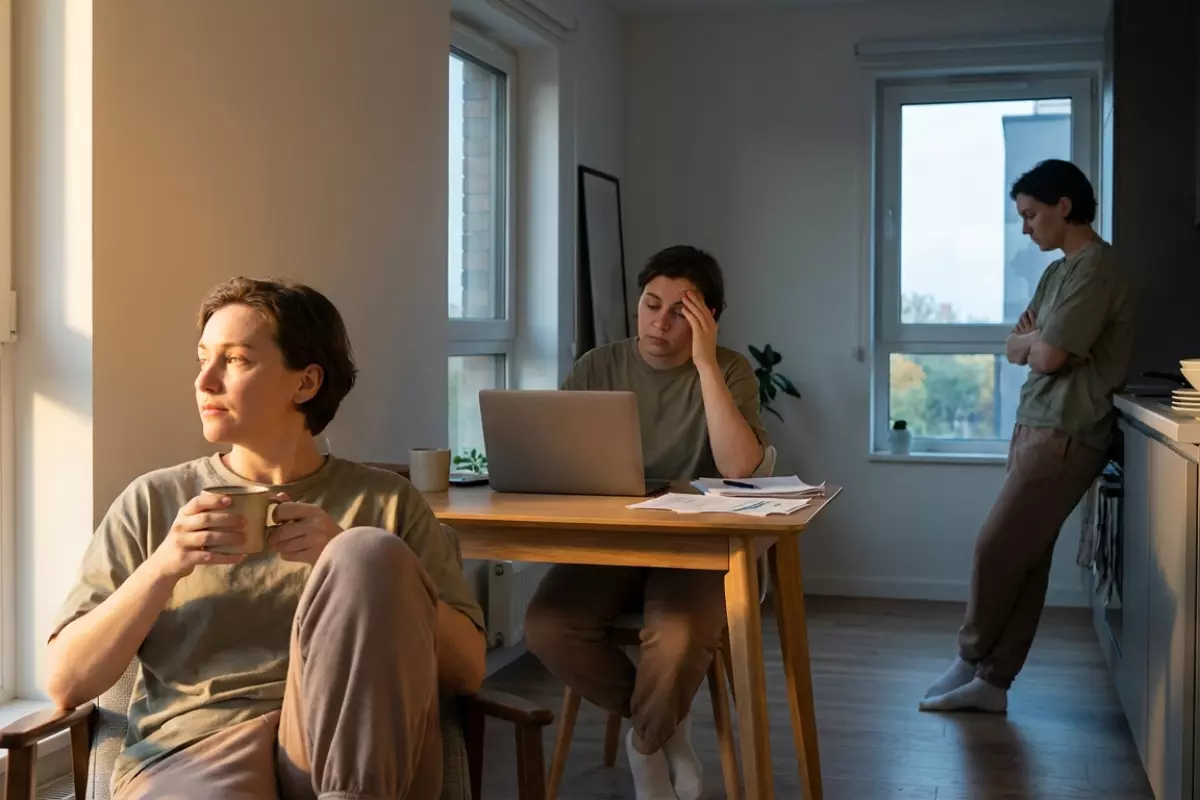
Some people notice their feelings and stamina shifting noticeably from morning to night, sometimes without an obvious trigger. A calm start can turn into irritability by midday, or a productive stretch can suddenly drop into mental fog. These shifts can feel “out of proportion” to what’s happening around you, which makes them easy to misread as purely personality or willpower.
Day-to-day fluctuations are common because the body’s alertness systems are constantly adjusting. Sleep quality, meal timing, caffeine, hydration, stress hormones, and sensory load all influence how steady you feel. When several small factors stack up, the result can look like a rapid emotional change even if nothing dramatic happened.
- Morning lift, afternoon dip: Higher drive early on can be followed by a slump later, especially with poor sleep, heavy lunches, or long stretches without movement.
- Irritability that builds quietly: Minor frustrations may feel bigger after hours of decision-making, noise, or multitasking.
- Sudden “wired” energy: A burst of restlessness can appear after caffeine, stress, or rushing, sometimes paired with racing thoughts.
- Evening emotional spillover: Feelings that were held in during the day can surface at night when distractions drop and fatigue rises.
- Social sensitivity: Interactions may feel easy at one time of day and overwhelming at another, depending on energy reserves.
| Pattern you might notice | Common everyday contributors | What it can look like in the moment |
|---|---|---|
| Late-morning overdrive | Strong caffeine response, adrenaline from deadlines, skipping breakfast | Fast speech, impatience, jumping between tasks |
| Midday crash | Blood-sugar swing, dehydration, screen fatigue, long sitting | Low motivation, heaviness, tearfulness or irritability |
| Afternoon agitation | Accumulated stress, sensory overload, too many decisions | Snapping, feeling “on edge,” trouble concentrating |
| Evening rebound | Second wind, delayed stress response, irregular sleep schedule | Restlessness, difficulty winding down, emotional intensity |
Tracking the timing can clarify whether the changes follow a rhythm. Noting sleep length, meal gaps, caffeine, and demanding tasks can reveal patterns like “irritable when I haven’t eaten” or “low mood after long meetings.” This doesn’t explain every sudden feeling, but it often shows why certain hours are more vulnerable to sharp shifts in energy and emotion.
What to do in the first 5 minutes
When a sudden wave of anger, fear, sadness, or panic hits, the first goal is not to “fix” the feeling. The goal is to slow the body’s alarm response so your thinking can come back online. Most people act on autopilot in these moments—arguing, texting, leaving abruptly, or shutting down—so a simple, repeatable sequence helps.
-
Pause movement and reduce input.
Stop what you’re doing if it’s safe to do so. Put your phone face down, lower the volume, and step away from the most stimulating part of the room. This reduces the chance of impulsive actions that can escalate the emotional spike.
-
Name the state in plain words.
Use a short label such as “I’m flooded,” “This is anxiety,” or “I’m really angry.” Labeling doesn’t erase the feeling, but it often creates a small gap between the emotion and the next behavior.
-
Do one body-based reset for 60–90 seconds.
Pick one technique and stick with it briefly rather than switching repeatedly.
- Longer exhale breathing: inhale gently, then exhale a little longer than the inhale for several cycles.
- Grounding through senses: notice 5 things you can see, 4 you can feel, 3 you can hear, 2 you can smell, 1 you can taste.
- Temperature shift: splash cool water on your face or hold a cool object to your cheeks for a short moment.
-
Check the “urge” before you act.
Intense feelings often come with a strong push to do something immediately—send a message, accuse someone, quit, binge, or withdraw. Silently note the urge (“I want to lash out” / “I want to disappear”) and delay it for a few minutes. Delaying is often enough to prevent a regretful reaction.
-
Choose the smallest safe next step.
Decide what keeps you and others safe and buys time: get a glass of water, go to the restroom, step outside, or say a neutral line like “I need a minute.” The aim is stability, not a perfect solution.
| If the emotion shows up as… | What it often pushes you to do | A 1–2 minute alternative |
|---|---|---|
| Racing heart, tight chest, shaky hands | Escape quickly, call repeatedly, seek immediate reassurance | Slow the exhale; place both feet on the floor; look around and name objects to orient to the present |
| Heat in the face, clenched jaw, sharp thoughts | Argue, send a blunt text, bring up old grievances | Unclench the jaw; relax hands; delay replies and write a draft you do not send |
| Heaviness, tearfulness, “what’s the point” thinking | Withdraw, cancel plans, stay in bed, stop responding | Do one small task (wash face, open a window); contact one person with a simple check-in message |
| Numb, spaced out, unreal or disconnected | Go on autopilot, agree to things, keep scrolling to avoid feeling | Press palms together; describe your surroundings out loud; sip water and notice temperature and taste |
If the intensity keeps rising despite these steps, treat it like a temporary storm: keep reducing stimulation, keep actions small, and postpone big decisions until your body settles. Once the surge passes, it becomes easier to figure out what triggered it and what you actually need next.
How to map triggers over a week
Tracking sudden emotional spikes for seven days helps you spot patterns that are easy to miss in the moment. The goal is not to prove a single cause, but to notice what tends to show up right before the feeling hits, what the feeling looks like in your body, and what usually makes it fade or intensify.
Keep the process simple so you actually do it. A short note taken within 10–30 minutes of the shift is usually more accurate than trying to reconstruct it at night.
- Pick a quick logging method. Use a notes app, a small notebook, or a single page you can reuse. Choose something you can access immediately, not a system that requires perfect organization.
- Define what counts as an “event.” Log any emotion that feels out of proportion, arrives abruptly, or changes your behavior (snapping, shutting down, crying, impulsive scrolling, overeating, isolating).
- Record the basics every time. Write the time, where you were, who you were with (or if you were alone), and what you were doing right before the surge.
- Capture the “just before” moment. Note the last clear trigger you can identify: a message notification, a tone of voice, a memory, a smell, a task switch, a crowded space, a quiet room, or even a moment of boredom.
- Name the emotion and rate intensity. Use plain labels (anger, shame, fear, sadness, irritability, numbness) and a 0–10 rating so you can compare across days.
- Include body signals. Many “out of nowhere” feelings have a physical lead-in: tight chest, jaw clenching, stomach drop, heat in face, headache, restlessness, fatigue, or a sudden need to escape.
- Note context that lowers resilience. Track sleep, hunger, caffeine/alcohol, pain, menstrual cycle changes, illness, and workload. These often don’t cause the emotion by themselves, but they can make reactions sharper.
- Write what happened next. Add the first thing you did (argued, avoided, people-pleased, checked your phone, cleaned, worked harder) and whether it helped short-term or made the feeling stick around.
- Review at the end of each day. Look for repeats: similar situations, similar people, similar times, or the same bodily warning signs. Keep it observational, not judgmental.
- Do a weekly pattern scan. At the end of the week, circle the top 2–3 most common setups (for example: “late afternoon + hunger,” “after work + crowded store,” “after a certain person texts,” “quiet evenings + rumination”). These become your best clues for prevention and coping.
| What to note | Examples of what it can look like | Why it matters |
|---|---|---|
| Situation (time/place/activity) | 7:30 a.m. commute; 3 p.m. at desk; bedtime scrolling | Reveals time-of-day and environment patterns |
| Immediate cue | Notification; criticism; silence; clutter; a song; a memory | Shows common “spark” moments that feel random |
| Emotion + intensity (0–10) | Anger 8; shame 6; anxiety 7; numbness 5 | Makes shifts comparable across days |
| Body signals | Tight throat; racing heart; heavy limbs; hot face; nausea | Helps you catch the surge earlier next time |
| Vulnerability factors | 5 hours sleep; skipped lunch; too much caffeine; headache | Highlights conditions that amplify reactions |
| Response + outcome | Argued and felt worse; took a walk and calmed down | Identifies coping moves that reduce intensity versus prolong it |
If a day has no obvious trigger, log that too. “Nothing happened” can still be informative when it lines up with low sleep, long stretches without breaks, or certain settings. Over a week, those “blank” entries often stop looking blank and start showing a repeatable setup.
Making space for feelings without getting stuck
When a strong emotion shows up out of nowhere, the goal is often to acknowledge it without letting it take over the whole day. That usually means noticing what is happening in the body and mind, giving it a name, and allowing it to be present long enough to pass through, rather than fighting it or feeding it.
A common pattern is swinging between two extremes: shutting it down (distraction, numbing, pushing it away) or merging with it (ruminating, replaying scenarios, acting on impulse). A more balanced approach is to treat the feeling as information, not an emergency. It can be real and intense without requiring immediate action.
- Label the emotion in plain language. Simple naming like “this is anxiety” or “this is anger” can reduce the sense of chaos and create a small pause before reacting.
- Separate the feeling from the story. Emotions often bring a fast narrative (“something is wrong,” “I’m failing,” “they hate me”). Noticing the story helps prevent spirals while still respecting the emotion.
- Allow a limited window for it. Giving it 5–10 minutes of attention (breathing, sitting, journaling a few lines) can be more effective than either suppressing it all day or analyzing it for hours.
- Choose the next smallest helpful action. Actions like drinking water, stepping outside, washing your face, or sending one clarifying message can ground the system without turning the moment into a major project.
- Delay big decisions. When emotions spike, decisions tend to become all-or-nothing. Waiting until the intensity drops often prevents regret.
| What often happens | How it can keep you stuck | A more workable alternative |
|---|---|---|
| Trying to “fix” the feeling immediately | Turns the emotion into a problem to solve, increasing pressure and frustration | Focus on tolerating the wave first; problem-solve later when calmer |
| Ruminating to find the “real reason” | Creates loops that intensify fear, guilt, or anger without adding clarity | Write down one possible trigger and one need; stop there for now |
| Acting on impulse (texts, spending, quitting, arguing) | Short-term relief followed by longer-term consequences and more emotion | Use a pause rule: wait 20 minutes, then reassess what you want to do |
| Numbing out (scrolling, overeating, substances) | Reduces discomfort briefly but often rebounds stronger later | Use soothing plus awareness: a walk, shower, music, then a quick check-in |
| Self-criticism for having the emotion | Adds shame on top of the original feeling, making it harder to move through | Use neutral language: “My system is activated; it will settle” |
It also helps to watch for “fuel” behaviors that keep intense emotions running, such as repeatedly checking for reassurance, replaying conversations, or scanning for signs something is wrong. These habits are understandable, but they often signal the brain to stay on alert. Replacing them with a brief grounding routine can reduce intensity over time.
If the feeling points to a real need, it can be addressed without escalating. For example, anxiety may signal uncertainty that needs a plan, anger may signal a boundary that needs wording, and sadness may signal a loss that needs acknowledgment. The key is to respond to the message without letting the emotion dictate the method or the timing.