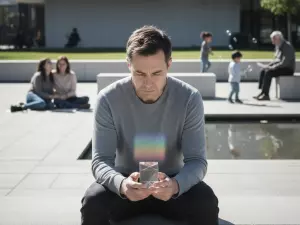
Emotional Numbness That Exists Without Anxiety

 This article explains why numbness can show up without worry, from low arousal shutdown to overstimulation without anxiety. It looks at how numbness affects decision-making, why neutrality can feel uncomfortable, simple grounding practices, and how to tell peace from numbness.
- Why numbness can appear without worry
- Low arousal states and emotional shutdown
- How numbness changes decision-making
- The role of overstimulation even without anxiety
- Why neutrality can feel uncomfortable
- Simple grounding practices for emotional presence
- How to tell the difference between peace and numbness
Feeling emotionally flat even without anxiety can be confusing, like your inner volume has been turned down while life keeps moving. You may still show up for work, laugh at the right moments, and handle chores, yet notice that joy, sadness, or excitement rarely land. This shutoff can creep in after prolonged stress, disappointment, or nonstop busyness, and it may be a quiet signal that something needs care, not a personal flaw.
Why numbness can appear without worry
Emotional flatness can show up even when there is no obvious fear, panic, or constant “what if” thinking. For many people it’s less about being worried and more about the mind shifting into a low-reactivity mode that conserves energy, reduces stimulation, or keeps daily life manageable. This can look like going through the motions, feeling distant from events, or noticing that reactions arrive late or not at all.
It also helps to remember that feelings don’t always match circumstances in real time. The brain can prioritize tasks, social expectations, or problem-solving over emotional processing, especially during busy or demanding periods. In that sense, numbness without anxiety can be a pattern of attention and regulation, not a sign that something is “wrong” in the moment.
- Overload without worry: A packed schedule, constant notifications, caregiving, or decision fatigue can dull emotion. The system is saturated, so it turns down intensity even if there’s no anxious thought loop.
- Habitual “keep it together” mode: People who are used to staying composed may automatically minimize feelings. This can become a default style: practical, controlled, and emotionally muted.
- Delayed processing: Some experiences register cognitively first and emotionally later. The person understands what happened, but the feeling response is postponed, faint, or inconsistent.
- Low mood or depletion: Depression, burnout, or chronic stress can present as emptiness rather than nervousness. Enjoyment and motivation drop, while worry may be minimal or absent.
- Disconnection as a learned strategy: If strong emotions were discouraged earlier in life, detaching can feel “normal.” The person may function well while feeling internally blank.
- Physical factors that blunt emotion: Poor sleep, hormonal shifts, illness, pain, or certain medications can reduce emotional intensity. The experience can resemble numbness even when the person feels calm.
- Social masking: In workplaces or family roles where emotional display feels risky, people may suppress reactions. Over time, suppression can start to feel like genuine absence of feeling.
In everyday behavior, this often shows up as reduced excitement about good news, limited frustration during setbacks, or a sense of being “fine” but not truly engaged. Someone might still be productive and sociable, yet notice that laughter feels automatic, empathy feels effortful, or personal preferences feel harder to access.
When numbness without anxiety is present, context usually matters: it may worsen during high-demand weeks, improve after rest, or lift when there is more time for quiet reflection. Tracking patterns like sleep, workload, social pressure, and recovery time can clarify whether the emotional dullness is tied to depletion, routine suppression, or delayed processing rather than worry.
Low arousal states and emotional shutdown

Emotional numbness can show up as a low-energy, muted state rather than a tense or panicky one. Instead of feeling “on edge,” the body and mind shift into conservation mode: fewer feelings register, motivation drops, and reactions become smaller and slower. This can look like calm from the outside, even when it is actually a kind of internal powering down.
In everyday life, this pattern often appears when someone has been carrying too much for too long. The nervous system may reduce emotional intensity to keep functioning, especially when there is no immediate way to fix the situation. People may still think clearly and complete tasks, but they do it on autopilot, with less emotional color and less sense of reward.
- Reduced emotional range: positive feelings (interest, joy, affection) flatten first, while negative feelings may also feel distant or “behind glass.”
- Low drive and initiation: starting activities takes extra effort, even if the person logically wants to do them.
- Social withdrawal without conflict: fewer messages, shorter replies, cancelling plans, or preferring quiet routines.
- Slower processing and response: pauses in conversation, difficulty finding words, or feeling mentally “foggy.”
- Comfort-seeking behaviors: more scrolling, snacking, napping, or repetitive activities that require little emotional engagement.
- Blunted stress signals: problems are recognized intellectually, but the usual urgency or emotional push to act is missing.
This shutdown-style response is different from anxiety-driven hyperarousal. With anxiety, the body tends to mobilize: racing thoughts, tension, and a sense of threat. With low arousal, the system tends to immobilize: energy drops, feelings dim, and it becomes harder to care, even about things that normally matter.
| What it can look like | How it often feels from the inside | Common everyday triggers |
|---|---|---|
| Doing the minimum, sticking to routines | “I’m functioning, but not really present.” | Long periods of responsibility without recovery time |
| Not reacting much to good or bad news | “I know it matters, but I can’t feel it.” | Emotional overload, repeated disappointments |
| Avoiding conversations and decisions | “Everything feels like too much effort.” | Conflict fatigue, decision fatigue, burnout |
| Spacing out, losing track of time | “My mind goes blank or far away.” | Monotony, chronic stress, feeling trapped or powerless |
| Feeling detached in relationships | “I care, but I can’t access it right now.” | Unresolved hurt, ongoing tension, lack of emotional safety |
Because this state is quiet and low-key, it can be missed or misread. Others may interpret it as laziness, indifference, or being “easygoing,” while the person experiencing it may assume they are simply tired or that their personality has changed. Noticing the pattern over time is often the clue: the numbness is most likely when demands are high, rest is limited, or emotions have felt unsafe or unproductive for a while.
How numbness changes decision-making
When emotions feel muted, choices often shift from “what matters to me?” to “what’s easiest to get through?” Without strong internal signals like excitement, concern, or satisfaction, everyday decisions can become more mechanical, delayed, or driven by habit rather than preference.
This doesn’t always look dramatic. Many people still function well at work and handle responsibilities, but the process behind their choices changes. Instead of being pulled toward meaningful options, they may rely on rules, routines, or other people’s cues to decide what to do next.
- More defaulting to routines: Familiar options feel safer and require less effort, so the same meals, shows, routes, and weekend plans repeat even when they’re no longer enjoyable.
- Less “gut feeling” guidance: Subtle emotional feedback that normally helps rank options can be quiet, making choices feel oddly equal or arbitrary.
- Decision delay and procrastination: If nothing feels rewarding or urgent, it’s harder to start. Tasks get postponed until a deadline, reminder, or external pressure forces action.
- Short-term relief over long-term value: Choices may prioritize reducing discomfort right now (avoiding calls, canceling plans, staying busy) rather than building toward goals.
- Reduced sensitivity to consequences: Not in a reckless way for everyone, but consequences can feel distant or abstract, which can weaken follow-through.
- More “checking boxes” behavior: People may do what is expected on paper while feeling disconnected from the reason behind it, including career steps, relationships, or self-care routines.
- Greater reliance on external input: Opinions, ratings, and other people’s preferences can carry more weight because internal preference signals are faint.
| Everyday situation | Common pattern when emotionally numb | How it can show up day to day |
|---|---|---|
| Choosing how to spend free time | Picking low-effort defaults | Scrolling, rewatching the same shows, staying in even when bored |
| Work and productivity choices | Doing only what is clearly required | Meeting deadlines but avoiding optional tasks, networking, or creative work |
| Social decisions | Avoidance or passive agreement | Canceling plans, not initiating contact, or saying yes without interest |
| Spending and purchasing | Impulse for distraction or no spending at all | Buying small items for a brief “something,” or delaying purchases indefinitely |
| Health and self-care | Inconsistent follow-through | Skipping meals, exercise, or appointments because the payoff feels muted |
| Relationship conversations | Reduced emotional signaling | Giving neutral responses, not expressing preferences, seeming “fine” when not engaged |
A key feature is that choices can feel less personal. Even when someone can logically explain what they “should” do, the internal sense of meaning that usually supports commitment may be quieter. Over time, this can lead to a narrow routine where decisions are made to minimize effort, avoid discomfort, or meet expectations rather than to pursue satisfaction.
The role of overstimulation even without anxiety

Emotional shutdown can happen when the brain is handling too much input for too long, even if there is no fear, worry, or panic in the background. Instead of feeling “stressed,” a person may feel flat, detached, or on autopilot. This is often a practical response: reducing emotional intensity can make it easier to keep functioning when attention and energy are already stretched.
Overload is not only about loud noise or crowded places. It can come from constant switching between tasks, repeated notifications, extended social interaction, or a day packed with decisions. When the nervous system stays in high gear, it may prioritize efficiency over emotional richness, which can look like numbness rather than visible distress.
- Too many demands at once: Multitasking, rapid context switching, and “always on” availability can drain mental bandwidth, leaving less capacity for feelings.
- Continuous low-level stimulation: Background media, scrolling, group chats, and open tabs can keep the mind activated without a clear stopping point.
- Decision fatigue: Repeated small choices (what to answer, what to buy, what to prioritize) can lead to emotional blunting as the day goes on.
- Social saturation: Even pleasant interactions can become too much when there is little recovery time, leading to a muted emotional response.
- Sensory strain: Bright lights, strong smells, uncomfortable clothing, or persistent noise can push the system toward “numb” as a protective setting.
In everyday behavior, this pattern often shows up as reduced responsiveness rather than obvious agitation. Someone might still complete tasks, show up to commitments, and even laugh at jokes, but feel like the reactions are distant or delayed. They may prefer simple routines, avoid extra conversation, or seek quiet without being able to explain why.
| Common source of overload | Typical “numb” presentation | What it can be mistaken for |
|---|---|---|
| Back-to-back screens and notifications | Blankness, zoning out, difficulty feeling pleasure | Boredom or lack of interest |
| High task switching at work or school | Autopilot mode, reduced empathy, short replies | Rudeness or “not caring” |
| Long social days (even enjoyable ones) | Emotional flattening, desire to be alone, quietness | Sadness or social withdrawal |
| Busy schedules with little downtime | Feeling unreal, disconnected, or “not present” | Depression or laziness |
| Sensory-heavy environments (noise, crowds, lights) | Shut down, slower thinking, minimal expression | Fatigue or irritability |
Because this kind of emotional numbing can look calm from the outside, it is easy to miss. A useful clue is timing: the flatness often increases after prolonged input and improves when stimulation drops. Recovery tends to be less about “talking through worry” and more about lowering demands, simplifying choices, and giving the mind a clear off-ramp from constant engagement.
Why neutrality can feel uncomfortable
Emotional neutrality can register as “something is off” because the brain is used to reading feelings as signals. When there is no clear pull toward excitement, worry, sadness, or relief, it can feel like missing information. People often interpret that blankness as a problem to solve, even when nothing urgent is happening.
Everyday life also trains people to expect a reaction. Conversations, news, social media, and work updates usually come with an implied emotional script: be impressed, be concerned, be amused, be motivated. When the expected response doesn’t show up, neutrality can feel socially risky, as if it might be mistaken for boredom, coldness, or not caring.
- It removes the “next step” feeling. Strong emotions often create momentum: anxiety pushes preparation, excitement pushes action, anger pushes confrontation. A flat state can make decisions feel oddly effortful because there’s no internal urgency to lean on.
- It can be confused with depression or burnout. Many people associate low emotional intensity with being unwell. Even without sadness or anxiety, a muted response can trigger self-checking and worry about what it “means.”
- It clashes with identity and values. If someone sees themselves as passionate, caring, or driven, a neutral reaction can feel like a mismatch. That mismatch may lead to overcompensating, forcing enthusiasm, or withdrawing to avoid being judged.
- It increases mental scanning. When feelings are quiet, attention often turns inward: “Do I feel anything yet?” This monitoring can make the neutral state feel louder and more uncomfortable, even though the original experience was simply calm or blank.
- It reduces reward cues. Pleasure and interest typically come with noticeable emotional feedback. Without that feedback, activities can seem pointless or “not worth it,” which can lead to procrastination, scrolling, snacking, or other quick-stimulation habits.
- It can make relationships feel uncertain. People often rely on emotional signals to gauge connection. If warmth, excitement, or irritation isn’t showing up, someone may worry they’re disconnected, even if their behavior remains caring and consistent.
In practice, discomfort often shows up as restlessness rather than distress: switching tasks repeatedly, seeking noise in the background, starting arguments over small issues, or chasing a strong feeling through entertainment or risk. These patterns are common attempts to replace a quiet internal landscape with something more familiar and easier to interpret.
Neutrality isn’t always a sign of emotional numbness; it can also be a normal baseline that feels unfamiliar in a high-stimulation routine. The uncomfortable part is often the uncertainty it creates: without an obvious emotion, people may doubt their own preferences, question their motivation, or assume they should be reacting more strongly than they are.
Simple grounding practices for emotional presence
When emotions feel muted without the “edge” of anxiety, it often helps to focus on contact with the moment rather than trying to force a feeling. Grounding is about giving the nervous system clear, simple signals of safety and orientation: where you are, what you’re doing, and what your body can sense right now.
These practices tend to work best when they are brief, specific, and repeated. A common pattern with emotional numbness is waiting to “feel ready” before engaging; grounding flips that by starting with small actions and letting awareness catch up.
- Name-and-notice (30–60 seconds): Silently label five things you can see, four you can feel (clothes, chair, floor), three you can hear, two you can smell, and one you can taste. If that feels like too much, do just “3-2-1.” The goal is sensory clarity, not relaxation.
- Feet and pressure cues: Press both feet into the ground for 10 seconds, then release for 10 seconds, repeating 3 times. Add gentle pressure by squeezing your hands together or holding a mug. Pressure input can be easier to register than emotions.
- Temperature shift: Wash hands with warm water, then cool water, noticing the change. Or hold something cool for a minute. Temperature contrast can “wake up” attention when everything feels flat.
- Orienting: Slowly turn your head and look around the room as if you’re arriving for the first time. Identify exits, light sources, and stable objects. This can reduce the sense of being mentally “elsewhere.”
- Micro-movement: Roll shoulders, unclench jaw, or stretch fingers one by one. Numbness often comes with subtle bracing; small movements help the body update its state without demanding big emotion.
- Breath with a task: Instead of focusing on breathing alone, pair it with counting or touch: inhale for 4 while tracing a finger up your palm, exhale for 6 while tracing down. This keeps attention anchored when feelings are distant.
- One-sentence check-in: Use a neutral prompt: “Right now, my body feels…,” “My energy is…,” “My mind is….” If the answer is “blank” or “nothing,” that still counts as data. Add one concrete detail (heavy, tight, buzzy, foggy).
- Do-then-notice: Choose a small action (drink water, open a window, step outside for 60 seconds) and then notice one change afterward. This supports emotional presence through cause-and-effect, not introspection.
It can also help to match the technique to the situation. Numbness often shows up differently at work, in conversations, or when you’re alone, so having a few options reduces the urge to shut down or “push through” automatically.
| Situation where numbness shows up | Grounding option to try | What to look for (small signs of connection) |
|---|---|---|
| In a conversation, feeling detached | Press toes into shoes; notice one sound in the room; summarize the last sentence you heard | Better tracking of words, slightly clearer attention, less “autopilot” replying |
| At work, “blank” focus and low motivation | 60-second orienting + pick one concrete next step; set a 5-minute timer | More task clarity, reduced avoidance, a mild increase in energy |
| After scrolling or zoning out | Stand up, change temperature (wash hands), look at a distant object for 20 seconds | Less fogginess, more sense of time passing, easier transition to another activity |
| When emotions “should” be there but aren’t | One-sentence check-in + body scan of jaw/shoulders/hands; soften one area | Noticing tension patterns, a hint of sadness/irritation/relief, or clearer bodily signals |
| Before sleep, feeling disconnected from the day | Pressure cues (hands together) + list three neutral facts about the day | More continuity of memory, calmer settling, less mental drifting |
If a practice makes you feel more unreal, dizzy, or “far away,” it usually means it’s too inward or too intense for that moment. Switching to external anchors (looking around, touching a textured object, listening for sounds) is often more stabilizing than deep body focus when emotional numbness is strong.
Consistency matters more than duration. Brief grounding repeated across the day can gradually rebuild a sense of being present enough to notice feelings as they return in small, ordinary ways.
How to tell the difference between peace and numbness
Calm can look similar to emotional flatness from the outside, but they usually feel different on the inside and show up differently in daily choices. Peace tends to come with a sense of steadiness and connection, while numbness often comes with disconnection, reduced motivation, or a “going through the motions” quality.
A useful way to separate the two is to look at flexibility: peace is typically responsive to what’s happening, and numbness is often rigid or muted even when something meaningful occurs. Another clue is whether you can access feelings when you choose to, such as enjoying a hobby, feeling warmth toward someone, or getting appropriately concerned when something needs attention.
| Everyday sign | More like peace | More like numbness |
|---|---|---|
| Emotional range | Feelings are present but not overwhelming; you can still feel joy, sadness, or excitement when it fits the moment. | Feelings are blunted across the board; even “good news” or a favorite activity barely registers. |
| Connection to people | You feel grounded with others and can be present in conversations, even if you’re quiet. | You feel distant or “behind glass,” nodding along but not really relating or caring. |
| Body cues | Breathing and muscles feel settled; the body feels safe and rested. | Body feels shut down, heavy, foggy, or oddly “switched off,” sometimes with low energy. |
| Motivation and follow-through | You can start and finish basic tasks; rest feels restorative rather than avoidant. | Procrastination and avoidance increase; tasks feel pointless, and rest doesn’t refresh. |
| Response to meaningful events | You can feel appropriate emotion when something matters (gratitude, concern, pride), even if it’s subtle. | Reactions stay muted regardless of importance; you may “know” you should care without feeling it. |
| Decision-making | Choices feel clearer; you can weigh options and sense what aligns with your values. | Choices feel indifferent or random; it’s hard to sense preferences or what you want. |
| Enjoyment and interest | Small pleasures still land (music, food, nature), even if you’re not highly emotional. | Hobbies feel flat; you may keep doing them out of habit without any satisfaction. |
| Ability to be moved | You can be touched by a kind moment, a story, or a memory, and it feels safe to let it in. | Sentimental or intense moments feel unreal, irritating, or blank; you may avoid them. |
If you’re unsure, focus on patterns over a single day. Peace usually coexists with access to emotion, even when life is quiet. Emotional numbness more often shows up as reduced access: you may function fine on the surface, but feel detached from your own reactions, preferences, and relationships.
It can also help to notice what happens when you intentionally engage with something that normally sparks feeling, like a favorite song, a meaningful photo, exercise, or a supportive conversation. With genuine calm, emotion can rise and fall naturally. With numbness, the dial often stays stuck near zero, or you may feel drained rather than soothed afterward.