Feeling Emotionally Numb Without Strong Negative Emotions

 This article explains how numbness can happen without intense emotions, the difference between emotional flattening and suppression, why less negativity isn’t always relief, and how subtle avoidance works. It also shows muted positive emotion, gentle ways to explore feelings, steps to widen range, and signs access is returning.
- How numbness can happen without intense emotions
- Emotional flattening versus emotional suppression
- Why the absence of negativity isn’t always relief
- How avoidance can be subtle and automatic
- What “muted positive emotion” looks like
- How to explore feelings without forcing them
- Practical steps to widen emotional range over time
- Signs that emotional access is returning
Feeling emotionally flat without strong sadness or anger can be quietly unsettling. Life may look fine on paper, yet moments that should bring interest, warmth, or satisfaction land with a dull thud. This muted inner life often appears during busy routines, after prolonged stress, or when you have been pushing through for too long. Noticing it is a meaningful first step toward feeling like yourself again.
How numbness can happen without intense emotions
Emotional flatness doesn’t always show up after a dramatic event or a big wave of sadness. It can develop quietly when the mind and body stay in “get through the day” mode for long enough. Instead of feeling strongly upset, a person may notice muted reactions, low motivation, or a sense that experiences are happening at a distance.
In everyday life, this often comes from chronic load rather than a single crisis. When attention is constantly pulled toward tasks, responsibilities, or background worry, the brain may reduce emotional intensity as a practical way to conserve energy and keep functioning. The result can look like numbness even when nothing feels obviously “wrong.”
- Stress that never peaks, but never ends: Ongoing deadlines, caregiving, financial pressure, or constant notifications can keep the nervous system activated. Over time, the emotional system may dampen both pleasant and unpleasant feelings to prevent overload.
- Habitual suppression: People often learn to “stay composed” at work, in family roles, or in social settings. When pushing feelings aside becomes automatic, it can generalize until it’s harder to access emotion even in safe moments.
- Burnout patterns: Burnout isn’t only exhaustion; it can also involve cynicism, detachment, and reduced satisfaction. Instead of intense distress, there may be a steady sense of “nothing really matters” or “I can’t get excited.”
- Overstimulation and distraction: Constant scrolling, multitasking, or background media can crowd out the quieter signals that help emotions register. The day feels full, but internal awareness feels thin.
- Sleep disruption and physical depletion: Poor sleep, irregular meals, dehydration, or low movement can blunt emotional responsiveness. When the body is running low, feelings often become dull or simplified.
- Low-grade anxiety or rumination: Worry doesn’t always feel intense. It can be a steady mental hum that keeps attention in the head rather than in the body, making emotions harder to sense clearly.
- Loss of rewarding routines: When hobbies, social contact, or outdoor time shrink, there are fewer natural “inputs” that spark interest and pleasure. The absence can be gradual enough that it’s noticed only later as emotional emptiness.
| Everyday pattern | What it can look like | Why it can lead to feeling numb |
|---|---|---|
| Constant productivity mode | Going from task to task, little pause, difficulty “switching off” | Emotions get treated as interruptions, so they’re minimized to maintain pace |
| High responsibility roles | Being the reliable one, solving problems, holding things together | Self-focus drops; emotional needs are postponed until they become harder to access |
| Frequent distraction | Checking the phone often, background noise, multitasking | Less internal attention means fewer chances for feelings to fully form and be noticed |
| Reduced recovery time | Short sleep, no real breaks, weekends filled with errands | Without recovery, the system stays depleted and emotional range narrows |
| Social “performing” | Keeping things light, avoiding vulnerability, always saying “I’m fine” | Repeated masking can weaken the connection between inner experience and expression |
Because these patterns are common and often rewarded, emotional blunting can be easy to misread as a personality change or a lack of caring. More often, it’s a sign that the system has adapted to sustained demands by turning the volume down.
Emotional flattening versus emotional suppression
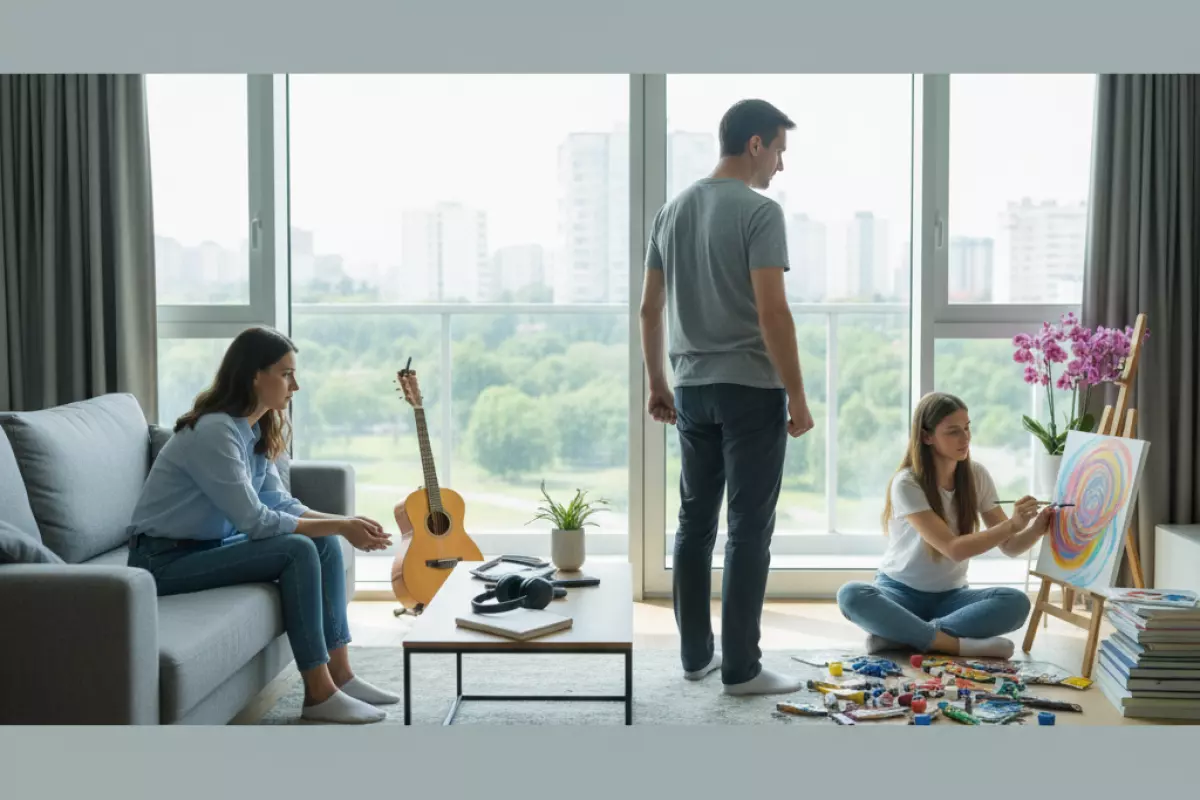
Feeling “flat” and actively holding feelings back can look similar from the outside, but they work differently on the inside. One is more like the volume on emotions has been turned down across the board; the other is more like keeping the volume up but muting the speaker so nothing comes out.
| What it looks like | Emotional flattening (dampened range) | Emotional suppression (pushing feelings down) |
|---|---|---|
| Core experience | Emotions feel faint, distant, or hard to access, including positive ones. | Emotions are present but are intentionally blocked, hidden, or quickly “shut off.” |
| Typical day-to-day signs | Less excitement about good news, muted enjoyment, “going through the motions,” reduced curiosity. | Changing the subject, staying busy to avoid feelings, forcing a neutral face, telling yourself to “be fine.” |
| What triggers it | Often shows up after prolonged stress, burnout, sleep loss, grief, or as a side effect of some medications. | Often shows up in situations where feelings seem unsafe, inconvenient, or “not allowed” (work, family conflict, social pressure). |
| Sense of control | Usually feels involuntary: you want to feel more, but can’t “reach” it. | Usually feels effortful: you’re doing something to keep emotions contained. |
| Body clues | Low energy, heaviness, slowed reactions, blankness; fewer strong physical emotion signals. | Tension in jaw/shoulders, tight chest, shallow breathing, restlessness; the body may look calm while feeling keyed up. |
| Thought patterns | “Nothing really matters,” “I should care more,” “I’m not reacting like I used to.” | “Don’t think about it,” “Stay composed,” “If I start, I won’t stop,” “I can deal with it later.” |
| Social impact | People may describe you as distant or hard to read; you may withdraw because connection feels muted. | People may describe you as controlled or private; you may avoid vulnerable conversations to prevent feelings from surfacing. |
| After-effects | Ongoing dullness, reduced motivation, difficulty feeling pleasure or relief even when problems resolve. | Rebound feelings later (irritability, sudden tears, emotional “leaks”), mental fatigue from constant self-monitoring. |
In real life, the two can overlap. Someone might start by intentionally pushing feelings aside to function at work or in a crisis, then notice that over time their emotional range stays muted even when they want to feel more. Others experience the opposite: a generally blunted mood, but they still clamp down on the few stronger feelings that break through.
- A quick self-check: If you notice a feeling and then immediately try to contain it, that points toward suppression. If you mainly notice an absence of feeling, or only faint signals, that leans toward flattening.
- Look at positives, not just negatives: A dampened response to compliments, hobbies, music, or good news often suggests overall numbing rather than just “not wanting to feel bad.”
- Notice effort: Suppression typically comes with a sense of work (monitoring your face, words, and reactions). Flattening often comes with frustration or confusion because there is little to manage.
Understanding which pattern is happening can clarify what helps. When emotions are being pushed down, the main issue is often safety, permission, and habits of avoidance. When the emotional signal itself is turned down, the focus is often on recovery factors like rest, reduced overload, and rebuilding connection to bodily cues and everyday pleasure.
Why the absence of negativity isn’t always relief
Feeling “fine” on the surface can be misleading when it’s driven by shutdown rather than calm. When strong negative emotions disappear, it may look like stress is gone, but everyday life can still feel flat, distant, or strangely effortful. Instead of comfort, the result is often a muted inner world where reactions don’t match what’s happening.
One reason this happens is that emotions work as a system. When the mind dampens anger, fear, or sadness to avoid overwhelm, it often turns down the volume on everything else too, including excitement, curiosity, and affection. The absence of distress can therefore come with less motivation, less connection, and fewer signals about what matters.
- Relief usually feels like softness. There’s a sense of release, better sleep, easier breathing, and more flexibility in how a person responds.
- Numbing often feels like distance. People may describe being on autopilot, watching life happen, or not caring even when they think they “should.”
- Reduced negativity can remove useful alarms. Anxiety and frustration can be unpleasant, but they also flag boundaries, needs, and problems that require attention.
- Decision-making can get harder. Without emotional cues, choices may rely on overthinking, people-pleasing, or default habits rather than genuine preference.
- Relationships can feel oddly quiet. Conflict may decrease, but so can warmth, spontaneity, and the ability to feel moved by others.
| What it looks like day-to-day | More like relief | More like emotional numbing |
|---|---|---|
| Body signals | Tension eases; appetite and sleep gradually normalize | Low energy, heaviness, or “wired but blank” sensations |
| Thought patterns | Clearer priorities; less rumination | Foggy thinking; difficulty caring or choosing |
| Motivation | Steadier follow-through; interest returns | Procrastination; tasks feel pointless or unreal |
| Connection with others | More patience; easier empathy | Detached conversations; going through the motions |
| Emotional range | Ups and downs still exist, but feel manageable | Flatness across both “bad” and “good” feelings |
In typical behavior patterns, this muted state can be reinforced by coping habits that reduce stimulation: staying busy to avoid reflection, scrolling for hours, isolating, or keeping conversations practical and surface-level. These strategies can prevent spikes of discomfort, but they also limit the moments that normally bring meaning and emotional color.
It can help to notice the difference between “I’m not upset” and “I’m not really here.” Relief tends to make life feel more livable and responsive, while emotional blunting often makes life feel smaller, quieter, and harder to engage with even when nothing is obviously wrong.
How avoidance can be subtle and automatic
Emotional shut-down often isn’t a conscious decision. It can show up as small, practical habits that keep feelings at arm’s length while still looking “fine” on the outside. The mind learns that staying busy, staying logical, or staying detached reduces discomfort, so it repeats those moves automatically.
This kind of emotional distancing can be easy to miss because it’s frequently rewarded: productivity goes up, conflict goes down, and other people may even praise the calmness. Over time, though, the same patterns that prevent overwhelm can also flatten positive emotion and make everyday life feel muted.
- Staying in your head instead of your body: analyzing, explaining, or problem-solving immediately, while skipping over what the feeling actually is. For example, turning “I’m hurt” into a debate about whether the situation was “reasonable.”
- Filling every gap with noise: podcasts, scrolling, constant music, or background TV so there’s no quiet space where emotions might surface.
- Keeping conversations on safe topics: talking about plans, work, or other people’s issues, but steering away from personal needs, disappointment, or longing.
- Using humor or positivity as a quick exit: making a joke, changing the subject, or “looking on the bright side” before the emotional moment has had time to register.
- Micro-avoidance of triggers: not opening certain messages, delaying a call, taking a longer route home, or staying “too busy” to deal with a decision.
- Over-functioning: doing tasks for others, organizing, fixing, or caretaking so attention stays on action rather than inner experience.
- Under-functioning or shutting down: procrastinating, zoning out, sleeping more, or feeling “blank” when something emotionally loaded comes up.
- Keeping everything controlled: rigid routines, perfectionism, or avoiding spontaneity because uncertainty can invite feelings that are harder to manage.
| Common pattern | How it looks day to day | What it often protects from | How it can contribute to numbness |
|---|---|---|---|
| Intellectualizing | Explaining emotions instead of feeling them; debating details | Vulnerability, confusion, loss of control | Feelings stay conceptual, so emotional intensity fades |
| Constant stimulation | Always multitasking; reaching for a screen in any pause | Quiet moments where sadness, anger, or loneliness might appear | No space for emotions to rise and pass, so everything feels “flat” |
| People-pleasing | Saying yes automatically; smoothing tension quickly | Conflict, rejection, being seen as “too much” | Personal needs get muted, reducing access to genuine desire and joy |
| Emotional minimization | “It’s not a big deal”; moving on fast; downplaying impact | Feeling overwhelmed or “dramatic” | Repeated downshifting makes it harder to register emotion at all |
| Overworking/over-responsibility | Staying productive to the point of exhaustion | Helplessness, uncertainty, painful thoughts | Chronic stress narrows emotional range and reduces pleasure |
Because these behaviors are often subtle, a useful clue is the sequence: a feeling starts to rise, and then there’s an immediate shift into doing, thinking, fixing, joking, or distracting. The shift can happen so quickly that the only noticeable result is a vague sense of disconnection afterward.
Not every form of distraction is a problem. The pattern becomes more relevant when it’s the default response to discomfort, when it shows up across many situations, or when it starts to block not only painful emotions but also excitement, affection, satisfaction, and curiosity.
What “muted positive emotion” looks like

When positive feelings are dulled, life can still look “fine” from the outside, but the inner payoff is smaller. Pleasant moments register intellectually (you know something is good), yet the emotional lift is brief, faint, or absent. People often describe it as going through the motions: functioning, socializing, and completing tasks, but without the usual spark of enjoyment or warmth.
This pattern is different from constant sadness or obvious distress. It can show up as a steady, neutral baseline where nothing feels deeply wrong, but also little feels genuinely satisfying. The result is often a quiet sense of flatness, reduced motivation, and fewer moments of spontaneous excitement.
- Good news lands softly. Compliments, achievements, or happy updates get a polite “that’s nice,” but there’s little internal glow or pride.
- Enjoyable activities feel more like chores. Hobbies, music, food, or entertainment seem “okay,” yet not truly rewarding, so it’s harder to choose them.
- Reduced anticipation. Plans that used to be energizing (a trip, seeing friends, a weekend) don’t create much forward-looking excitement.
- Less spontaneous laughter or playfulness. Humor is understood, but the body response is muted; smiling may feel effortful or automatic.
- Affection feels distant. You may care about people and want relationships to go well, but warmth, tenderness, or emotional closeness feels harder to access.
- “I should be happy” thoughts. There’s awareness that a moment is supposed to feel good, paired with confusion or frustration that it doesn’t.
- Lower reward from everyday comforts. Small pleasures (a shower, a cozy bed, a favorite meal) provide relief or convenience more than enjoyment.
- Motivation shifts to obligation. Actions are driven by responsibility, routines, or avoiding problems rather than curiosity or genuine interest.
| Everyday situation | How it often shows up | Common outward behavior |
|---|---|---|
| Receiving praise or thanks | Minimal inner reward; it feels “noted” more than felt | Brief smile, quick “no problem,” topic change |
| Finishing a goal or task | Little satisfaction; accomplishment feels neutral | Immediately moves to the next item, no celebration |
| Social time with friends | Connection feels thin; enjoyment fades quickly | Shows up and participates, but leaves early or feels drained |
| Leisure (shows, games, reading) | Interest is shallow; attention wanders | Scrolls while watching, switches activities frequently |
| Romantic or family moments | Care remains, but warmth is harder to access | Does helpful things, but avoids deeper emotional talks |
| Positive surprises (a gift, good luck) | Reaction feels delayed or muted | Says the “right” words, but expression looks flat |
Because the outside behavior can look normal, this kind of emotional flattening is easy to miss. A person may still be reliable, kind, and productive, while privately noticing that joy, interest, and gratitude don’t “reach” them the way they used to.
How to explore feelings without forcing them
When emotions feel muted, it can be tempting to “try harder” to feel something. That usually backfires: pressure makes the mind scan for the “right” reaction, and the body often responds by tightening up or going blank. A gentler approach treats feelings as signals that show up in their own time, especially when you build small moments of safety, attention, and choice.
A useful starting point is to focus on noticing rather than producing. Instead of asking “What am I feeling?” (which can feel like a test), many people do better with “What do I notice right now?” That shift makes room for subtle cues like heaviness, restlessness, fogginess, or a slight pull toward or away from something.
- Track body cues before naming emotions. Notice temperature, muscle tension, breathing depth, jaw/shoulder tightness, stomach sensations, or energy level. These often change before clear feelings appear.
- Use low-stakes labels. If “sad” or “angry” feels too strong or inaccurate, try neutral categories like “pleasant/unpleasant,” “activated/shut down,” or “clear/foggy.”
- Stay with one sensation for 10–30 seconds. The goal is brief contact, not deep digging. If attention fades, that is information too.
- Let thoughts be clues, not conclusions. Repetitive thoughts (“I should care more,” “Nothing matters”) can signal stress or fatigue even when the emotional tone is hard to access.
- Choose one gentle prompt at a time. Examples: “What was the easiest part of today?” “What did I avoid?” “What would feel like relief?” Too many prompts can create pressure and more numbness.
- Use micro-actions to invite emotion. A short walk, a shower, stretching, music at a moderate volume, or stepping outside can loosen shutdown without forcing a breakthrough.
It also helps to watch for common “forcing” patterns. People often push by overanalyzing, replaying events to try to trigger a reaction, or comparing themselves to how they “should” feel. These habits can keep the nervous system on guard, which makes emotional access harder.
| What forcing often looks like | A less pressuring alternative |
|---|---|
| Interrogating yourself: “What is wrong with me?” | Curiosity: “What might my mind/body be protecting me from right now?” |
| Trying to “feel the correct emotion” about an event | Allowing mixed signals: “Part of me cares, part of me feels blank.” |
| Replaying memories to trigger tears or anger | Noticing present-day impact: sleep, appetite, irritability, concentration |
| Judging numbness as failure | Treating numbness as a state that can shift with rest, support, and time |
| Over-checking: “Do I feel it yet?” every few minutes | Setting a brief check-in once or twice a day, then returning to routine |
If emotions start to surface, keeping them manageable matters more than intensity. Many people find it easier to build tolerance by letting feelings come in small doses, then grounding in something concrete: noticing five things in the room, feeling feet on the floor, or doing a simple task. This “touch and return” rhythm can reduce the fear of getting overwhelmed, which is a common reason the mind stays emotionally numb.
Finally, pay attention to context. Some environments make it easier to reconnect: quiet, privacy, predictable routines, and supportive company. Others increase shutdown: conflict, exhaustion, constant stimulation, or feeling evaluated. Adjusting the setting is not avoidance; it is often the practical step that allows emotions to show up naturally.
Practical steps to widen emotional range over time
Regaining access to a fuller set of feelings usually works best as a gradual process: noticing what is present, giving it language, and creating safe enough conditions for emotions to show up without forcing them. When someone feels emotionally flat but not especially sad or anxious, small, repeatable habits often do more than big “breakthrough” moments.
- Start with body signals, not feelings words. Numbness often shows up as muted physical cues. Do quick check-ins during routine moments (morning, lunch, evening): notice jaw tension, chest pressure, stomach tightness, heaviness, restlessness, or low energy. Label the sensation first (“tight,” “heavy,” “buzzing”) before trying to name an emotion.
- Use a “two-step label” to build emotional vocabulary. Try: (1) sensation, (2) best-guess emotion. Example: “Warm face and fast heart → maybe embarrassment or excitement.” If the guess is wrong, that still trains attention and reduces the blankness over time.
- Track patterns instead of intensity. When feelings are faint, focus on when they appear and what changes them. Noting “more present after a walk” or “flatter after scrolling” is often easier than rating emotions on a 1–10 scale.
- Reduce emotional “noise” before trying to feel more. Sleep debt, constant multitasking, and irregular meals can blunt internal signals. Stabilizing basics (sleep window, hydration, regular food, movement) can make emotions easier to detect because the body is less overloaded.
- Practice low-stakes emotional exposure. Choose small, safe experiences that tend to evoke mild feelings: a short movie scene, a nostalgic song, a photo album, a brief conversation with a trusted person, time with a pet, or a gentle workout. The goal is not to “feel a lot,” but to notice any shift at all.
- Swap “Why don’t I feel?” for “What do I notice?” “Why” questions can trigger analysis and shutdown. “What” questions keep attention on present-moment data: “What changed in my body when that happened?” “What urge did I have?” “What did I want to do next?”
- Identify and name protective habits. Many people automatically use distraction, humor, intellectualizing, people-pleasing, or overworking to avoid discomfort. Naming the pattern (“I’m escaping into tasks”) creates a pause where a small feeling can surface.
- Use micro-expressions of emotion. If full sharing feels too exposed, try scaled-down versions: write one honest sentence in a notes app, tell someone “I’m not sure what I feel, but I’m a bit off,” or choose one word from an emotion list. Small expression can reconnect internal experience with outward behavior.
- Make room for mixed emotions. Emotional narrowing often comes with “all-or-nothing” expectations (either fine or falling apart). Practice allowing combinations: relief and sadness, gratitude and resentment, calm and boredom. Mixed states are common and can feel more realistic than a single label.
- Set boundaries that reduce chronic shutdown. If daily life requires constant self-suppression, numbness can become the default. Simple boundaries (shorter calls, fewer commitments, protected decompression time) can lower the need to “turn off” internally.
| Situation | What numbness often looks like | Small experiment to try | What to watch for |
|---|---|---|---|
| After a stressful day | Blank mind, scrolling, snacking without noticing | 5 minutes of quiet + body scan before any screen | Any sensation shift (tight to neutral, heavy to lighter), even if no clear emotion |
| During conversations | Automatic responses, polite tone, little internal reaction | Pause once and name one detail: “I notice I’m tense” | Urge to change topic, speed up, or withdraw (these are emotional clues) |
| When something “good” happens | Achievement feels flat, quick move to the next task | Spend 60 seconds describing the win out loud or in writing | Warmth, pride, relief, or discomfort with attention |
| When alone | Restlessness, boredom, or feeling unreal/detached | Grounding: name 5 things you see, 4 you feel, 3 you hear | More presence in the body; emotions may follow later |
| Before sleep | Racing thoughts but muted feelings | Write: “Today I felt ___ when ___” (even if uncertain) | More specific memories and clearer emotional labels over days |
Progress is usually measured in clarity and variety rather than intensity. Early signs include noticing emotions later than the event, identifying “neutral” states more precisely (content, bored, calm, disconnected), and recognizing urges (to avoid, to reach out, to rest) as meaningful signals.
If numbness is tied to trauma, prolonged stress, substance use, or dissociation, structured support can help because the nervous system may be protecting against overwhelm. In those cases, the most effective approach is often steady, paced work that increases safety and awareness without pushing for big emotional releases.
Signs that emotional access is returning
When numbness starts to lift, it often shows up in small, ordinary moments rather than a sudden emotional “breakthrough.” The shifts can be subtle: feelings become easier to notice, reactions make more sense, and daily life starts to carry a bit more meaning or color.
- More “signal” in the body. You may notice physical cues again, such as a relaxed chest after good news, a knot in the stomach during stress, or warmth when you feel cared for. These sensations often return before clear labels like “sad” or “happy.”
- Emotions feel more specific. Instead of a flat “fine” or “nothing,” you can identify shades like disappointed, relieved, uneasy, content, or hopeful. The ability to name feelings usually grows gradually.
- Reactions match the situation more often. You might find yourself responding in proportion to what’s happening, such as feeling mildly annoyed by an inconvenience rather than blank or suddenly overwhelmed.
- Moments of enjoyment show up again. Interest in music, food, hobbies, or conversation may return in brief flashes. Even short bursts of curiosity or amusement can be meaningful signs of reconnecting.
- Natural tears or laughter come back. Crying at a sad scene, laughing more easily, or feeling a lump in the throat can indicate that emotional expression is becoming more available.
- Improved connection with others. You may feel more present in conversations, more affected by kindness, or more able to empathize without feeling detached or “behind glass.”
- Preferences and opinions feel clearer. Deciding what you want to eat, how you want to spend time, or what boundaries you need can become easier when internal signals are returning.
- Motivation shifts from “should” to “want.” Tasks may still be hard, but the drive can start to include personal reasons (comfort, pride, interest) rather than only obligation or autopilot.
- Less need to distract or shut down. You might notice fewer urges to scroll, binge-watch, overwork, or mentally check out just to get through the day, because feelings are more tolerable to sit with.
- Emotions move through instead of staying stuck. A wave of irritation, sadness, or worry may rise and fall rather than lingering as a constant dullness or turning into a sudden crash.
It’s also common for returning feelings to include discomfort. Being able to sense sadness, anger, or fear again can be a normal part of regaining emotional range, especially if you’ve been operating in a protective “shutdown” mode.