Emotional numbness after prolonged psychological stress

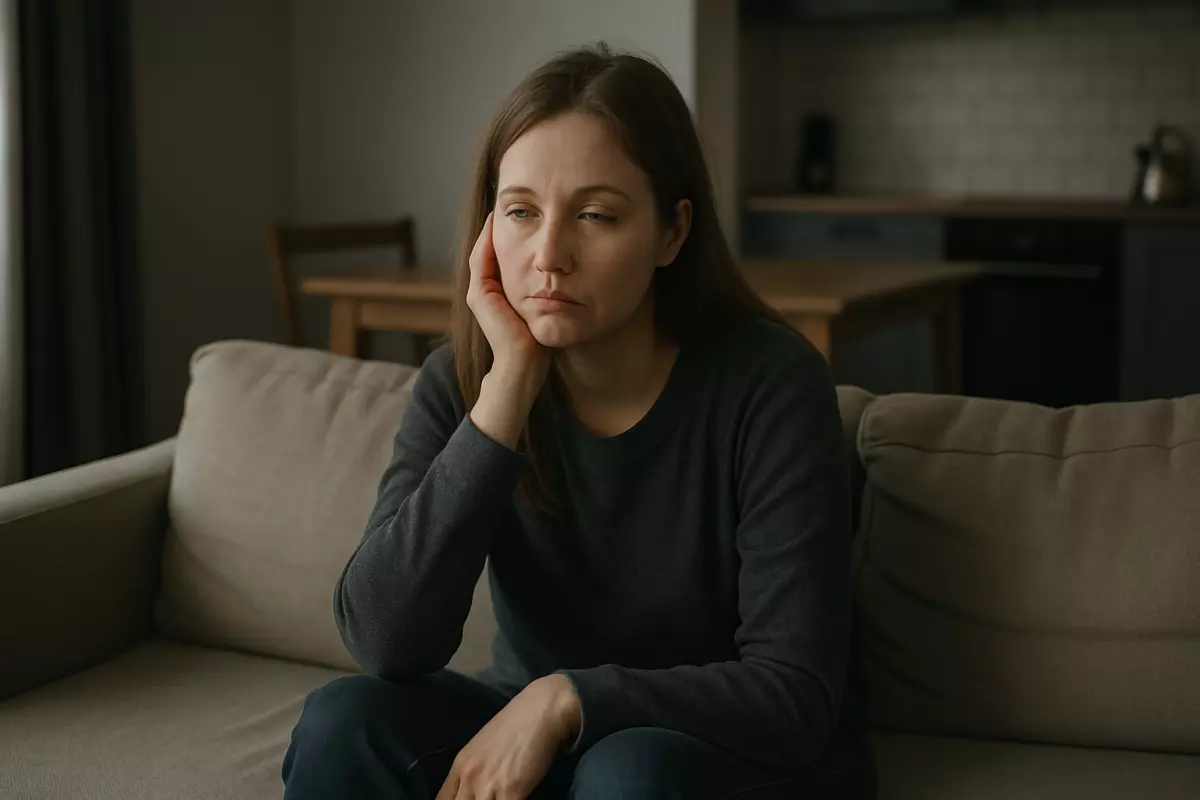 Covers how long-term stress accumulates into emotional overload and a shutdown response, leading to stress fatigue, emotional blunting, and numbness as feelings and emotional contrast fade.
- Cumulative effects of long-term stress
- Emotional overload and shutdown response
- Why feelings fade after constant pressure
- Stress fatigue and emotional blunting
- Loss of emotional contrast over time
- Why numbness replaces strong emotions
- Early signs of stress-related numbness
- Emotional recovery after stress reduction
After months of constant pressure, you may notice your feelings go flat, as if your mind has turned down the volume just to get through the day. This kind of emotional dulling can appear in small moments, like not reacting to good news or feeling distant from people you care about. It is often a signal that you have been carrying too much for too long and need rest, support, and space to recover.
Cumulative effects of long-term stress
When stress stays “on” for weeks or months, the body and mind start treating pressure as the default setting. Instead of returning to a calm baseline after a hard day, you may notice a slow narrowing of emotional range, less curiosity, and more automatic, survival-mode decisions. This can set the stage for emotional numbness because the system learns to conserve energy by dialing down feeling, connection, and reflection.
Over time, prolonged strain often shows up as a pattern: you cope in the moment, but the cost appears later. Sleep becomes lighter, patience runs thinner, and it takes more effort to feel motivated or emotionally present. People may describe it as “running on fumes,” where functioning continues but enjoyment, empathy, and spontaneity fade.
- Reduced emotional responsiveness: reactions feel muted, delayed, or “flat,” especially to events that used to matter.
- More irritability and quicker shutdown: small hassles feel disproportionately draining, leading to snapping, withdrawing, or going silent.
- Decision fatigue: everyday choices (what to eat, how to respond, whether to socialize) start to feel heavy, so you default to the easiest option.
- Lower tolerance for uncertainty: you may seek rigid routines, avoid new tasks, or procrastinate because anything unpredictable feels threatening.
- Social pullback: messages go unanswered, plans get canceled, and conversations feel like work rather than support.
- Physical wear-and-tear: headaches, muscle tension, stomach issues, and frequent minor illnesses can accompany emotional blunting.
- Attention and memory slips: you reread the same paragraph, forget appointments, or lose track mid-conversation.
| What builds up over time | How it often looks day to day | Why it can contribute to numbness |
|---|---|---|
| Chronic hypervigilance | Always scanning for problems, difficulty relaxing even during downtime | Emotions get “turned down” to stay functional while on constant alert |
| Sleep disruption | Waking early, light sleep, feeling unrefreshed | Less capacity for emotional processing makes feelings harder to access |
| Ongoing self-control demands | Holding it together at work, caretaking, masking distress | Energy is spent on managing behavior, leaving less room for emotional experience |
| Repeated disappointment or overload | Lower expectations, “why bother” thinking, reduced initiative | Detachment becomes a protective habit against more frustration or hurt |
| Decreased rewarding activities | Less exercise, hobbies, play, or meaningful connection | Fewer positive cues reach the brain, so pleasure and interest fade |
A common cycle is that stress narrows options: you do less of what restores you, which makes you feel even more depleted, which then reinforces emotional shutdown. In this state, people often rely on short-term relief (scrolling, overeating, overworking, alcohol, constant distractions) that reduces discomfort briefly but can deepen disconnection over time.
Not everyone experiences these changes the same way. Some become outwardly productive but inwardly detached; others feel “foggy” and slow. In both cases, the underlying pattern is similar: long-running pressure trains the nervous system to prioritize getting through the day over fully feeling it.
Emotional overload and shutdown response

When stress keeps piling up without enough recovery, the mind can switch from “trying to cope” to “going quiet.” Instead of feeling more, a person may feel less: emotions flatten, motivation drops, and reactions become muted. This can look like calm on the outside, but it is often a protective slowdown that reduces input when everything feels like too much.
This shutdown pattern usually builds over time. Early on, people may feel on edge, irritable, or constantly alert. If the pressure continues, the body and brain may conserve energy by turning down emotional intensity, narrowing attention, and avoiding anything that could trigger another surge of overwhelm.
- Reduced emotional range: fewer highs and lows, less excitement, less sadness, and a sense of “nothing really lands.”
- Delayed reactions: needing extra time to process news, decisions, or conflict, or responding with “I don’t know” more often.
- Withdrawal and avoidance: skipping social plans, ignoring messages, or keeping conversations surface-level to prevent overload.
- Autopilot behavior: doing required tasks mechanically while feeling disconnected from purpose or satisfaction.
- Lower tolerance for stimulation: noise, clutter, multitasking, or emotional conversations can feel unusually exhausting.
- Physical “freeze” signs: heaviness in the body, slowed speech, blank mind, or difficulty initiating simple steps.
In everyday life, this can be confusing for others because the person may still show up to work, handle chores, or care for others, yet seem distant or indifferent. Internally, it often feels like running out of emotional bandwidth. Rather than choosing not to care, the system is limiting what it can take in.
| What it can look like | What may be happening underneath |
|---|---|
| “I’m fine” said with a flat tone | Emotional blunting to prevent another spike of distress |
| Going quiet during conflict | Overwhelm leading to a freeze response and reduced verbal access |
| Canceling plans or not replying | Avoidance to limit stimulation and conserve energy |
| Doing only the basics (work, eat, sleep) and little else | Narrowed focus on survival tasks when capacity is low |
It also tends to be inconsistent. A person may seem engaged in a structured setting, then crash afterward, or appear detached at home but “perform” in public. This is common when energy is being rationed: the system prioritizes what feels necessary and shuts down the rest.
Over time, this pattern can reinforce emotional numbness after prolonged psychological stress. Because feelings are dampened, it becomes harder to use emotions as signals for needs, boundaries, and recovery, which can keep the cycle going until rest, safety, and manageable demands return.
Why feelings fade after constant pressure
When stress stays high for a long time, the mind often shifts from “feeling and reacting” to “getting through the day.” This can look like emotional flatness, reduced excitement, or a sense of being disconnected from what would normally matter. It is less about not caring and more about the brain conserving energy when it expects more demands than relief.
Ongoing pressure keeps the body’s threat system switched on. Over time, that system can crowd out softer emotions like curiosity, joy, or tenderness because attention is repeatedly pulled toward what could go wrong. Many people notice they can still function at work or at home, but their inner experience becomes muted, as if feelings are turned down to a low volume.
- Protective shutdown: When emotions have repeatedly led to conflict, disappointment, or overwhelm, “numbing out” can become a protective habit. The nervous system learns that less feeling means less pain, even if it also reduces pleasure.
- Decision fatigue and overload: Constant problem-solving uses mental bandwidth. With fewer resources left, the brain prioritizes essentials (tasks, safety, basic routines) and deprioritizes emotional processing, which can feel like emptiness or indifference.
- Loss of recovery time: Without breaks, sleep, or moments of safety, the system never fully resets. Instead of swinging between stress and rest, life becomes one long “on” state, and emotions can flatten into a steady, dull baseline.
- Emotions get postponed: People often delay feelings to stay productive: “I’ll deal with this later.” If “later” never comes, the habit of postponing can become automatic, and it may start to feel like there is nothing there to process.
- Reduced reward response: Chronic strain can make enjoyable activities feel less rewarding. Hobbies, social time, and small wins may stop producing the usual lift, which reinforces withdrawal and further blunting.
- Learned helplessness patterns: When efforts don’t change outcomes for a long time, motivation can drop. Emotional numbness may follow because hope, disappointment, and anticipation all require a sense that actions matter.
| Common pressure pattern | What it can look like emotionally | Typical day-to-day behavior |
|---|---|---|
| High demands with little control | Resignation, flat mood, reduced anger | Doing only what is necessary, avoiding extra responsibilities |
| Conflict or criticism that feels inescapable | Emotional “freeze,” less warmth | Short answers, keeping conversations practical, staying busy to avoid topics |
| Constant uncertainty (waiting for news, outcomes, decisions) | Low excitement, muted relief | Checking, overplanning, difficulty enjoying downtime |
| Caregiving or responsibility without support | Compassion fatigue, reduced tenderness | Going through routines, feeling distant even while being reliable |
This fading of emotional intensity often happens gradually, so it can be mistaken for a personality change. In reality, it is frequently a stress adaptation: the system narrows focus to survival and efficiency. The more constant the pressure, the more likely emotions are to become simplified into “fine,” “tired,” or “nothing,” because complex feelings require time, safety, and mental space to register.
Stress fatigue and emotional blunting
When stress runs for weeks or months, the nervous system can shift into a “conserve and cope” mode. Instead of feeling a full range of emotions, people may notice a flatter inner experience, fewer spontaneous reactions, and a sense of running on autopilot. This is often less about not caring and more about the mind reducing intensity to stay functional.
Chronic pressure keeps the body’s threat system active: sleep gets lighter, attention stays on potential problems, and the brain prioritizes immediate demands over reflection or pleasure. Over time, emotional signals can start to feel muted because constantly responding at full volume would be exhausting. Many people describe it as being mentally tired, socially “checked out,” or unable to access excitement even when something good happens.
- Reduced positive feelings: hobbies feel less rewarding, compliments land “flat,” and anticipation is harder to feel.
- Lower emotional reactivity: situations that used to trigger anger, joy, or sadness now produce a smaller response.
- Decision fatigue: even small choices feel draining, leading to defaulting to routines or avoiding decisions.
- Social withdrawal: replying less, canceling plans, or feeling like conversation takes too much energy.
- More “functional” behavior: getting tasks done while feeling detached from the meaning of them.
- Physical tiredness with a wired edge: exhaustion mixed with restlessness, especially after prolonged worry.
A common pattern is a cycle: stress increases, energy drops, emotions dull, and then people may push harder to compensate. That extra effort can deepen fatigue, making emotional shutdown more likely. Because the change is gradual, it can be mistaken for a personality shift rather than a stress response.
| What it looks like day to day | What may be happening underneath |
|---|---|
| “I’m not upset, I’m just blank.” | Protective dampening of feelings to avoid overload. |
| Enjoyable activities feel like chores. | Reward system is underpowered after long periods of strain. |
| More irritation over small things, but less sadness or joy. | Stress narrows emotions toward quick, defensive reactions. |
| Going through the motions at work or home. | Energy is prioritized for basic functioning, not emotional processing. |
| Difficulty connecting during conversations. | Attention is stuck on monitoring problems, leaving less capacity for empathy and nuance. |
Emotional blunting from stress fatigue often shows up most clearly during downtime. When the schedule finally quiets, instead of relief there may be emptiness or numbness, because the system has not yet shifted back into a calmer state. Noticing this pattern can help distinguish it from indifference: the person may still value relationships and goals, but feel temporarily disconnected from the feelings that normally accompany them.
Loss of emotional contrast over time

After months of high stress, feelings can start to blend together. Instead of clear shifts between interest and boredom, joy and disappointment, or calm and worry, the inner “volume” stays stuck in a narrow range. People often describe it as going through the day on autopilot: not exactly sad, but not genuinely moved either.
This flattening usually develops gradually. When the nervous system spends a long time in threat-management mode, it may downshift emotional intensity to conserve energy and reduce overwhelm. The trade-off is that positive moments can feel muted, and negative moments may feel less sharp but more persistent, like a low-grade background hum.
- Good news lands quietly: compliments, achievements, or fun plans register intellectually, but the lift is brief or absent.
- Bad news feels oddly distant: upsetting events may trigger problem-solving, but not the expected emotional punch.
- Fewer “peaks and dips”: days feel similar even when circumstances change, making time blur together.
- Reduced anticipation: looking forward to things is harder, so motivation relies more on duty than desire.
- Less emotional feedback: it becomes harder to tell what is wanted, what is too much, or what needs to change.
- Social reactions may look mismatched: laughing later than others, reacting “politely,” or seeming indifferent when something is meaningful.
In everyday behavior, this can show up as choosing safe, predictable routines over new experiences, because novelty doesn’t feel rewarding enough to justify the effort. People may still function at work or at home, but decisions become more mechanical: picking what is practical rather than what feels fulfilling. Over time, this narrowed emotional range can also affect relationships, since warmth, excitement, and empathy cues may be harder to access on demand.
It can help to think of emotional contrast like color saturation. Under prolonged strain, the mind may turn the saturation down to avoid overload. That protective adjustment can be useful in the short term, but when it becomes the default setting, life can feel gray even when nothing is “wrong” on the surface.
Why numbness replaces strong emotions
After long periods of psychological strain, the mind often shifts into a lower-intensity mode. Instead of feeling sadness, fear, anger, or joy in full color, emotions can become muted, distant, or hard to access. This isn’t usually a conscious choice; it’s a pattern that can develop when the nervous system has been running “on high” for too long and starts prioritizing basic functioning over emotional depth.
One everyday way this shows up is a sense of operating on autopilot. People may still do what needs to be done at work or at home, but they feel detached from what they’re doing. The body can remain tense or alert, yet the emotional response that would normally match a situation feels blunted. Over time, this can look like “not caring,” when it is often closer to emotional overload management.
- Protection from overwhelm: When feelings repeatedly spike without relief, dampening them can reduce the immediate sense of being flooded. Numbness can act like a temporary volume limiter.
- Energy conservation: Strong emotions take mental and physical energy. Under prolonged stress, the system may conserve resources by narrowing the range of feelings and focusing on getting through the day.
- Habituation to constant threat: If stress becomes the baseline, the brain can treat high arousal as “normal.” Emotional reactions may flatten because the system stops responding to each new trigger with the same intensity.
- Disconnection between body signals and meaning: People may notice physical sensations (tight chest, fatigue, restlessness) but struggle to label them as specific emotions. This can make feelings seem absent even when the body is still reacting.
- Learned suppression: In environments where expressing feelings led to conflict, punishment, or extra demands, shutting down emotionally can become a practiced habit that persists even when circumstances change.
Numbing is also shaped by typical behavior patterns. Many people reduce activities that normally bring emotion to the surface, such as socializing, hobbies, music, or reflective downtime. Avoidance can be subtle: keeping busy, scrolling, working late, or staying “productive” so there is less space to feel. The result is a cycle where fewer emotional inputs and more self-protection lead to even less emotional clarity.
It can help to think of this state as a shift in priorities rather than a personality change. When the system is focused on safety and endurance, it may trade emotional intensity for stability. That trade can be useful in the short term, but if it becomes the default, it can interfere with connection, decision-making, and the ability to recognize what you need.
| Common situation | Typical emotional response | How numbness may show up |
|---|---|---|
| Conflict at home or work | Anger, hurt, urgency to resolve | Flat tone, “whatever” reactions, delayed processing after the event |
| Good news or achievement | Pride, excitement, relief | Brief acknowledgment without pleasure, difficulty celebrating |
| Loss, disappointment, or rejection | Sadness, grief, longing | Feeling empty or “fine,” then sudden emotion later in private |
| Time off or quiet moments | Relaxation, curiosity, enjoyment | Restlessness, boredom, or the urge to stay busy to avoid feelings |
Because emotional shutdown is often a response to prolonged pressure, it may lift gradually as stressors decrease and the nervous system has repeated experiences of safety, rest, and predictable support. Until then, numbness can be the mind’s way of keeping life manageable when strong feelings have started to feel unmanageable.
Early signs of stress-related numbness
Emotional shut-down often builds gradually after weeks or months of strain. Instead of feeling “nothing” all at once, many people notice their reactions getting smaller, slower, or harder to access in everyday situations. The change can show up at home, at work, and in close relationships, especially when stress has become constant and recovery time is limited.
These patterns can look like calm on the outside while the inside feels flat, distant, or on autopilot. They may also alternate with brief spikes of irritability or anxiety, followed by a return to emotional dullness.
- Reduced emotional range: Positive events feel muted (less excitement, pride, or joy), and difficult events feel oddly far away rather than clearly sad or upsetting.
- Delayed reactions: Feelings arrive hours or days later, or only show up when the pressure drops (for example, after a deadline passes).
- Going through the motions: Daily tasks get done, but with little sense of meaning, satisfaction, or connection to the outcome.
- Social withdrawal that feels “practical”: Skipping calls, canceling plans, or keeping conversations surface-level because it takes too much energy to engage.
- Less empathy or patience than usual: Other people’s problems register intellectually, but the emotional response is faint, forced, or absent.
- Difficulty naming feelings: When asked how things are going, answers default to “fine,” “busy,” or “tired,” with trouble identifying anything more specific.
- Loss of interest in previously enjoyable activities: Hobbies, music, food, or intimacy feel bland, like the “volume” has been turned down.
- Increased irritability and short fuse: Small hassles trigger sharp reactions, followed by a quick return to numbness or detachment.
- More screen time or busywork as a buffer: Scrolling, gaming, constant chores, or extra work becomes a way to avoid quiet moments where feelings might surface.
- Physical signs that don’t match the emotional flatness: Tight jaw, headaches, stomach upset, shallow breathing, or poor sleep even though emotions feel distant.
- “Foggy” thinking and indecision: Choices feel strangely hard, motivation drops, and concentration slips, especially when decisions involve personal needs.
- Changes in self-talk: More statements like “It doesn’t matter,” “I don’t care,” or “Just get through it,” which can signal emotional protection rather than true indifference.
In many cases, stress-related numbness is not a lack of caring; it is a sign the nervous system is conserving resources. When this pattern persists, it can start to affect relationships, work performance, and self-care because emotional signals that normally guide priorities become harder to read.
Emotional recovery after stress reduction
When ongoing pressure eases, feelings often return in a gradual, uneven way rather than all at once. Many people notice a “thawing” period: emotions start to register again, but they may feel unfamiliar, delayed, or surprisingly intense. This is a common pattern after long stretches of coping on autopilot, when the mind has been prioritizing getting through the day over fully processing experiences.
Early changes can be subtle. Instead of suddenly feeling joyful or deeply connected, a person might first notice small signs like being more easily moved by music, feeling irritation more clearly, or having stronger preferences about what they want and don’t want. These shifts can be a sign that the nervous system is no longer stuck in constant threat-management mode.
- Emotions return in layers. “Louder” feelings like anger, anxiety, or sadness may show up before softer feelings like warmth, curiosity, or affection.
- Timing can be delayed. A reaction may come hours or days after an event, especially when someone is used to staying functional in the moment and processing later.
- Intensity may feel out of proportion. Crying over a small disappointment or feeling unexpectedly overwhelmed can happen as emotional bandwidth comes back online.
- Body signals often lead the way. Appetite, sleepiness, tension, or a sense of relief can shift before a person can name what they feel.
- Connection can feel awkward at first. Re-engaging socially may bring both desire for closeness and a pull to withdraw, sometimes in the same day.
It also helps to expect some back-and-forth. A calmer week can make someone feel more present, followed by a day of flatness if demands spike again or sleep drops. This doesn’t necessarily mean progress is lost; it often reflects a system that is still learning what “safe enough” feels like.
| What you might notice | What it often means in everyday terms | Common, practical response |
|---|---|---|
| More irritability or impatience | Protective energy is returning; boundaries feel more relevant | Reduce overload, name the trigger, take short breaks before reacting |
| Sudden tearfulness | Suppressed feelings are getting room to surface | Allow a few minutes to feel it, then ground with routine (water, walk, shower) |
| Feeling “too sensitive” to noise, conflict, or crowds | Stress tolerance is rebuilding, not fully restored yet | Choose lower-stimulation options and increase exposure gradually |
| Moments of enjoyment that fade quickly | Pleasure systems are reactivating in short bursts | Repeat small positive activities; consistency matters more than intensity |
| Stronger need for sleep or solitude | Recovery requires repair time after prolonged strain | Protect rest, simplify schedules, and avoid stacking major decisions |
As emotional responsiveness returns, typical behavior patterns change too. People often start making clearer choices, noticing what drains them, and seeking comfort in more direct ways. They may also revisit memories or unresolved conflicts that were “on hold” during the high-stress period. That can feel inconvenient, but it’s often part of normal processing when there is finally enough mental space.
If the return of feelings is distressing, the most helpful approach is usually steady and basic: regular sleep, predictable meals, movement, and manageable social contact. These supports reduce spikes and crashes, making it easier to recognize emotions as signals rather than emergencies. Over time, the goal is not constant happiness, but a wider, more flexible range of feeling—where numbness is less frequent and emotions are easier to understand and respond to.