Why Mental Drain Can Lead to Emotional Numbness

 The article describes how mental drain feels emotionally, why prolonged effort and multitasking can dull reactions, and how failed stress recovery leads to emotional blunting.
- What mental drain feels like emotionally
- Why prolonged effort dulls emotional reactions
- Stress recovery failure and emotional blunting
- Difference between physical tiredness and mental drain
- How multitasking accelerates emotional shutdown
- Emotional numbness as a conservation response
- Practical ways to reduce mental drain
- When emotional numbness signals overload
When your mind stays stretched too thin for too long, your emotions can start to fade, leaving you feeling strangely flat or distant. Constant demands, nonstop decisions, and too little time to recover can quietly push you into a kind of protective shutdown. It often creeps in unnoticed, showing up as numbness, low motivation, or a sense that you are just going through the motions.
What mental drain feels like emotionally
When your mind is running on empty, emotions often get quieter, flatter, or harder to access. It may not feel like sadness or anxiety in a clear way. Instead, the internal “volume” drops: reactions slow down, caring takes more effort, and even positive moments can land with a dull thud.
This kind of emotional fatigue can look confusing from the outside because it doesn’t always come with obvious distress. A person might still show up to work, answer messages, and handle basic tasks, but feel oddly disconnected while doing it. The gap between what’s happening and what you feel about it is a common early sign.
- Muted reactions: Good news, jokes, or compliments register intellectually, but the emotional spark is faint or delayed.
- Irritability over small things: Minor inconveniences feel disproportionately annoying because there’s less mental energy for patience and perspective.
- Low motivation to engage: Social plans, hobbies, or conversation can feel like “too much,” even if they’re normally enjoyable.
- Emotional “blankness”: Instead of feeling upset, you may feel nothing in particular, or a vague sense of emptiness.
- Reduced empathy bandwidth: You may care about others but struggle to respond warmly, listen deeply, or offer comfort.
- Decision fatigue that turns emotional: Choosing what to eat, what to wear, or how to reply can trigger frustration, shutdown, or avoidance.
- More zoning out: Scrolling, staring, or getting lost in repetitive tasks can become a default because it demands less emotional processing.
Behaviorally, mental exhaustion often pushes people toward “safe” emotional settings: neutral, controlled, and low intensity. You might keep conversations practical, avoid topics that require vulnerability, or feel a strong urge to be left alone. This isn’t necessarily intentional withdrawal; it’s often a way to conserve remaining energy.
Over time, this pattern can resemble emotional numbness. Feelings aren’t gone, but they’re harder to reach because the brain prioritizes getting through the day over fully processing experiences. That’s why someone can seem fine on the surface while privately feeling detached, foggy, or emotionally switched off.
Why prolonged effort dulls emotional reactions
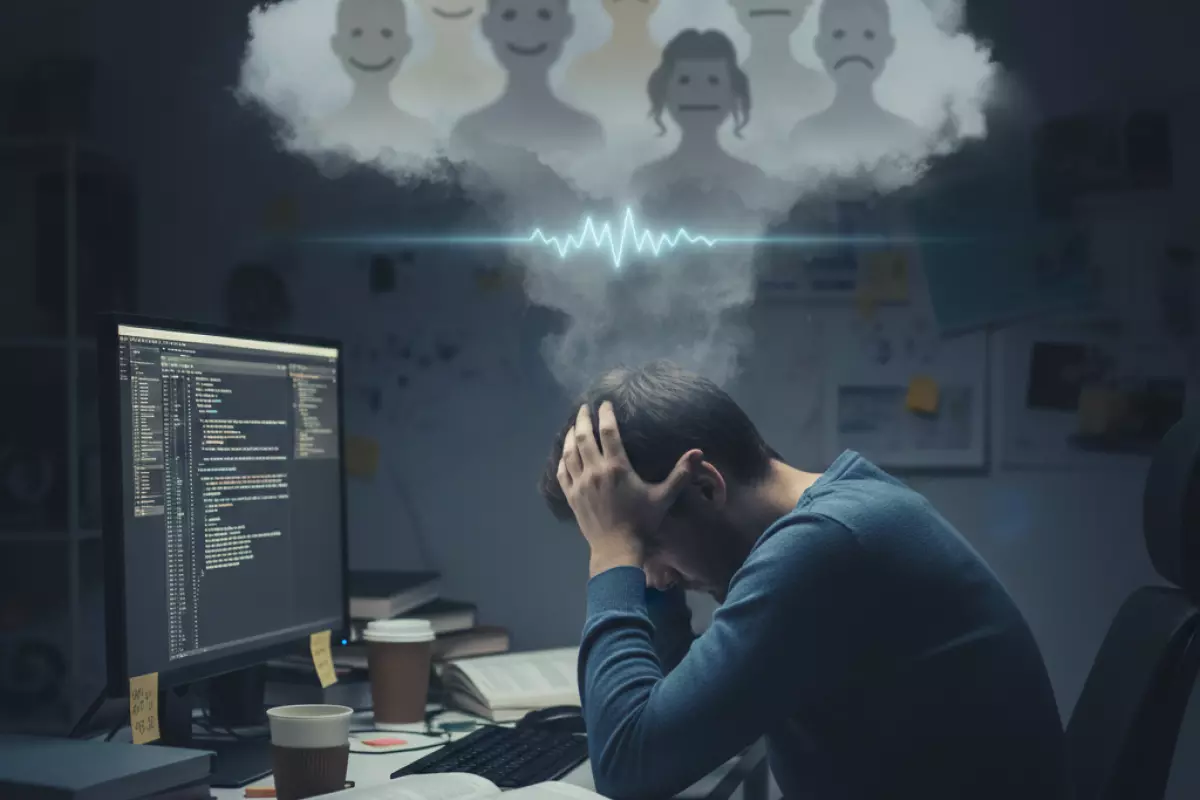
When the mind stays “on” for hours, it often shifts into a conservation mode. Attention, self-control, and decision-making use the same limited mental resources that also help people notice feelings, label them, and respond with nuance. As those resources thin out, emotions may still be present, but they register more faintly and feel harder to access.
This muted response is common after long stretches of work, studying, caregiving, or constant problem-solving. Instead of feeling clearly happy, sad, or excited, people may describe feeling flat, detached, or “not really reacting” to things that would normally matter. It can look like calm on the outside, but internally it’s often a sign of overload rather than peace.
- Attention narrows to the task and away from feelings. Prolonged focus trains the brain to prioritize what’s urgent and measurable. Subtle emotional cues—tone of voice, body sensations, small shifts in mood—get filtered out as “nonessential.”
- Decision fatigue reduces emotional range. After making many choices, people tend to default to simple, low-effort responses. That can mean fewer spontaneous reactions, less curiosity, and more “whatever” or “I don’t care” feelings.
- Stress chemistry can blunt pleasure and connection. Long effort often comes with sustained stress. When the body stays activated, it may dampen reward sensitivity, making positive events feel less satisfying and social interaction feel like work.
- Emotional processing gets postponed. During demanding periods, it’s common to delay feelings to keep functioning. Over time, postponement can become a habit, and the emotional system stays in standby even when the pressure eases.
- Reduced interoception makes emotions harder to “read.” Tired brains pay less attention to internal signals like hunger, tension, or a racing heart. Since emotions are partly built from these body cues, the experience can become vague or numb.
- Protective detachment becomes the default. When there’s too much to handle, emotional distance can act like a buffer. It prevents overwhelm in the short term, but it also lowers responsiveness to both negative and positive moments.
In everyday behavior, this often shows up as slower replies, less facial expression, fewer laughs, and a preference for low-stimulation activities. People may stop initiating plans, avoid emotionally loaded conversations, or feel oddly indifferent to good news and bad news alike.
It’s also why rest doesn’t always bring feelings back immediately. After sustained mental drain, the nervous system may need time to shift out of “get through it” mode before emotional reactions return to their usual intensity.
Stress recovery failure and emotional blunting
When the body and mind don’t fully “come down” after pressure, emotions can start to feel muted. Instead of returning to a steady baseline after a tough day, the nervous system stays in a semi-alert state. Over time, this can make feelings harder to access, not because emotions disappear, but because the system prioritizes getting through the day over processing what’s happening.
A common pattern is that stress becomes continuous rather than occasional: unfinished tasks, constant notifications, irregular sleep, and little true downtime. If recovery is repeatedly delayed, the brain may reduce emotional responsiveness as a protective shortcut. This can look like calmness on the outside, but internally it often feels like flatness, detachment, or a lack of motivation.
- Short recovery windows: Breaks exist, but they’re filled with more input (scrolling, messages, errands). The mind doesn’t get the quiet it needs to reset.
- Sleep that doesn’t restore: Even with enough hours, stress can keep sleep lighter, more fragmented, or less refreshing, which lowers emotional bandwidth the next day.
- “Functional mode” taking over: People may focus on completing essentials while postponing feelings, leading to a sense of going through the motions.
- Reduced reward response: Activities that used to feel enjoyable can feel neutral, as if the “signal” of pleasure is turned down.
- Lower tolerance for extra demands: Minor problems feel oddly overwhelming, while bigger events may trigger surprisingly little emotion.
Everyday behavior often shifts in subtle ways. Someone might answer with shorter replies, avoid making plans, or stop initiating contact because social interaction requires emotional energy. Others may keep busy to prevent a crash, filling any open time with chores or screens because stillness makes the exhaustion more noticeable.
| What recovery looks like | What it can look like when recovery keeps failing | How it may feel day to day |
|---|---|---|
| Stress rises, then settles after rest | Stress stays elevated across days | “I’m not upset, but I’m not really okay either.” |
| Sleep restores energy and mood | Sleep happens, but doesn’t refresh | Foggy, irritable, or emotionally flat in the morning |
| Enjoyment returns during downtime | Downtime feels empty or restless | Hobbies feel like effort, not relief |
| Emotions match the situation | Reactions feel delayed, muted, or absent | Knowing something matters, but not feeling it |
| Connection feels energizing | Social contact feels draining | Pulling back, cancelling plans, or “checking out” in conversations |
This kind of emotional dulling can be confusing because it may alternate with spikes of anxiety, anger, or tears when the system finally overloads. The numbness isn’t necessarily a sign of not caring; more often it reflects a mind that hasn’t had enough recovery time to process feelings safely and fully.
Difference between physical tiredness and mental drain
Body fatigue usually comes from using muscles and energy, while cognitive exhaustion comes from sustained attention, decision-making, and emotional effort. Both can feel like “being worn out,” but they tend to show up in different habits, different triggers, and different kinds of relief.
Physical exhaustion is often easier to spot because it follows a clear cause-and-effect pattern: you exert yourself, then you need rest. Mental strain can build quietly during normal days filled with notifications, multitasking, problem-solving, and social demands, even if you have not done anything physically demanding.
| What it looks like | Physical tiredness | Mental drain |
|---|---|---|
| Main source | Muscle use, poor sleep, illness, long hours on your feet | Overthinking, constant decisions, emotional labor, information overload |
| Common sensations | Heavy limbs, soreness, low stamina, wanting to sit or lie down | Foggy thinking, irritability, feeling “full” or overloaded, trouble focusing |
| Typical behavior patterns | Moving slower, skipping workouts, needing naps, craving physical comfort | Procrastinating, scrolling without interest, avoiding messages, zoning out in conversations |
| How it affects emotions | Emotions may be intact but patience is lower | Feelings can flatten; reactions become muted or delayed, which can set the stage for emotional numbness |
| What helps most | Sleep, hydration, nutrition, stretching, lighter physical load | Reducing input, taking real breaks, simplifying decisions, quiet time, boundaries with demands |
| How quickly it improves | Often improves after a good night’s sleep or a rest day | May linger even after sleep if the mental load stays high |
A useful rule of thumb is to notice what you reach for when you are depleted. When the body is tired, rest and basic care tend to restore you. When the mind is overworked, you may rest physically but still feel “not recovered” because the pressure to process, plan, or respond is still running in the background.
Because mental fatigue can dull emotional responsiveness, people sometimes mistake it for a personality change or a lack of caring. In reality, it is often a sign that your attention and coping resources are maxed out, and your system is shifting into a low-reactivity mode to conserve energy.
How multitasking accelerates emotional shutdown

Constant task-switching pushes the brain into a “manage and move on” mode. When attention is repeatedly pulled between messages, tabs, errands, and conversations, mental resources get spent on tracking what’s next rather than noticing what’s felt. Over time, this can make emotions seem muted or distant, not because feelings disappear, but because there’s less bandwidth to register them in real time.
Multitasking also creates a steady stream of micro-stress. Each interruption adds a small demand: reorient, remember, decide, respond. Those quick spikes can keep the body in a low-grade alert state, which often prioritizes efficiency and problem-solving over emotional processing. The result is a pattern where people function and complete tasks while feeling oddly disconnected from their own reactions.
- Shallow attention reduces emotional detail. Feelings are often subtle signals that need a moment of focus to become clear. When attention is split, emotions may register only as vague irritability, restlessness, or “nothing in particular.”
- Frequent context switching increases cognitive load. Holding multiple threads in mind (what you were doing, what interrupted you, what you must do next) uses working memory. With that capacity tied up, there’s less room to reflect on meaning, needs, or boundaries.
- Interruptions train avoidance by default. If every uncomfortable moment is quickly replaced by a new task or notification, the brain learns that distraction is the fastest relief. This can look like emotional numbing, because feelings are repeatedly cut off before they fully form.
- Performance mode becomes the norm. Juggling tasks encourages a “just get through it” mindset. In that state, people may ignore hunger, fatigue, or disappointment until they feel flat, detached, or suddenly overwhelmed.
- Reduced recovery time blocks processing. Emotional digestion often happens in pauses: commuting without a screen, finishing one task before starting another, quiet moments after a tense interaction. When pauses vanish, emotions have fewer chances to settle and integrate.
| Common multitasking pattern | What it does to attention | How it can show up emotionally |
|---|---|---|
| Checking notifications while working | Breaks focus into short fragments | Feeling “blank,” impatient, or unable to care much |
| Switching between chats, email, and tasks | Keeps the brain in constant reorientation | Reduced empathy, less patience, emotional dullness |
| Listening while planning what to say next | Divides attention between input and rehearsal | Disconnected conversations, delayed emotional reactions |
| Filling every pause with scrolling | Eliminates quiet moments for reflection | Harder to identify feelings; more numbness over time |
A key sign is when emotions arrive late. Someone might stay composed during a stressful day of rapid switching, then feel nothing at dinner, and only later experience a wave of sadness, anger, or exhaustion. That delay often reflects limited processing time, not a lack of emotional capacity.
Because multitasking is socially rewarded, the shutdown can look like “being productive.” But when attention is constantly divided, the inner signals that guide rest, connection, and self-protection are easier to miss. That’s how a busy routine can gradually shift from simple distraction into a more persistent sense of emotional numbness.
Emotional numbness as a conservation response
When mental energy is consistently overdrawn, the brain often shifts into a low-power mode. Instead of processing every feeling in full detail, it narrows what gets through. This can look like “not feeling much,” but it’s frequently a practical way to reduce internal load when there isn’t enough capacity left for strong reactions.
This shutdown pattern is less about not caring and more about conserving resources. Emotions take work: noticing them, interpreting them, deciding what they mean, and choosing how to respond. Under chronic stress, sleep loss, decision fatigue, or nonstop demands, the nervous system may dampen emotional signals so you can keep functioning in basic ways.
- Attention gets rationed. You may focus on tasks, logistics, or urgent problems while feelings become background noise.
- Motivation flattens. Activities that used to feel rewarding can feel neutral, because the “reward” system is running on reduced output.
- Reactivity drops. Good news and bad news can land with the same muted impact, since strong swings require more processing.
- Social energy declines. Conversations may feel effortful, leading to shorter replies, less eye contact, or a preference for being alone.
- Body cues get quieter or louder. Some people feel disconnected from sensations; others notice more headaches, stomach tension, or fatigue as emotions show up physically.
In everyday behavior, this can show up as going “on autopilot.” You might complete work, errands, or caregiving responsibilities while feeling oddly detached, as if you’re watching yourself do it. Small choices become harder, and you may default to routines because they demand less mental effort than weighing preferences and feelings.
This conserving response can also affect relationships. People may interpret a flat tone or limited enthusiasm as disinterest, even when the underlying issue is depletion. You might still care deeply, but have less emotional bandwidth to express warmth, curiosity, or empathy in the moment.
It’s also common for the numbness to be selective. Strong feelings can be muted during the day to keep you functioning, then break through later as irritability, tearfulness, restlessness, or a sudden urge to withdraw. That rebound effect often reflects delayed processing rather than a change in values or personality.
Viewed this way, emotional blunting is a signal that the system is trying to protect itself from overload. The practical takeaway is that restoring capacity (sleep, reduced demands, predictable breaks, supportive connection) often helps feelings return gradually, rather than forcing emotional intensity on an already drained mind.
Practical ways to reduce mental drain
Lowering cognitive overload usually starts with spotting where attention is being “leaked” throughout the day: constant switching, unclear priorities, and unfinished tasks that keep the brain on alert. The goal is to make daily demands more predictable, reduce unnecessary decisions, and build short recovery moments so emotions don’t get flattened by sheer fatigue.
- Do a quick “open loops” sweep. Write down unresolved tasks, worries, and reminders in one place. Mental drain often comes from trying to hold everything in working memory. A short capture habit (notes app or paper) reduces background tension.
- Use a single next step. When something feels heavy, define the next physical action (email one person, open the document, pay one bill). Clear next steps reduce the mental load created by vague, sprawling problems.
- Batch similar tasks to cut context switching. Group messages, calls, errands, or admin work into set windows. Rapid switching is a common pattern behind feeling “fried” even on days without major events.
- Set “good enough” rules for low-stakes work. Decide in advance what acceptable looks like (for example: a 20-minute tidy, a simple meal, a short reply). Perfectionism multiplies effort and can quietly push people toward emotional shutdown.
- Build tiny recovery breaks that actually reset attention. Two to five minutes of standing up, stretching, slow breathing, or looking outside helps more than scrolling. The key is choosing a pause that reduces stimulation rather than adding it.
- Reduce decision fatigue with defaults. Repeating choices (breakfast options, a standard work start routine, a fixed gym day) frees up bandwidth for situations that truly require judgment.
- Create boundaries for notifications. Turn off nonessential alerts and check messages at planned times. Frequent pings keep the nervous system in a “ready” state, which can make feelings feel muted over time.
- Use a simple end-of-day shutdown. Spend 5 minutes listing what’s done, what’s next, and when you’ll handle it. This lowers the chance of rumination later, which is a major contributor to next-day exhaustion.
It also helps to match the strategy to the most common source of depletion. The same symptom (feeling numb or detached) can come from different patterns, like overcommitment, constant interruption, or lack of recovery.
| Common drain pattern | What it looks like day to day | Simple adjustment to try |
|---|---|---|
| Too many simultaneous priorities | Everything feels urgent; attention is scattered; progress feels invisible | Pick 1–3 “must-do” items for the day and park the rest on a list |
| Constant interruptions | Frequent checking; difficulty focusing; irritability or blankness later | Use timed focus blocks and check messages only at set intervals |
| Unclear expectations | Second-guessing; rework; worry about missing something | Clarify the definition of done before starting (scope, deadline, quality) |
| Too little real recovery | “Resting” but still stimulated; sleep feels unrefreshing | Swap one scrolling break for a low-input reset (walk, stretch, quiet) |
| Emotional overexposure | Absorbing others’ stress; feeling responsible for everyone’s mood | Limit intense conversations when depleted; schedule them when rested |
When mental energy is consistently protected, emotional responsiveness often returns gradually. Instead of forcing feelings to come back, these steps focus on reducing the ongoing strain that can push the mind into a numb, “power-saving” mode.
When emotional numbness signals overload
Emotional flatness can be the mind’s way of reducing input when life feels like too much to process. Instead of reacting normally, feelings get “turned down” so a person can keep functioning through deadlines, conflict, constant notifications, or ongoing worry. This isn’t always a conscious choice; it often shows up as a gradual shift where reactions become muted and motivation feels mechanical.
In everyday behavior, this kind of shutdown tends to appear after long periods of mental drain: too many decisions, not enough rest, or stress that never fully resolves. The nervous system prioritizes getting through the day over fully experiencing it, which can make joy, sadness, and even irritation feel distant or delayed.
- Emotions feel far away or delayed. Something that “should” feel exciting or upsetting barely registers, or the reaction shows up hours later when the pressure drops.
- Automatic, task-only mode. People may complete chores and work tasks efficiently but feel disconnected from why they’re doing them.
- Reduced empathy bandwidth. Caring is still there, but responding to others’ feelings can feel effortful, leading to shorter replies or avoidance.
- Less interest in hobbies and comfort routines. Activities that usually recharge—music, exercise, cooking, social time—start to feel like extra work.
- More “checking out” behaviors. Scrolling, binge-watching, snacking, or staying busy can become ways to avoid additional emotional input.
- Physical signals of strain. Tension, headaches, stomach upset, sleep changes, or a heavy, foggy feeling can accompany emotional blunting.
It can help to distinguish emotional numbness from simple calm. Calm usually comes with clarity and choice: a person can still access feelings when needed. Overload-related detachment is more rigid—there’s a sense of being stuck on low volume, even in situations that normally matter.
| What it can look like | What it often means in daily life |
|---|---|
| “I don’t feel much about anything lately.” | Emotional systems may be conserving energy after prolonged stress or decision fatigue. |
| Going through the motions at work or home | Functioning is prioritized over processing; feelings may be postponed to “later.” |
| Getting irritated by small requests | Bandwidth is low; even minor demands can feel like one more thing to manage. |
| Wanting to be alone more than usual | Social interaction can feel like additional input when the mind is already saturated. |
| Not enjoying things that are normally enjoyable | Reward and motivation signals can dull when the body is in sustained “push through” mode. |
Because this pattern often builds quietly, it’s easy to misread it as laziness, indifference, or a personality change. More often, it reflects an overloaded system trying to protect itself from further strain. Noticing the shift early—especially when it follows weeks of poor sleep, nonstop responsibilities, or persistent worry—can clarify that the issue is capacity, not character.