How Noise, Crowds, and Isolation Shape Emotional States

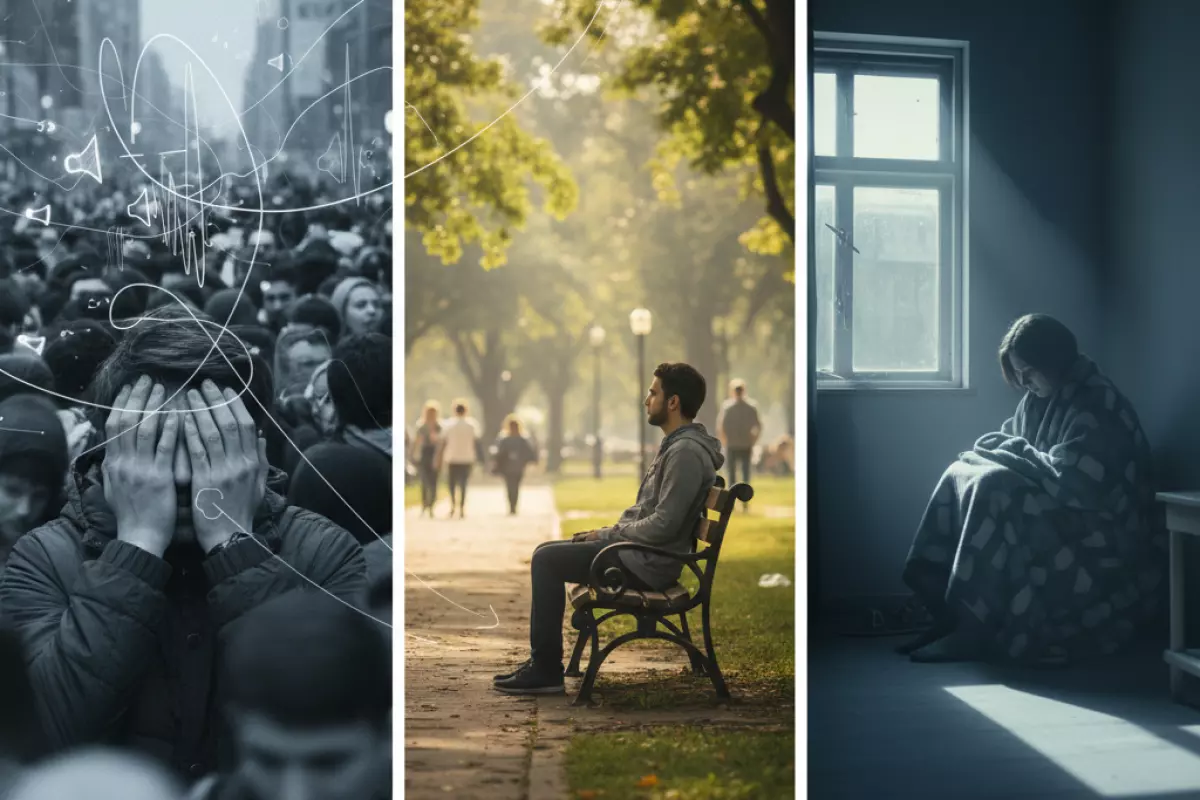 The article explains how environments shape emotional regulation, including how noise can overstimulate, crowds can overwhelm, and isolation can dull feelings. It also covers why people respond differently, how sensory input causes emotional fatigue, and how to choose mood-supportive settings.
Noise, crowds, and solitude can subtly shape your mood throughout the day. A blaring café, a packed train, or a quiet evening at home might leave you tense, energized, calm, or numb, often before you can explain why. This article looks at how everyday settings influence emotions and offers simple ways to notice your patterns with more kindness and choice.
Environmental factors and emotional regulation
Daily surroundings quietly steer how people calm down, stay focused, or get overwhelmed. When the brain is busy filtering noise, scanning crowded spaces, or coping with too little social input, it has fewer resources left for patience, flexible thinking, and steady mood. These effects often show up as quicker irritation, mental fatigue, or a stronger need to withdraw.
A useful way to think about this is “load.” Some settings add sensory and social load (loud streets, packed rooms), while others remove stimulation and feedback (long stretches alone). Both can shift emotional balance, just in different directions. People typically regulate best when they can predict what’s coming, control how much input they get, and take short recovery breaks.
| Environmental condition | Common emotional shift | Typical signs in everyday behavior | What often helps in the moment |
|---|---|---|---|
| Persistent noise (traffic, office chatter, loud neighbors) | Heightened stress and irritability | Shorter temper, difficulty concentrating, feeling “on edge,” more mistakes | Lower the volume where possible, use brief quiet breaks, switch to a calmer task, noise-reducing headphones |
| Intermittent sudden sounds (alerts, construction bursts) | Startle and anxiety spikes | Jumpiness, scanning for the next sound, trouble settling back into a task | Predictability cues (timers, schedules), steady background sound, grounding through slow breathing |
| Crowded spaces (public transit, events, busy stores) | Overwhelm or social tension | Clenched posture, faster walking, avoiding eye contact, urge to escape, reduced empathy | Create personal space (stand near edges), plan exits, take “micro-breaks,” focus on one simple goal |
| High social demand (meetings, constant interaction) | Emotional exhaustion | Flat affect, less patience, zoning out, increased sensitivity to criticism | Short decompression periods, clear boundaries, fewer simultaneous conversations, hydration and food |
| Isolation or low social contact (remote work alone, living alone, limited community) | Low mood or worry loops | Rumination, reduced motivation, irregular sleep, less self-care, feeling disconnected | Regular check-ins, structured routine, daylight and movement, small planned social touchpoints |
| Chaotic or cluttered environments (messy rooms, constant visual distractions) | Restlessness and frustration | Task switching, procrastination, feeling mentally “crowded,” difficulty finishing | Clear one small area, reduce visible items, use a single-task timer, keep essentials within reach |
These patterns are common because the nervous system treats intense input and uncertainty as potential threats, even when nothing is actually dangerous. That can push people toward quicker defensive reactions: snapping, shutting down, or trying to control small details. On the other side, too little stimulation and feedback can make emotions feel “sticky,” where worries repeat and motivation drops.
In practice, regulation improves when people can adjust three levers: predictability (knowing what to expect), control (choosing distance, volume, timing), and recovery (brief periods of calm or connection). Small changes like stepping outside for two minutes, moving to a quieter corner, or scheduling a short call can reduce the emotional spillover that noise, crowds, and isolation often create.
Noise and emotional overstimulation
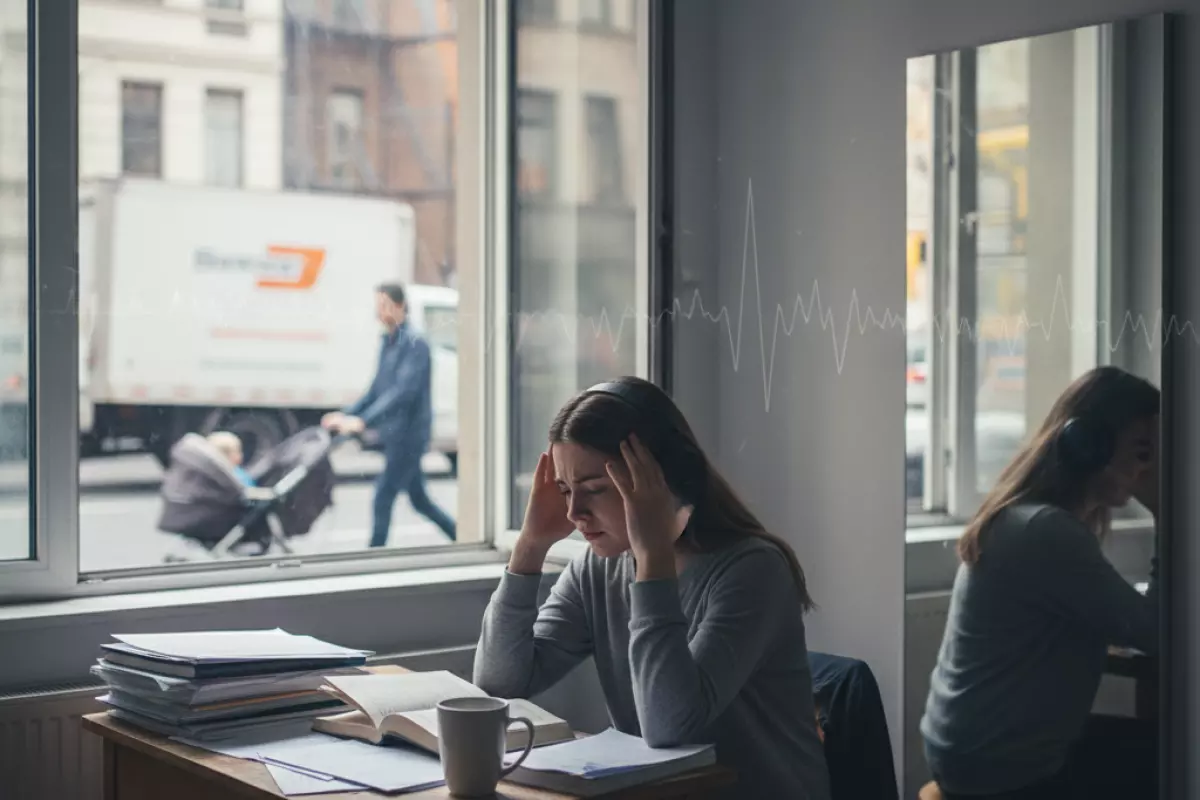
Loud or unpredictable sound can push the nervous system into a higher-alert state, making emotions feel closer to the surface. When the brain has to keep filtering competing inputs, it spends more effort on basic processing and has less capacity left for patience, problem-solving, and social nuance.
This effect is often strongest when sound is uncontrolled (you can’t turn it down or leave), irregular (sudden bangs, overlapping voices), or meaningful (a crying baby, an argument nearby). Even when the noise isn’t “dangerous,” the body may treat it like a demand for attention, increasing tension and shortening emotional tolerance.
- Lower frustration threshold: Small inconveniences feel bigger, and minor disagreements escalate faster.
- Reduced focus and mental clarity: People lose their train of thought more often, reread messages, or make avoidable mistakes.
- More impulsive reactions: Snapping, interrupting, or withdrawing can happen before someone realizes they’re overwhelmed.
- Social fatigue: Following conversations in a loud room requires extra effort, so people may seem “checked out” or irritated.
- Physical stress signals: Headaches, jaw tension, shallow breathing, and restlessness can appear alongside mood changes.
Context matters. A lively concert can feel energizing because the sound is expected and chosen, while the same volume from construction outside a bedroom can feel intrusive and exhausting. Predictability and control tend to shape whether high volume reads as excitement or as pressure.
| Common sound situation | Typical emotional/behavior pattern | What usually helps in the moment |
|---|---|---|
| Open-plan office chatter and phone calls | More distractibility, irritability, shorter replies, avoidance of complex tasks | Brief quiet breaks, noise-canceling or earplugs, batching deep-work time |
| Traffic, sirens, or street noise at home | Baseline tension, sleep disruption, feeling “on edge” without a clear reason | White noise, closing windows, moving rest areas away from the street side |
| Crowded restaurant with overlapping conversations | Social strain, mishearing, quicker fatigue, desire to leave early | Choose quieter seating, take short outside pauses, simplify conversation topics |
| Sudden intermittent sounds (banging, alarms, barking) | Startle response, jumpiness, anger spikes, difficulty settling afterward | Grounding through slow breathing, stepping into a quieter room, predictable background sound |
| Family noise at the end of the day (TV, kids, chores) | Overwhelm, impatience, feeling crowded, emotional shutdown | Lower overall volume, one sound source at a time, short “quiet reset” routines |
People also differ in sensitivity. When someone is tired, hungry, stressed, or already managing strong feelings, the same level of sound is more likely to tip into sensory overload. In everyday life, this is why end-of-day environments that feel “normal” can still trigger sharp moods, avoidance, or a need for silence.
Over time, frequent exposure to disruptive sound can condition a person to anticipate annoyance or conflict in certain places. That expectation can tighten the body before anything happens, making it easier for emotions to rise quickly and harder to recover once the environment finally quiets down.
Crowds and emotional overwhelm
Being surrounded by lots of people can push the brain into “high alert” mode. There are more faces to scan, more sounds to sort, and less control over personal space. Even when nothing is threatening, the constant stream of movement and noise can make emotions feel louder and harder to manage.
In everyday settings like busy transit, concerts, shopping centers, or packed offices, the strain often comes from sensory load and social demands happening at the same time. When the nervous system is already tired, hungry, stressed, or short on sleep, a crowded environment can tip from “energizing” to “too much” quickly.
- Sensory overload: Many small inputs (voices, footsteps, bright lights, smells) compete for attention, making it harder to filter what matters.
- Reduced personal space: Close proximity can trigger discomfort or irritability, especially when people bump, block pathways, or stand too close.
- Unpredictability: Sudden changes (a surge of people, loud announcements, jostling) keep the body braced for the next interruption.
- Social monitoring: Even without talking to anyone, people often track how they look, where they’re standing, and whether they’re “in the way,” which uses mental energy.
- Decision fatigue: Navigating lines, finding exits, choosing routes, and avoiding collisions adds a steady stream of tiny decisions.
Emotional reactions in dense spaces are often misread as “overreacting,” but they usually follow predictable patterns. When attention is stretched thin, people become more sensitive to minor annoyances and less able to recover quickly after a small stressor. That can show up as impatience, feeling trapped, or a sudden urge to leave.
| What tends to happen in busy spaces | How it often feels emotionally | Common behavior pattern | Simple adjustment that can help |
|---|---|---|---|
| Constant background noise and overlapping conversations | Edgy, tense, easily startled | Shorter replies, less patience, trouble concentrating | Step to a quieter edge area; take a brief “sound break” |
| People moving unpredictably (crowd surges, frequent stops) | On guard, annoyed, rushed | Speeding up, weaving, scanning for exits | Choose a slower lane or wall-side route to reduce surprises |
| Limited personal space (close standing, accidental contact) | Uncomfortable, irritated, “boxed in” | Leaning away, crossing arms, avoiding eye contact | Create a small buffer by changing position or facing sideways |
| High social density (many eyes, social comparison cues) | Self-conscious, tense, overstimulated | Checking appearance, second-guessing actions, withdrawing | Focus on a single task (route, list) to narrow attention |
| Long waits and bottlenecks (lines, packed entrances) | Restless, frustrated, powerless | Sighing, fidgeting, snapping at small delays | Set a time limit; take micro-breaks (step out, return) |
Not everyone responds the same way. Some people feel energized by the buzz and social contact, while others experience faster emotional saturation. Differences often come down to baseline anxiety, sensitivity to noise, past experiences with crowded places, and how much control someone has over leaving or taking breaks.
A useful rule of thumb is that overwhelm builds when input increases and control decreases. When there’s no easy exit, no quiet corner, or no ability to slow down, the body may treat the situation like a problem to solve urgently, which intensifies stress and makes calm decision-making harder.
Isolation and emotional dullness
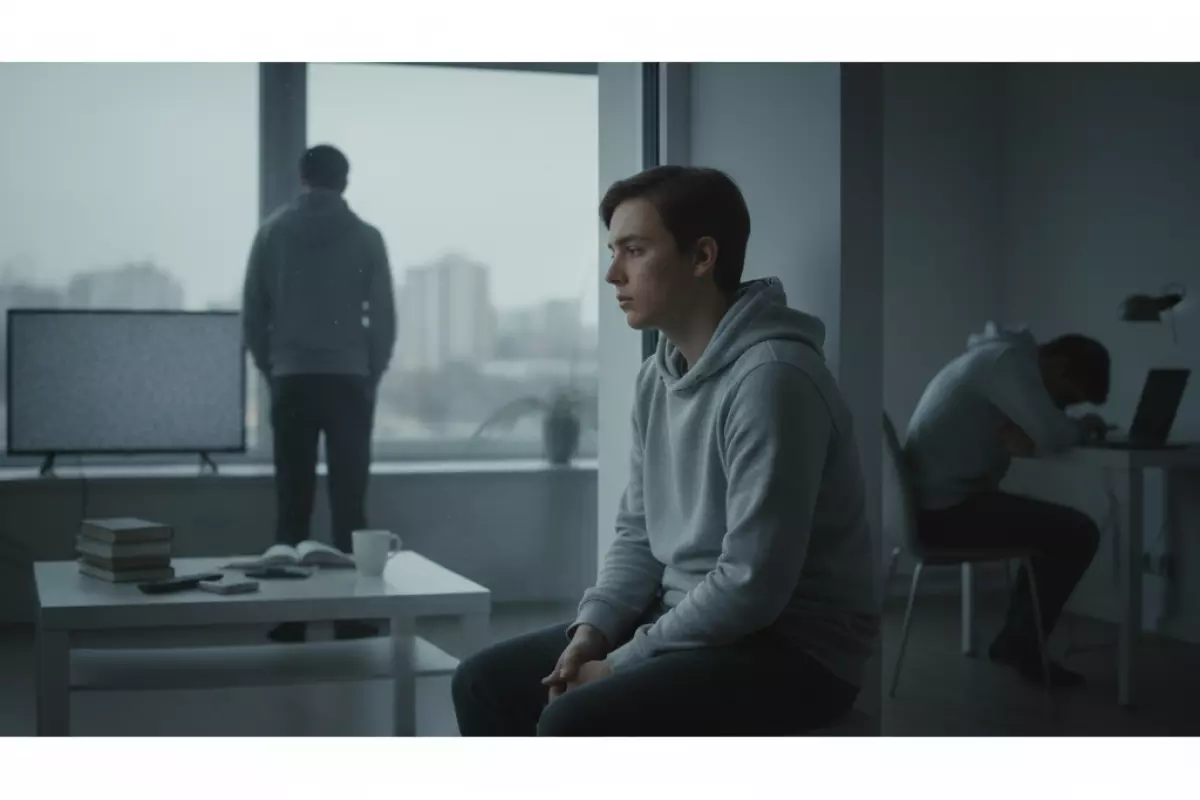
Spending long stretches with little social contact can make feelings seem muted or distant. Instead of clear sadness or joy, many people notice a flatter mood, lower motivation, and a sense of moving through the day on “autopilot.” This often builds gradually, so it may be recognized more through changes in behavior than through a single strong emotion.
Emotional blunting in solitude is partly about reduced stimulation. Everyday interactions naturally create small emotional cues: facial expressions, shared jokes, minor conflicts, and quick moments of validation. When those cues disappear, the brain has fewer prompts to label and amplify feelings, and the emotional “volume” can drop. Over time, even enjoyable activities may feel less rewarding because there is no shared context to reinforce them.
- Less emotional feedback: Without other people reacting, it is harder to calibrate what you feel, so feelings may seem vague or hard to name.
- Fewer mood shifts: Social contact often breaks up the day; without it, the day can feel repetitive, which can flatten emotional highs and lows.
- More rumination: Quiet time can turn into looping thoughts, which may lead to numbness as a way to “shut down” mental overload.
- Lower sense of meaning: Many routines feel more purposeful when they connect to others; alone, tasks can feel like chores rather than choices.
- Reduced physical activation: Isolation can mean less movement and fewer changes of scenery, both of which normally support alertness and mood.
Common day-to-day signs include delaying messages, skipping meals or eating mindlessly, losing track of time online, and avoiding decisions because nothing feels urgent. Some people also notice that they react more slowly to good news or bad news, not because they do not care, but because their emotional system is under-stimulated and tired.
| Everyday pattern | How it can affect emotions | Small, realistic adjustment |
|---|---|---|
| Days with minimal conversation | Fewer emotional cues; mood feels flat or “blank” | Schedule one brief check-in (call, voice note, or chat) at a consistent time |
| Working alone without breaks | Autopilot and reduced sense of reward | Add a short transition ritual: step outside, stretch, or change rooms between tasks |
| Mostly digital entertainment | Passive stimulation; enjoyment feels thin or short-lived | Mix in one active activity: cooking, a walk, a hobby with visible progress |
| Avoiding plans because “it’s easier” | Short-term relief but longer-term numbness and disconnection | Commit to low-effort social contact: a 20-minute coffee, a shared errand, or a class |
Not all time alone leads to dullness. Chosen solitude can feel restorative when it includes structure, movement, and occasional connection. The risk tends to rise when isolation is unplanned, prolonged, or paired with stress, poor sleep, or a sense of being stuck. In those conditions, emotional flattening can become a protective response: it reduces intensity, but it also reduces pleasure and engagement.
Why environments affect people differently
People can be in the same noisy room, packed train, or quiet apartment and walk away feeling completely different. That’s because emotional reactions are shaped by a mix of biology, past experience, expectations, and what someone needs in that moment. Environments don’t just “cause” a mood; they interact with attention, stress systems, and social cues in ways that vary from person to person.
- Sensitivity to stimulation varies. Some nervous systems register sound, movement, and visual clutter as “too much” sooner than others. In a crowded café, one person may feel energized by the buzz, while another feels tense because their brain keeps tracking every conversation and footstep.
- Control and choice change the emotional meaning. The same level of noise can feel manageable when it’s chosen (music at a party) and stressful when it’s imposed (construction outside a window). Crowds can feel exciting at a concert but threatening when someone can’t easily leave.
- Context sets expectations. People tolerate stimulation better when it matches what they believe the setting is “for.” A busy market is expected to be loud and packed; a quiet library isn’t. When the environment breaks the unwritten rules, irritation and anxiety rise faster.
- Past experiences shape threat vs. safety signals. If someone has had negative experiences with conflict, harassment, or being trapped, dense spaces and unpredictable noise can trigger vigilance. Others with positive memories of social gatherings may read the same cues as friendly and safe.
- Current stress load matters. When someone is already tired, hungry, or under pressure, their capacity to filter stimulation drops. A commute that feels fine on a calm day can feel overwhelming after a hard meeting or poor sleep.
- Social needs differ day to day. Isolation can feel restful for someone who has been “on” all week, but it can feel heavy for someone craving connection. Likewise, crowds can ease loneliness for some people while draining others who need quiet to reset.
- Personality and coping habits influence outcomes. People who recharge through solitude often seek low-input spaces, while those who recharge through interaction may feel flat or restless when alone. Coping strategies also matter: someone who uses headphones, routines, or planned breaks may handle busy settings more smoothly.
- Attention and interpretation steer emotion. Two people can hear the same background noise, but one interprets it as “lively” and the other as “chaotic.” That interpretation affects body tension, patience, and whether the space feels supportive or draining.
These differences explain why noise can trigger irritability in one person and focus in another, why crowds can feel either comforting or suffocating, and why isolation can be either calming or unsettling. Emotional states are often less about the setting alone and more about how predictable, controllable, and meaningful the setting feels to the individual.
| Environmental factor | What tends to increase discomfort | What tends to increase comfort |
|---|---|---|
| Noise | Unpredictable bursts, inability to escape, competing voices, constant low-frequency hum | Predictable sound, personal control (volume, headphones), clear purpose (music, event) |
| Crowds | Tight spacing, blocked exits, unwanted touch, unclear social norms, feeling watched | Enough personal space, easy routes out, familiar people, shared goal (show, game) |
| Isolation | Long stretches without contact, lack of routine, uncertainty, rumination | Chosen solitude, planned check-ins, meaningful activities, predictable schedule |
| Visual stimulation | Clutter, bright flicker, constant motion, too many signs or screens | Simple layout, softer lighting, calmer movement patterns, clear organization |
| Sense of control | Rules feel arbitrary, no privacy, limited options, feeling trapped | Ability to adjust the space, set boundaries, take breaks, choose where to sit or stand |
In everyday life, small changes in predictability and control often explain big differences in mood. When a space supports basic needs like safety, autonomy, and manageable stimulation, people are more likely to feel steady. When it interferes with those needs, the same environment can push different people toward stress, irritability, or withdrawal for different reasons.
Emotional fatigue from sensory input
When the brain has to process too much sound, movement, light, or social activity for too long, it can start conserving energy by dulling emotional responsiveness. This often shows up as irritability, feeling “on edge,” or becoming unusually quiet and withdrawn, even when nothing specific has gone wrong.
Everyday environments can create this overload because they demand constant filtering: deciding what to pay attention to, what to ignore, and how to respond. Noise from traffic, overlapping conversations, notifications, bright screens, and crowded spaces all compete for attention. Over time, the effort of continuous monitoring can leave people feeling mentally drained and less able to handle normal frustrations.
- Shorter patience: Small interruptions feel bigger, and minor inconveniences trigger sharper reactions.
- Reduced social bandwidth: Talking, listening, and making decisions in groups can feel exhausting, leading to fewer words or a desire to leave early.
- Difficulty focusing: Attention jumps around, tasks take longer, and people may reread or restart activities.
- More sensitivity to “extra” input: Sounds seem louder, lights feel harsher, and touch or proximity can feel intrusive.
- Emotional flattening: Instead of strong feelings, there may be a muted, numb, or “checked out” mood.
Common triggers tend to stack. A loud commute followed by a busy office, then a crowded store can produce a cumulative effect, especially when there is little quiet time in between. Lack of sleep, hunger, and stress usually lower tolerance further, so the same level of stimulation feels harder to manage.
| Situation | What tends to happen | Typical emotional shift | Simple reset that often helps |
|---|---|---|---|
| Open-plan workspace or busy classroom | Frequent interruptions and background chatter make sustained focus harder | Frustration, restlessness, feeling “wired” | Short quiet break, headphones, or switching to a single-task block |
| Crowded public transit or events | Close proximity and unpredictable movement increase vigilance | Irritability, tension, urge to escape | Find a less dense area, slow breathing, reduce visual input by looking down |
| Constant phone alerts and multitasking | Attention fragments, and the brain stays in “checking” mode | Anxiety, impatience, mental fog | Silence nonessential notifications, set check-in times, brief screen-free pause |
| Bright lighting and heavy screen time | Eye strain and continuous visual processing increase tiredness | Low mood, irritability, reduced motivation | Dim lights if possible, look far away for a minute, take a short walk |
In many cases, the most reliable sign is a mismatch between the situation and the reaction: a normal request feels like a demand, or a routine noise feels unbearable. This doesn’t mean a person is being difficult; it usually means their capacity for input is already used up.
Recovery typically comes from reducing stimulation long enough for the nervous system to settle. Quiet, predictable spaces, fewer simultaneous tasks, and brief pauses between high-input settings can restore emotional balance and make everyday interactions feel manageable again.
Choosing environments that support mood
Where people spend time quietly shapes how they feel, often without them noticing. Noise level, crowd density, and the amount of social contact can either steady emotions or make them swing faster. The goal is usually not to find a “perfect” setting, but to match the surroundings to what the mind and body need in that moment: more calm, more energy, or more connection.
A practical first step is to watch for patterns. Many people feel more irritable in unpredictable soundscapes, more anxious in tightly packed spaces, and more down when days pass with little interaction. These reactions are common because the brain treats constant stimulation as effort, and prolonged lack of stimulation as a kind of social and sensory “hunger.”
- Use noise as a dial, not an on/off switch. If a quiet room feels too flat, a steady background sound (like a fan or soft music) can add comfort. If the environment is chaotic, moving to a space with fewer sudden sounds often reduces tension.
- Choose crowd levels based on your current capacity. When energy is low or stress is high, smaller groups and wider personal space tend to feel easier. When motivation is low, a moderate amount of activity nearby can provide momentum without becoming overwhelming.
- Plan for “social nutrition.” Brief, low-pressure contact (a short chat, a shared task, a familiar place) can prevent isolation from deepening. On the other hand, if you feel socially saturated, a defined quiet window can protect mood from burnout.
- Reduce unpredictability. Environments feel safer when you can anticipate what will happen next. Sitting with a view of exits, choosing off-peak hours, or picking familiar routes can lower background stress in crowded or noisy areas.
- Build transition moments. Shifting from a loud or crowded setting straight into a demanding task can keep the nervous system “revved.” A short decompression routine (water, a few minutes of silence, a slower walk) helps emotions settle.
- Keep one “recovery space” available. Many people benefit from having a consistent spot that signals downshift: a particular chair, a corner of a room, or a quiet bench. The predictability itself can become calming over time.
| Situation | Common emotional effect | Environment tweak that often helps |
|---|---|---|
| Sudden, irregular noise (traffic bursts, loud conversations) | Edginess, impatience, difficulty focusing | Move to a steadier sound zone; add consistent background sound; take short quiet breaks |
| Dense crowds with limited personal space | Tension, vigilance, feeling “on guard” | Choose edges of rooms, off-peak timing, or routes with more space; take brief exits to reset |
| Long stretches alone with little stimulation | Low mood, rumination, reduced motivation | Add small social touchpoints; work in a public-but-not-busy place; schedule a check-in |
| Back-to-back social exposure without downtime | Overwhelm, irritability, emotional “numbness” | Insert quiet buffers; limit high-intensity settings; choose smaller groups or shorter visits |
| Quiet space that feels too empty or stagnant | Restlessness, boredom, feeling disconnected | Add light activity, gentle sound, or a change of scenery; pick a setting with mild ambient life |
Over time, these small choices add up. When surroundings are adjusted to fit the day’s stress level and social needs, emotions tend to become more predictable: fewer spikes from overload, fewer dips from disconnection, and a steadier baseline that makes everyday tasks feel more manageable.