Mood changes after social overstimulation

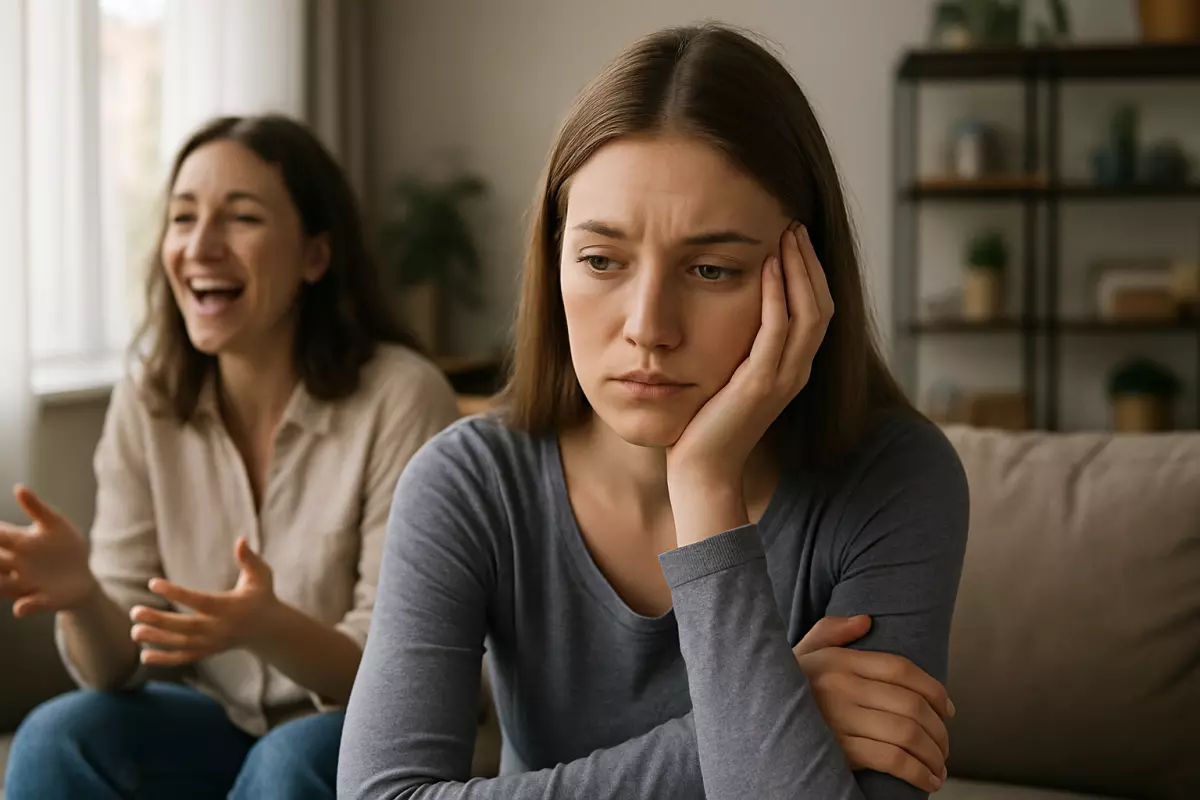 The article explains what social overstimulation feels like emotionally, including nervous system overload from too much interaction, noise, and attention.
- What social overstimulation means emotionally
- Excessive interaction and nervous system load
- Emotional fatigue after crowded environments
- Sensitivity to noise, attention, and interaction
- Delayed mood drop after social events
- Why overstimulation affects some more than others
- Recovery needs after intense social exposure
After a lot of social time, your mood can shift in unexpected ways. When the conversation ends and things get quiet, you may feel overstimulated, irritable, or strangely numb. This article explains why your mind and body react like that, and offers practical ways to recover and feel steady again without judging yourself for needing a break.
What social overstimulation means emotionally
When the social “input” keeps coming faster than your mind can process it, emotions often stop feeling gradual and start feeling abrupt. Instead of noticing a slow build from calm to tired, you may jump from engaged to irritable, from interested to numb, or from friendly to wanting to be left alone. This isn’t about disliking people; it’s about your emotional system hitting capacity.
In everyday terms, too much conversation, noise, eye contact, decision-making, and social performance (reading cues, choosing words, monitoring tone) can create a sense of internal crowding. The brain shifts into a protective mode: it tries to reduce demands quickly, which can make feelings seem stronger, more negative, or oddly “flat.”
- Irritability and shorter patience: Small interruptions, questions, or jokes can feel disproportionately annoying because there’s less emotional bandwidth left to regulate reactions.
- Anxiety or tension: You might feel keyed up, restless, or on edge, especially if you’re still expected to respond politely and quickly.
- Emotional numbness: Instead of feeling upset, you may feel blank or detached, as if you’re watching yourself participate rather than actually connecting.
- Sudden sadness or tearfulness: A minor disappointment can tip into tears once the system is overloaded, even if nothing “big” happened.
- Defensiveness: Neutral comments can sound critical, and you may interpret tone as harsher than intended because your tolerance for ambiguity drops.
- Low motivation to engage: Replying, smiling, and keeping up can feel like work, leading to a strong urge to withdraw or go quiet.
These shifts often come with a mismatch between what you feel and what you show. Many people keep a socially appropriate expression while internally feeling overwhelmed, which can increase strain and make the eventual mood dip sharper once they’re alone.
| Emotional experience | How it often shows up in real life |
|---|---|
| “Everything is too much” | Feeling crowded by chatter, questions, or background noise; wanting fewer inputs at once |
| “I can’t think straight” | Losing your train of thought, struggling to find words, feeling slower to respond |
| “I’m annoyed for no good reason” | Snapping, being blunt, or feeling angry at minor delays or small talk |
| “I don’t feel like myself” | Acting distant, forced, or robotic; laughing less; feeling disconnected from the moment |
| “I need to get away” | Seeking the bathroom, checking your phone, leaving early, or going quiet to reduce demands |
Emotionally, social overload is often less about a single feeling and more about reduced regulation. When your capacity is used up, it becomes harder to filter noise, tolerate uncertainty, or recover from small social friction. That’s why mood changes after social overstimulation can look inconsistent: one day it’s irritability, another day it’s shutdown, and another day it’s anxious energy.
Excessive interaction and nervous system load
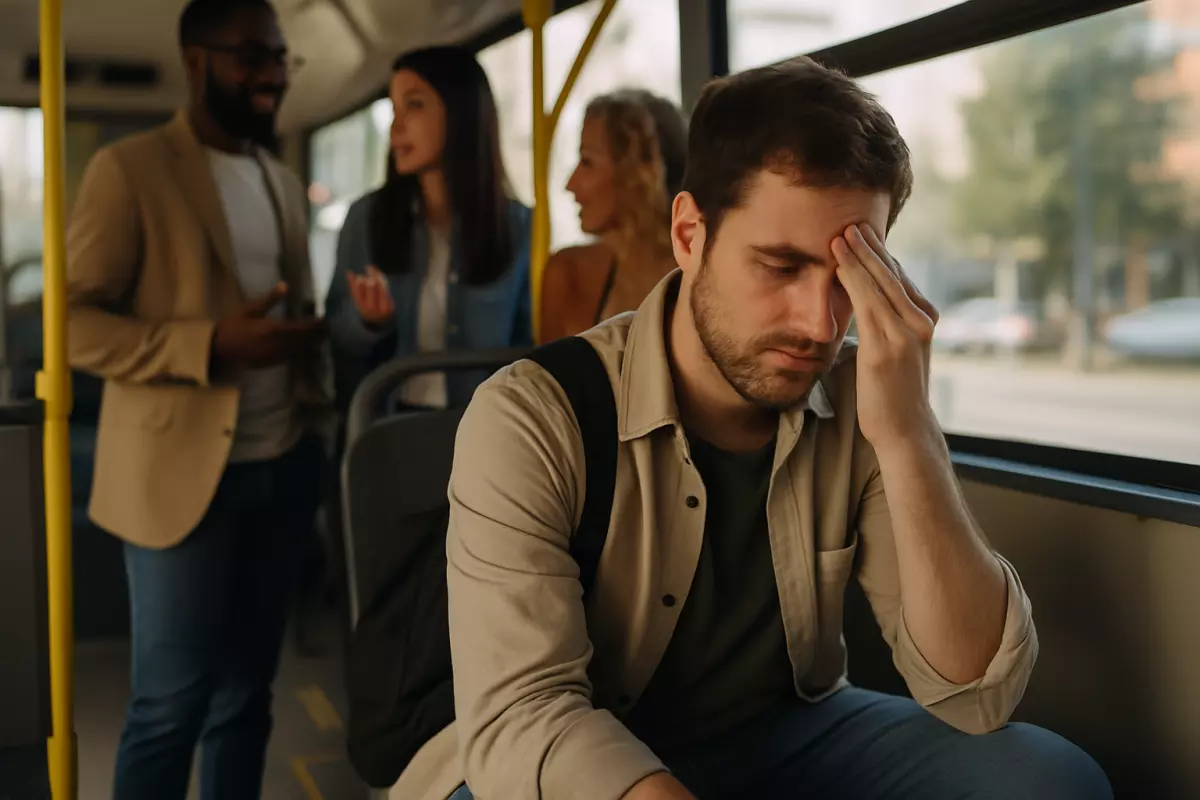
Too much social input in a short time can leave the body acting like it has been “on duty” for hours. Even when the conversations are pleasant, the brain is tracking facial expressions, tone of voice, timing, and social expectations. That constant monitoring uses energy and can push the stress response up, which is why mood can dip or become jumpy after a busy day of people.
This kind of overload is often less about any single interaction and more about how long the system stays activated without a reset. When there is little downtime between meetings, messages, group settings, or family demands, the nervous system has fewer chances to return to baseline. The result can look like irritability, restlessness, or a sudden urge to withdraw.
- High alert for longer than expected: Staying socially “ready” keeps attention and self-control engaged, which can feel like tension or mental fatigue later.
- More stimulation than the brain can filter: Noise, overlapping conversations, bright environments, and constant notifications add sensory load on top of social effort.
- Emotional contagion: Picking up on others’ stress, excitement, or conflict can shift mood even if nothing directly happened to you.
- Performance pressure: Trying to be polite, funny, professional, or agreeable can increase internal effort, especially when you are tired.
- Reduced recovery time: Skipping meals, sleep, or quiet breaks makes the body less able to downshift after interaction.
| What the load looks like | How it can show up in mood and behavior |
|---|---|
| Back-to-back conversations with no quiet gaps | Snappier tone, impatience, feeling “done” with talking |
| Busy, loud settings (events, open offices, crowded transit) | Edginess, headaches, urge to escape or shut down |
| Ongoing small demands (texts, group chats, quick questions) | Scattered attention, low frustration tolerance, mental fog |
| Emotionally charged contact (conflict, caretaking, heavy topics) | Sadness, anxiety, rumination, feeling drained afterward |
These shifts are often temporary, but they can be confusing because they may appear after the social time ends. The body may “come down” from sustained activation once you are alone, and that drop can feel like emptiness, irritability, or sudden tiredness. Recognizing the pattern helps explain why a good day with people can still lead to a low or unsettled mood later.
Typical signs that the system is carrying too much input include wanting silence, struggling to make small decisions, reacting strongly to minor annoyances, or feeling emotionally flat. In everyday life, it often helps to treat this as a need for recovery rather than proof that something went wrong socially.
Emotional fatigue after crowded environments
After spending time in a busy mall, a packed party, a loud restaurant, or a crowded commute, it’s common to feel mentally “wrung out.” The brain has been handling constant noise, movement, conversations, and social cues, and the after-effect can show up as low energy, irritability, or a sudden desire to be alone.
This kind of drained feeling isn’t always about disliking people. It often reflects sensory load (sound, lights, proximity) plus social processing (reading expressions, deciding when to talk, tracking group dynamics). When those demands stack up for long enough, mood can dip and patience can shorten, even if the event itself was enjoyable.
- What it can feel like: heaviness in the body, a “foggy” mind, reduced motivation to talk, or a strong pull toward quiet and familiar routines.
- What it can look like: going silent on the way home, snapping at small annoyances, zoning out, or needing extra time before responding to messages.
- What people often misread: others may assume you’re upset with them, when you’re actually depleted and trying to recover.
| Common situation | Typical after-effects | What’s often driving it |
|---|---|---|
| Concerts, bars, sporting events | Headache, irritability, trouble focusing | High noise, bright lights, constant stimulation |
| Parties, networking, family gatherings | Emotional flatness, social “hangover,” wanting solitude | Continuous conversation, impression management, role expectations |
| Shopping centers, festivals, airports | Restlessness, impatience, feeling overwhelmed | Crowding, decision fatigue, unpredictable movement |
| Open offices, conferences, classrooms | Low tolerance for interruptions, mental fatigue | Background chatter, multitasking, limited control over environment |
Mood changes after a crowded setting often follow a pattern: you feel fine while you’re “on,” then the drop hits once you’re in a quieter space. That delayed reaction can be confusing, but it’s a typical response when adrenaline and social effort wear off and the nervous system shifts into recovery.
It can help to notice early signs of overload, such as struggling to follow conversations, feeling unusually sensitive to sound, or getting annoyed by normal delays. Those cues often show up before the full crash, and they’re a signal that your attention and emotional bandwidth are running low.
Recovery usually looks simple and practical: fewer inputs, less talking, and more predictability. Quiet time, a calmer route home, a shower, a familiar show, or a short walk can reduce stimulation without requiring big changes. If you tend to feel wiped out after crowds, planning a buffer of downtime afterward can prevent the fatigue from spilling into the rest of the day.
Sensitivity to noise, attention, and interaction
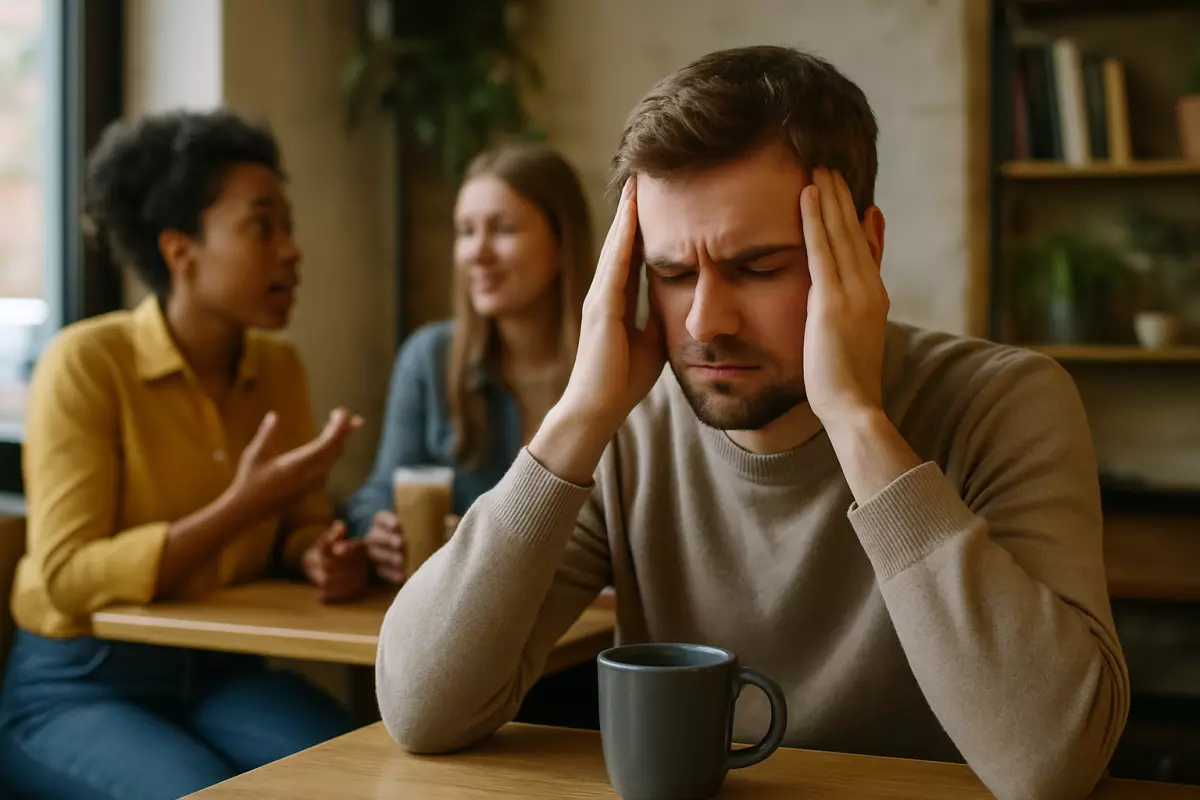
After a busy social stretch, the brain often keeps processing stimulation even when the event is over. That can make ordinary input feel “too much” for a while: background sounds seem louder, small interruptions feel sharper, and even friendly conversation can take extra effort to follow. This shift is usually less about disliking people and more about a temporary overload in the systems that filter sound, manage focus, and read social cues.
In everyday terms, people often notice a lower tolerance for competing inputs. A café that felt lively earlier may suddenly feel chaotic; a group chat can feel demanding rather than fun; and being watched or “on the spot” may trigger irritability or a strong urge to withdraw. These reactions can show up even when mood is otherwise fine, because the body is still coming down from high alert and high engagement.
- Noise feels intrusive: clattering dishes, overlapping conversations, TV in the background, or traffic may be harder to ignore than usual.
- Attention becomes narrow: multitasking is tougher, switching tasks feels draining, and small decisions can feel disproportionately annoying.
- Social signals take more effort: tracking jokes, reading tone, or keeping up with fast-paced talk may feel like work rather than automatic.
- Lower threshold for interruption: being called from another room, notifications, or repeated questions can spark impatience quickly.
- Physical “edge” increases: jumpiness at sudden sounds, tension in the body, or a need to control the environment (lower lights, fewer voices) becomes more noticeable.
Attention and interaction can also become more sensitive to how contact happens. One-on-one conversation may feel manageable while group settings feel overwhelming, because groups require faster turn-taking and more cue-reading. Similarly, passive exposure (sitting near a crowd) can be easier than active participation (being expected to respond), since the latter demands sustained focus and emotional regulation.
| What tends to feel hard | How it often shows up | Why it can happen after overstimulation |
|---|---|---|
| Background noise and layered sound | Wanting silence, turning down music, feeling irritated by “normal” volume | Filtering systems are tired, so more sound reaches awareness |
| Being observed or expected to perform | Feeling self-conscious, snapping, needing to leave the room | Social monitoring stays high even when energy is low |
| Rapid conversation and group dynamics | Losing the thread, zoning out, feeling excluded or overwhelmed | Processing speed and working memory are taxed after heavy input |
| Interruptions and notifications | Startle response, impatience, difficulty returning to a task | Task-switching costs more when attention is already depleted |
These patterns often create a feedback loop: overstimulation makes it harder to focus and respond smoothly, and struggling to keep up can then worsen mood. Noticing the pattern helps explain why someone might seem unusually quiet, blunt, or easily annoyed after a socially intense day, even if nothing “bad” happened.
Delayed mood drop after social events
A common pattern after a busy gathering is feeling fine during the event, then noticing a slump hours later or the next day. People often describe it as a “crash” that shows up once they’re back in a quiet space, when the brain and body finally stop running on social momentum.
This shift can look like low mood, irritability, mental fog, or a sudden urge to withdraw. It is not always tied to anything that went “wrong” socially. Instead, it often reflects how much energy was spent tracking conversations, reading cues, managing noise, and staying engaged.
- Timing: the dip may appear after getting home, later that night, or the following morning.
- Emotional tone: flatness, sadness, or being unusually sensitive to small frustrations.
- Thinking style: replaying conversations, second-guessing what was said, or feeling embarrassed despite no clear reason.
- Body signals: headache, tension, heavy fatigue, or restlessness that makes it hard to settle.
- Social behavior: canceling plans, ignoring messages, or wanting “no-input” time (silence, dim lights, familiar routines).
Several everyday factors can make the after-effect stronger. Long events with little downtime, loud venues, constant small talk, alcohol, or disrupted sleep can leave the nervous system overstimulated. For some people, masking (working hard to appear relaxed, upbeat, or “on”) adds another layer of effort that only becomes obvious once the event ends.
| What it can look like | What it often means in practice |
|---|---|
| Feeling down the next day despite having fun | Energy debt from sustained attention, noise, and social performance catching up later |
| Irritability at home or with close people | Reduced tolerance once “holding it together” is no longer required |
| Rumination about awkward moments | Brain trying to resolve uncertainty after high social load, not proof that something bad happened |
| Wanting to be alone and avoid messages | A recovery drive to reduce input and regain a sense of control |
It also helps to separate a normal post-social low from signs that something else is going on. A typical downturn improves with rest, food, hydration, and quiet time, and it does not keep worsening over several days. If the mood drop is intense, frequent, or paired with panic, persistent hopelessness, or major sleep disruption, it may be worth treating it as more than simple overstimulation and looking for additional support or patterns.
Why overstimulation affects some more than others
People react differently to sensory and social load because their nervous systems filter input at different speeds, and their daily context changes how much “capacity” they have left. The same party, open-plan office, or group chat can feel energizing to one person and draining to another, depending on how intensely they register noise, movement, conversation layers, and social expectations.
Differences often show up as mood shifts after the event: irritability, fogginess, sadness, or a flat, “shut down” feeling for some; restlessness or a wired, unsettled mood for others. These reactions usually reflect a mix of biology, habits, and environment rather than a single trait.
- Sensory sensitivity and filtering: Some people notice background sounds, bright lights, or multiple conversations more sharply. When the brain spends more effort sorting signals from “noise,” fatigue and mood dips can appear sooner.
- Introversion, extraversion, and recovery style: Enjoying people is not the same as recovering from people. Some recharge through quiet, predictable time; others feel better with continued activity. If recovery needs are mismatched, emotional swings after social overstimulation are more likely.
- Social processing load: Reading facial cues, tracking turn-taking, and deciding what to say next takes mental energy. In fast-moving groups, the effort of keeping up can build pressure even when the interaction is positive.
- Stress baseline and “bandwidth”: When someone is already carrying work deadlines, family stress, or constant notifications, there is less room for extra input. A busy week can turn a normally manageable gathering into a tipping point.
- Sleep, hunger, and physical state: Poor sleep, dehydration, caffeine swings, or skipping meals can lower tolerance for stimulation. The mood change afterward may look “emotional,” but it is often partly physiological.
- Control and predictability: Being able to step outside, choose seating, or leave at a set time reduces strain. Feeling trapped, unsure of expectations, or unable to take breaks tends to intensify the crash afterward.
- Past experiences and learned associations: If certain settings have been linked with conflict, criticism, or embarrassment, the body may treat similar environments as higher threat. That can speed up overwhelm and amplify irritability or shutdown later.
- Neurodivergent patterns: People with ADHD or autism, for example, may experience stronger effects from noise, interruptions, or prolonged masking. The result can be delayed emotional fallout once the stimulation stops.
- Role demands: Hosting, networking, caregiving, or being “the responsible one” adds performance pressure. Even enjoyable social time can feel like work when someone is managing logistics and other people’s needs.
These factors also interact. A person might handle a lively dinner well when rested and with close friends, but feel moody after a similar event during a stressful week or in a louder venue. Noticing which combinations reliably lead to a post-event slump can clarify why the same level of social input affects people so differently.
Recovery needs after intense social exposure
After a packed event, long meeting, or busy day of conversation, many people need a period of decompression before they feel like themselves again. This isn’t only about being “tired”; it’s often a mix of mental fatigue, sensory overload, and the effort of tracking social cues. A short recovery window can prevent the irritability, flat mood, or restlessness that sometimes shows up later.
How long it takes to reset varies, but the pattern is common: the more intense, noisy, or emotionally demanding the interaction, the more likely the brain and body will look for quiet, predictability, and fewer decisions afterward. Without that pause, people may seem withdrawn, snappy, or unusually emotional even if the social time was enjoyable.
- Reduced input: Choosing calmer spaces, lowering noise, dimmer lighting, or stepping away from screens to give the senses a break.
- Lower social demand: Limiting follow-up calls, texts, or group chats for a while so the mind isn’t still “performing” socially.
- Simple, predictable routines: Eating something familiar, showering, changing into comfortable clothes, or doing a repetitive task that doesn’t require much judgment.
- Physical reset: Hydration, a snack, stretching, a walk, or a short nap to reduce stress activation and muscle tension.
- Emotional processing time: Quiet reflection, journaling, or just sitting without conversation to let the day’s impressions settle.
- Boundary-friendly planning: Leaving a buffer after big gatherings, scheduling errands for another day, or building in “no plans” time to avoid stacking demands.
| Common post-social state | What it can look like | Supportive response |
|---|---|---|
| Sensory saturation | Headache, feeling “wired,” annoyance at noise, craving silence | Quiet room, headphones, low light, fewer screens |
| Decision fatigue | Indecisive, overwhelmed by small choices, procrastination | Pre-made meal, simple routine, postpone non-urgent decisions |
| Social hangover | Flat mood, self-doubt about what was said, wanting to be alone | Reassurance through rest, grounding activities, limit rumination triggers |
| Stress rebound | Irritability, tearfulness, trouble sleeping, tense body | Light movement, hydration, calming wind-down, earlier bedtime |
Recovery is usually easiest when it’s planned rather than forced. A short buffer can be enough for mild overstimulation, while a more demanding day may call for an evening with minimal conversation and a slower pace. When the need to decompress is ignored repeatedly, mood swings after social time can become more frequent, because the body never fully returns to baseline before the next round of interaction.