Mood changes after intense focus or prolonged mental effort

 Covers why your mood can dip after deep work, including brain glucose, fatigue, and emotional regulation, plus how perfectionism can turn focus into irritability, emptiness, and low patience.
- Why mood often shifts after deep work sessions
- Brain glucose, fatigue, and emotional regulation
- Post-focus irritability, emptiness, and low patience
- How perfectionism turns focus into emotional strain
- Best recovery routine after intense concentration
- How breaks and task switching affect mood
- Work-rest cycles that protect emotional balance
- Signs you need a longer recovery window
After a long period of intense focus, your mood can change in unexpected ways. When the task ends, you may feel flat, irritable, restless, or unusually emotional, even if things went well. This post-effort dip is common and often reflects mental fatigue and a sudden drop in stimulation. Noticing it early helps you recover more easily with a short break, food, movement, or quiet time.
Why mood often shifts after deep work sessions
After a long stretch of intense concentration, it’s common to notice an emotional “aftertaste” once the task ends. The mind has been holding a narrow channel of attention open, filtering distractions, and managing small decisions. When that control relaxes, feelings that were muted during the work can surface quickly, and the contrast can make the shift feel sudden.
- Mental fuel runs low. Deep focus uses working memory and self-control. As those resources get tired, people often feel more irritable, flat, or sensitive to minor frustrations right after stopping.
- Stress chemistry lingers. Even productive focus can carry mild pressure: deadlines, performance concerns, or the effort of staying on track. When you step away, the body may still be in “do the thing” mode for a while, which can show up as restlessness or a short temper.
- Attention snaps back to everything you postponed. During concentrated work, you temporarily ignore hunger, messages, body discomfort, or worries. When the session ends, those signals return all at once, which can feel like a mood drop even if nothing “bad” happened.
- Reward timing affects emotion. If the work ends with a clear win, mood often lifts. If it ends mid-problem, the brain doesn’t get closure, so you may feel unsatisfied or uneasy despite making progress.
- Perfectionism and self-evaluation kick in. While focusing, you’re doing. Afterward, you’re judging. That switch can trigger self-criticism, doubt, or disappointment, especially if the output doesn’t match the effort.
- Social and sensory re-entry can feel harsh. Quiet, controlled conditions (one screen, one goal) are very different from noise, conversation, or multitasking. Returning to a busy environment can create a quick spike in overwhelm.
These shifts often follow recognizable patterns. A short break can feel unpleasant not because the work was harmful, but because the brain is transitioning from sustained control to a more open, reactive state.
| What it can feel like after stopping | Common underlying pattern |
|---|---|
| Irritable, impatient, easily annoyed | Self-control fatigue plus lingering stress arousal |
| Flat, unmotivated, “blah” | Drop in stimulation after sustained engagement; reward not yet registered |
| Restless, can’t relax right away | Body still keyed up; attention keeps scanning for the next task |
| Anxious or dissatisfied even though progress was made | Unfinished loop, uncertainty, or immediate self-evaluation |
| Sudden hunger, headache, or tension that affects mood | Delayed awareness of physical needs while concentrating |
In everyday life, the most noticeable mood changes tend to happen when sessions are long, breaks are skipped, or the stopping point is abrupt. Ending on a small checkpoint, taking a few minutes to downshift, and meeting basic needs (water, food, movement) often reduces the emotional whiplash without changing the amount of work you get done.
Brain glucose, fatigue, and emotional regulation
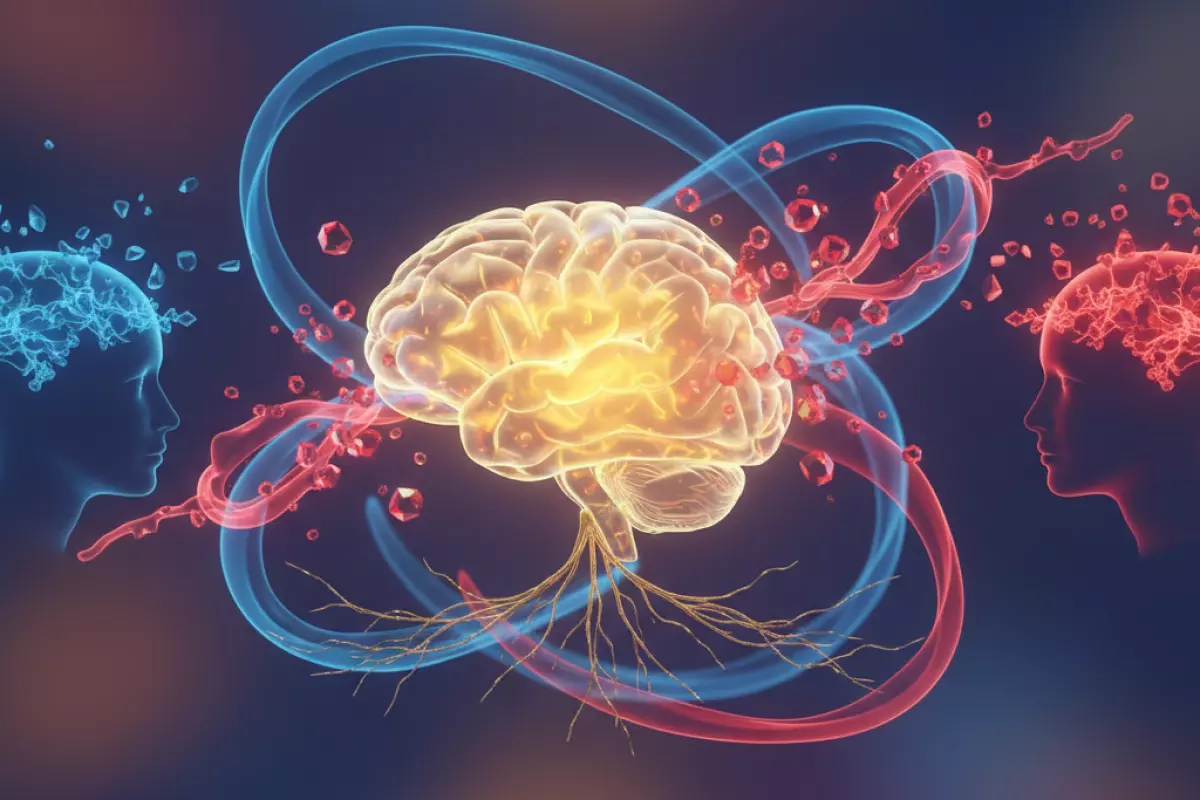
Mental work runs on a steady supply of energy, and the brain relies heavily on glucose in the bloodstream. During long stretches of concentration, the issue is usually not that the brain “runs out” of sugar, but that sustained effort increases the sense of strain and makes self-control feel more expensive. When the mind is tired, small frustrations can land harder, and it becomes easier to react quickly rather than respond thoughtfully.
As cognitive fatigue builds, the brain tends to conserve effort. That can show up as shorter patience, more impulsive choices, or a stronger pull toward whatever feels immediately relieving (snacking, scrolling, quitting early). These shifts are common after intense focus because attention, working memory, and inhibition are all drawing from the same limited pool of mental resources.
- Lower frustration tolerance: minor delays or mistakes feel disproportionately annoying after sustained thinking.
- More negative interpretations: neutral comments can sound critical, and ambiguous situations may be read as problems.
- Reduced impulse control: it becomes harder to pause before replying, and easier to say something sharper than intended.
- Decision fatigue: choices feel heavier, leading to avoidance, procrastination, or defaulting to the easiest option.
- Craving quick comfort: the brain nudges toward fast rewards, which can temporarily lift mood but may not solve the underlying tiredness.
Blood sugar swings can add another layer. If someone goes a long time without eating, or pairs intense focus with lots of caffeine and little food, dips in glucose can coincide with shakiness, irritability, and a “thin-skinned” feeling. That doesn’t mean every mood shift is caused by low blood sugar; it means that when energy availability is inconsistent, emotional steadiness can be harder to maintain.
A practical way to think about it is that tired attention changes what feels manageable. When the brain is well-fueled and rested, it can keep goals in mind, reframe annoyances, and choose a calmer response. When depleted, it prioritizes immediate relief and simplifies decisions, which can look like snapping, withdrawing, or becoming unusually pessimistic for a short period.
Post-focus irritability, emptiness, and low patience
After a long stretch of concentration, it’s common to feel emotionally “thin”: small annoyances land harder, conversation feels like work, and the shift back to normal life can feel oddly flat. This often shows up right after finishing a demanding task, stepping out of an exam-like situation, or closing a laptop after hours of problem-solving.
One reason is that intense mental effort uses up attention and self-control. When that reserve is low, the brain has less capacity for filtering distractions, smoothing social interactions, and tolerating delays. At the same time, the sudden drop in stimulation after a high-focus period can feel like a letdown, which many people interpret as emptiness or restlessness rather than simple fatigue.
- Irritability: You may snap at minor interruptions, feel unusually critical, or get frustrated by slow apps, traffic, or background noise.
- Low patience: Waiting, explaining, or negotiating feels harder than it “should,” and you might rush decisions just to end the interaction.
- Emptiness or flat mood: Finishing the task removes the structure and urgency you were riding on, leaving a temporary sense of “now what?”
- Social withdrawal: Texts and small talk can feel draining, so you delay replies or prefer silence.
- Body-based tension: Headache, jaw tightness, or a wired-but-tired feeling can amplify emotional reactivity.
These reactions tend to be strongest when the focus period involved high stakes, constant error-checking, or frequent context switching. They also show up more when basic needs were ignored during the work sprint, such as food, water, movement, or breaks. In everyday life, that can look like being fine while “in the zone,” then becoming short-tempered the moment someone asks a simple question.
| What it looks like | What’s often driving it | What helps in the moment |
|---|---|---|
| Snapping at interruptions right after finishing | Attention and inhibition are depleted; switching costs feel steep | Take 5–10 minutes of quiet decompression before engaging |
| Feeling oddly empty once the task ends | Drop in stimulation and purpose; adrenaline/urgency fades | Do a brief “transition ritual” (stretch, short walk, tidy desk) |
| Impatience with slow processes or people | Reduced tolerance for friction; brain wants immediate relief | Lower demands temporarily; choose the simplest next step |
| Wanting to be alone and avoiding messages | Social processing feels effortful when mentally spent | Send a quick boundary note (“I’ll reply later”) and pause notifications |
If the mood shift is brief and improves after a snack, hydration, movement, or a short reset, it usually reflects normal recovery from prolonged mental effort. When it becomes a predictable pattern, planning a buffer between deep work and social or family time can reduce friction, because the brain often needs a gradual ramp-down rather than an abrupt switch.
How perfectionism turns focus into emotional strain
Perfectionistic thinking can make deep concentration feel high-stakes. Instead of focusing mainly on the task, attention gets split between doing the work and constantly judging the work. That extra self-monitoring uses mental energy, so when the effort ends, the “come down” often shows up as irritability, disappointment, or a flat, drained mood.
This pattern is common during prolonged mental effort: the brain stays in a tight control mode for longer than it needs to. Small uncertainties start to feel like threats (“If this isn’t flawless, it’s a failure”), which keeps stress responses switched on. Even if the outcome is objectively good, the internal standard may keep moving, making it hard to feel satisfied.
- All-or-nothing standards: Work is labeled “great” or “terrible,” with little middle ground. That makes normal imperfections feel emotionally heavy after intense focus.
- Overchecking and micro-editing: Re-reading, re-calculating, or reformatting “just one more time” extends cognitive load and reduces the sense of completion.
- Fear of mistakes: Attention locks onto potential errors, so the task becomes a vigilance exercise rather than problem-solving.
- Difficulty stopping: Ending feels unsafe (“I haven’t earned a break”), so mental effort runs past the point of usefulness and increases post-task fatigue.
- Self-worth tied to performance: Results become a personal verdict, which makes any setback more likely to trigger shame, frustration, or mood swings.
- Discounting progress: Achievements are treated as “not enough,” so the brain doesn’t get the emotional payoff that normally follows sustained effort.
Perfectionism also changes how the body experiences focus. When the goal is “no mistakes,” the nervous system often stays tense: shallow breathing, clenched jaw, and a constant readiness to correct. Afterward, that tension can flip into exhaustion or emotional reactivity, especially if the person moves straight from one demanding task to another without a reset.
| Perfectionistic habit during focus | What it feels like afterward | A more balanced alternative |
|---|---|---|
| Setting an “impossible” standard (perfect or pointless) | Deflated mood, harsh self-talk, trouble enjoying completion | Define “good enough” criteria before starting |
| Constantly scanning for flaws while working | Restlessness, irritability, mental “buzz” that won’t shut off | Separate creation and review into two timed phases |
| Rechecking to reduce anxiety rather than improve quality | Fatigue, doubt, feeling stuck even after progress | Limit checks (for example, one final pass) and then submit/stop |
| Interpreting minor errors as personal failure | Shame, low mood, avoidance of the next task | Label mistakes as dаta: note, fix, and move on |
Over time, this cycle can train the brain to associate concentration with pressure instead of purpose. The result is that intense focus may reliably be followed by a mood drop, not because the work is harmful, but because the internal rules around the work keep the mind in a prolonged state of evaluation and threat detection.
Best recovery routine after intense concentration

After a long stretch of deep thinking, the brain often “downshifts” in a way that can feel like irritability, flat mood, restlessness, or sudden sensitivity. A good wind-down plan focuses on lowering mental load, restoring basic needs (water, food, movement), and giving attention a softer target so emotions can settle back to baseline.
- Do a clean stop (2–5 minutes).
End the task with a short closing ritual: save work, write a quick note on what to do next, and close tabs or documents. This reduces the “unfinished loop” feeling that can keep the mind tense and make mood swings more likely.
- Shift your body before you shift your mind (5–10 minutes).
Stand up, stretch, or take a brief walk. Light movement helps burn off stress hormones and reduces the wired-but-tired state that often shows up after intense focus.
- Rehydrate and get a small, steady snack (5 minutes).
Dehydration and low blood sugar can mimic emotional volatility. Water plus something with protein and complex carbs (for example, yogurt and fruit, nuts and a banana, or a sandwich half) tends to stabilize energy better than sugary snacks.
- Use a “low-stimulation break” instead of scrolling (10–20 minutes).
Right after heavy mental effort, fast content can keep the brain in a high-alert mode. Try a calmer reset: sit by a window, listen to quiet music, do a simple household task, or step outside. The goal is gentle input, not more decision-making.
- Do one quick check-in to label what’s happening (1 minute).
Put a simple name on the state: “I’m mentally spent,” “I’m overstimulated,” or “I’m hungry and tense.” Labeling reduces the chance of misreading the feeling as anger at a person or as a sign that something is “wrong” with you.
- Pick the right next activity: recovery, not another sprint (15–60 minutes).
If you need to keep going, switch to a lighter task (email triage, organizing notes, easy admin). If you can stop, do something restorative (shower, meal, short nap, easy conversation). Matching the next step to your energy prevents the “crash” that can drive mood changes.
| What you notice after focusing hard | What it often means | Simple reset to try |
|---|---|---|
| Irritable, snapping at small things | Overload and low patience from sustained control | 5–10 minute walk, then a snack or water |
| Foggy, slow, can’t decide | Mental fatigue and depleted attention | Close the loop with a note, then low-stimulation break |
| Restless, can’t sit still | Stress activation with nowhere to go | Light movement, stretching, or a quick chore |
| Flat mood or “empty” feeling | Post-effort drop in arousal and reward | Food, sunlight, and an easy pleasant activity |
| Headache or eye strain | Screen strain, tension, dehydration | Water, blink breaks, look far away for 60 seconds |
If mood shifts keep happening, consistency usually matters more than intensity: shorter breaks taken earlier, predictable meals, and a clear stopping point tend to prevent the sharpest emotional rebound. When the pattern includes frequent anger, panic, or prolonged low mood that doesn’t lift after rest, it can help to treat it as a signal to adjust workload, sleep, and recovery time rather than pushing through.
How breaks and task switching affect mood
Stepping away from demanding thinking can change how you feel within minutes because it interrupts the build-up of mental strain. When attention stays locked on one problem for a long time, people often become more irritable, flat, or restless without noticing the gradual shift. A well-timed pause tends to “reset” the sense of effort, while constant switching can do the opposite by keeping the brain in a state of unfinished business.
Breaks work best when they actually reduce cognitive load. Checking messages or scrolling may feel like a break, but it often keeps the mind in evaluation mode and can leave you feeling more scattered afterward. In contrast, a short walk, stretching, water, or a few minutes of quiet can lower arousal and make returning to the task feel less aversive.
- Short, intentional pauses often improve mood by reducing tension and giving attention a chance to recover.
- “Micro-breaks” during effort (10–60 seconds) can prevent the sharp dip that happens when you push until you feel depleted.
- Long breaks after overexertion may be needed when you’re mentally saturated, but they can also make re-entry feel harder if the task is still unresolved.
- Breaks that add decisions (news, email, social feeds) can increase agitation because they introduce new concerns and comparisons.
Task switching has a different emotional signature. Moving between tasks repeatedly creates “attention residue,” where part of your mind stays on the previous task. That lingering pull can feel like low-grade stress, impatience, or a sense that you’re busy but not progressing. Even when each task is small, the repeated ramp-up and ramp-down can drain motivation and make minor obstacles feel disproportionately annoying.
| Pattern | What it feels like | Why mood shifts |
|---|---|---|
| Single-task focus with planned breaks | Steadier energy, calmer return to work | Recovery happens before frustration peaks; progress feels clearer |
| Working until you “hit a wall,” then stopping | Irritability, fogginess, emotional flatness | Effort costs accumulate; the break arrives after depletion |
| Frequent switching between unrelated tasks | Restlessness, impatience, feeling scattered | Attention residue and repeated re-orientation increase mental friction |
| Switching to a low-stakes task as a breather | Temporary relief, sometimes guilt or unease | Relief comes from reduced difficulty, but the main task remains unresolved |
In everyday routines, the most noticeable mood dips often come from mismatches: taking a “break” that is mentally noisy, or switching tasks when you actually need recovery. A simple rule of thumb is to separate rest from stimulation. Rest-like pauses tend to soften irritability and restore patience, while stimulation-heavy pauses can keep emotional arousal high and make the next work block feel harder than it should.
Work-rest cycles that protect emotional balance
Emotional dips after heavy thinking often come from staying “on” for too long without a real reset. When attention is held tightly for extended periods, the brain keeps filtering distractions, monitoring mistakes, and pushing through friction. That sustained control can leave people feeling unusually irritable, flat, or sensitive once the task ends, even if nothing else changed.
A steadier approach is to treat breaks as part of the work, not a reward after it. Short pauses help lower mental load before it spills into mood. The goal is not to stop working entirely, but to alternate effort with recovery often enough that stress signals don’t accumulate unnoticed.
- Match break length to the intensity of focus. Light admin tasks may only need occasional pauses, while deep problem-solving usually benefits from more frequent recovery.
- Use “state-change” breaks, not just “screen-change” breaks. Switching from one app to another can keep the same cognitive strain. Standing up, changing posture, or looking at distant objects creates a clearer reset.
- Stop a little before you feel depleted. Waiting until you are mentally fried tends to produce sharper mood swings, because the break has to undo more strain.
- Keep transitions predictable. A simple routine (work, pause, return) reduces the emotional whiplash that can happen when breaks are random or guilt-filled.
- Protect the first minutes after finishing a demanding block. Many people are most reactive right after intense concentration, so it helps to avoid emotionally loaded conversations or decisions in that window.
| Work pattern | What it tends to feel like afterward | Why it affects mood | A practical adjustment |
|---|---|---|---|
| Long stretch without breaks (60–120+ minutes) | Snappy, restless, “wired but tired” | Self-control and error-monitoring stay high until they crash | Insert a brief pause every 30–60 minutes before fatigue spikes |
| Frequent micro-breaks (30–120 seconds) | More even, less emotionally jumpy | Small resets prevent stress buildup | Stand, breathe slowly, relax the jaw/shoulders, then resume |
| Breaks that stay cognitively demanding (doomscrolling, intense chats) | Still tense, easily annoyed | The brain doesn’t exit “high input” mode | Choose low-stimulation options: water, a short walk, quiet stretching |
| Work blocks with a clear stopping point | Calmer, more satisfied | Closure reduces unfinished-task pressure | End blocks by writing the next step in one sentence |
In everyday life, the most protective rhythm is the one you will actually follow. A simple timer, a natural cue (finishing a section, sending an email), or a recurring calendar reminder can keep rest intervals consistent. Over time, these cycles reduce the “emotional rebound” that can show up after prolonged mental effort, because recovery happens in smaller, more regular doses.
Signs you need a longer recovery window
Needing more downtime after heavy thinking often shows up as small, repeatable changes in mood, patience, and decision-making. The key pattern is that a short break (a walk, a meal, a quick reset) no longer brings you back to baseline, and the “off” feeling carries into the next task or the rest of the day.
- Your mood drops quickly after you stop focusing. You finish a demanding session and feel flat, irritable, or oddly emotional, even though nothing else happened.
- Minor friction feels unusually personal. Normal interruptions, background noise, or small mistakes trigger a sharper reaction than you’d expect from yourself.
- Rest doesn’t “take” the way it usually does. You take a break but still feel mentally buzzy, tense, or drained, and you return to work feeling no clearer.
- You get stuck in loops. Ruminating, replaying conversations, or repeatedly checking the same thing replaces forward progress, especially after prolonged mental effort.
- Decision fatigue shows up early. Simple choices (what to eat, what to answer first, what to wear) feel heavy, and you start defaulting to whatever is easiest.
- Your patience window shrinks. You interrupt more, rush people, or feel an urge to “just get it over with,” even in low-stakes situations.
- Attention becomes jumpy or sticky. You either can’t settle on anything for more than a minute, or you can’t disengage from one thought even when you want to.
- Small tasks feel strangely hard. Replying to a message, tidying up, or starting a simple chore feels like it requires disproportionate effort.
- You notice more physical spillover. Headaches, tight jaw/neck, eye strain, shallow breathing, or a “wired but tired” feeling appears after intense focus.
- Sleep and evenings are affected. You feel mentally tired but have trouble winding down, or you crash early and still wake up feeling unrefreshed.
- Your baseline doesn’t reset by the next morning. You start the day already edgy, foggy, or unmotivated, especially after several days of sustained cognitive load.
- You rely on quick fixes more than usual. Extra caffeine, constant snacking, scrolling, or other numbing habits become the main way you push through.
If several of these show up together, it usually means your recovery time is being outpaced by your mental demands. A longer reset can look like fewer high-effort blocks in a day, a real off-duty window after deep work, or a lighter day following an especially intense stretch.