Mood changes during prolonged time spent alone

 Here we how prolonged solitude changes emotions through reduced stimulation, mood shifts, overthinking, and a louder inner dialogue.
- Emotional dynamics of prolonged solitude
- Reduced external stimulation and mood shifts
- Overthinking and internal dialogue effects
- Loss of emotional feedback from others
- Difference between healthy solitude and isolation
- Personality traits and alone-time reactions
- When solitude restores vs drains emotional balance
Spending long stretches alone can shift your emotions in unexpected ways. What begins as calm quiet might drift into restlessness or mental fog, then return to relief or clarity. Paying attention to these changes helps you understand what you need in the moment, whether that means reaching out, taking a walk, or simply offering yourself a little patience and kindness.
Emotional dynamics of prolonged solitude
Long stretches of being alone tend to shift feelings in waves rather than in a straight line. Many people notice an early sense of relief or quiet, followed later by restlessness, sensitivity to small stressors, or a dip in motivation. These changes often reflect how the mind adapts when daily feedback from other people, shared routines, and casual conversation are reduced.
A key pattern is that emotions can become more “self-referential.” Without outside interruptions, attention turns inward: thoughts loop more easily, memories feel more vivid, and worries can seem louder. For some, this deepens calm and focus; for others, it increases rumination, irritability, or a feeling of emotional flatness. The same environment can produce different outcomes depending on sleep, structure, and how much contact still exists through messages or calls.
- Initial decompression: In the first phase, people often feel less socially “on,” enjoy fewer demands, and experience a calmer pace. This can come with better concentration and a sense of control over time.
- Rising sensitivity: As solitude continues, minor setbacks (a delayed email, a messy room, a small mistake) may trigger stronger reactions than usual because there are fewer positive distractions and fewer chances to “reset” through shared moments.
- Loneliness versus aloneness: Being alone is a situation; loneliness is an emotional response. It is common to switch between enjoying privacy and craving connection, sometimes within the same day.
- Motivation drift: Goals can feel less urgent without external cues like schedules, coworkers, or social plans. Some people become highly self-directed; others procrastinate more and feel guilty afterward.
- Mood amplification: Whatever mood is present can intensify. Contentment may deepen into peacefulness, while stress may grow into persistent worry, irritability, or low mood.
- Changes in self-talk: Inner dialogue can become harsher or more supportive depending on habits. When self-criticism becomes the main “voice,” mood often declines; when self-coaching is practiced, resilience tends to improve.
Over time, emotional balance often depends on whether the person builds substitutes for the regulating effects of social life. Simple anchors like regular meals, daylight exposure, movement, and planned check-ins can stabilize mood because they create predictable feedback and reduce the sense that days are blending together.
| Common emotional shift | How it may show up day to day | What typically helps |
|---|---|---|
| Restlessness and irritability | Feeling “stir-crazy,” snapping at small inconveniences, difficulty settling into tasks | Short bursts of activity, changing environments (even room-to-room), reducing caffeine late in the day |
| Rumination | Replaying conversations, overanalyzing decisions, getting stuck in “what if” thoughts | Time-limited reflection (journaling or notes), doing a concrete task afterward, mindful breaks |
| Emotional numbness | Days feel bland, less excitement, reduced interest in hobbies | Novelty in small doses, music or creative activities, structured social contact |
| Loneliness | Missing shared experiences, feeling disconnected even when busy | Regular check-ins, joining routine-based groups, planning future in-person time |
| Calm and clarity | More patience, better focus, feeling mentally “lighter” | Protecting quiet time, maintaining healthy routines, balancing solitude with occasional connection |
It is also typical for feelings to fluctuate with the time of day. Evenings and weekends can feel heavier because they are culturally linked to social time, while mornings may feel easier due to natural structure. Recognizing these predictable swings can make mood changes during extended time alone feel less confusing and easier to manage.
Reduced external stimulation and mood shifts
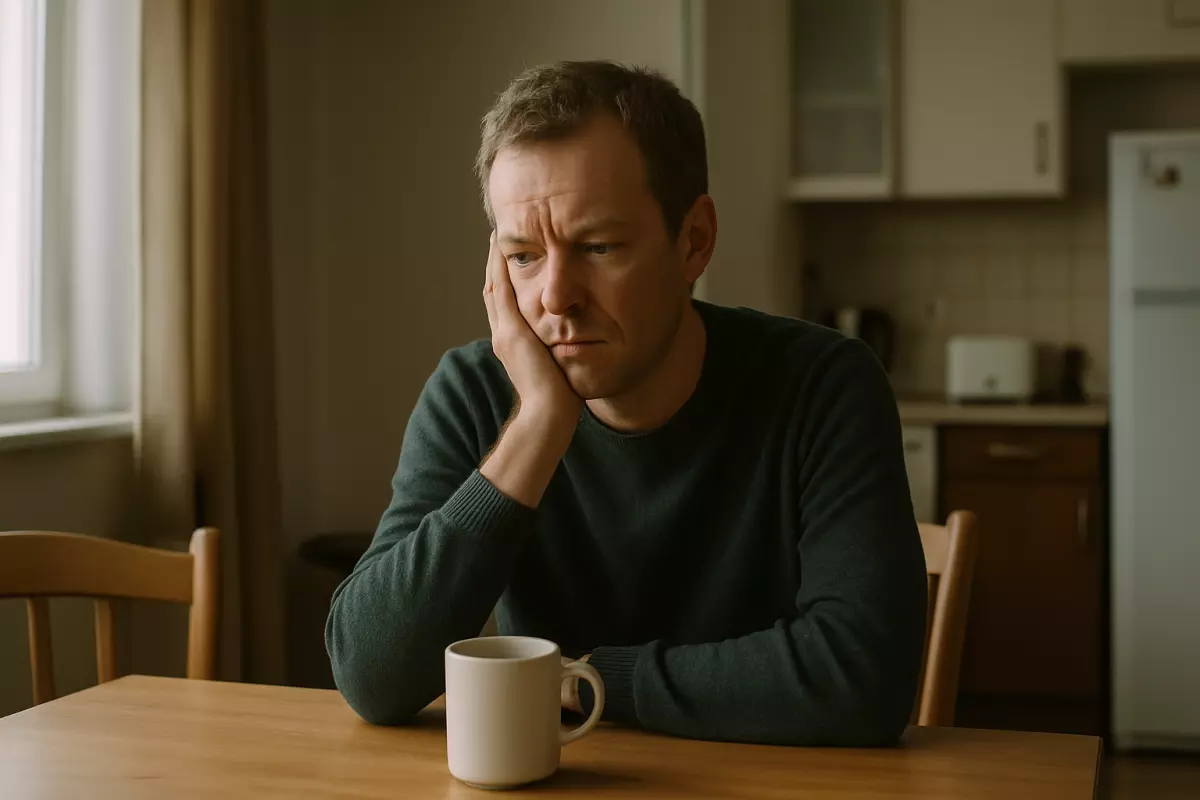
When you spend long stretches alone, your day often contains fewer small cues that normally keep emotions in motion: casual conversation, background activity, shared routines, and quick feedback from other people. With less “outside input,” mood can start to feel flatter, more changeable, or oddly intense because there are fewer interruptions and fewer reality checks.
This isn’t always negative. Some people feel calmer and more focused without constant social noise. Others notice that emotions linger longer than usual, because there’s less to redirect attention. A quiet environment can also make internal signals—fatigue, hunger, worry, excitement—stand out more, which can make mood swings feel sudden even when the cause is basic.
- Fewer micro-interactions: Without brief chats, smiles, or shared tasks, there are fewer quick boosts that can subtly lift mood during the day.
- Less external structure: Social plans and other people’s schedules often anchor sleep, meals, and activity. When that structure fades, mood may follow irregular routines.
- More attention on thoughts: With fewer distractions, the mind can loop on the same topics. This can deepen reflection, but it can also amplify irritability or sadness.
- Sensory “underload” or “overload”: Some people feel bored and restless in low-stimulation settings; others become more sensitive to small noises or clutter because there’s nothing else competing for attention.
- Delayed emotional reset: In company, emotions often shift naturally as situations change. Alone, there may be fewer natural transitions, so a bad moment can color a whole afternoon.
Common patterns include a slow drift toward low energy, followed by bursts of motivation when something finally captures attention. Another pattern is feeling fine while busy, then experiencing a noticeable dip once tasks end and the environment goes quiet again. Over time, these swings can start to seem unpredictable, even though they often track simple factors like sleep debt, lack of movement, or too much screen time.
It can help to notice what usually “moves the needle” on your mood in everyday life—conversation, errands, exercise, music, time outdoors—and whether those inputs have quietly disappeared. Reintroducing a few predictable sources of stimulation (even small ones) often makes emotional shifts feel less extreme and more understandable.
Overthinking and internal dialogue effects
Long stretches of solitude often turn attention inward. Without the usual back-and-forth of conversations, the mind fills the space with self-talk: replaying moments, planning, worrying, and narrating what’s happening. This can feel clarifying at first, but it can also intensify mood swings when the inner voice becomes repetitive or harsh.
A common pattern is that thoughts become “stickier.” Small uncertainties (a delayed reply, an awkward memory, an unfinished task) get revisited more times than they would during a busy day. The brain treats unresolved questions like open tabs, and when there are fewer distractions, it’s easier to keep clicking the same one. Over time, this loop can nudge mood toward irritability, low energy, or anxious tension.
- Rumination: Replaying past events to figure out what went wrong can shift from reflection into a loop that keeps negative feelings active.
- Future-tripping: Mentally rehearsing worst-case scenarios may create a sense of urgency or dread even when nothing is happening in the moment.
- Self-critique: Alone time can amplify an internal “editor” that points out flaws, making neutral days feel like personal failures.
- Hyper-monitoring: Noticing every mood change (“Why am I tired? Why do I feel off?”) can make emotions feel bigger and harder to shake.
- Meaning-making spirals: Interpreting normal quiet as “something is wrong” can turn temporary loneliness into a heavier, more hopeless mood.
Not all inner dialogue is a problem. Constructive self-talk tends to be specific and practical, like deciding what to cook, setting a small goal, or naming a feeling without judging it. The mood impact is usually steadier when the inner voice sounds like a helpful coach rather than a prosecutor.
| Pattern in the mind | How it often shows up in mood and behavior |
|---|---|
| Problem-solving reflection | More calm focus; action steps feel clearer; tension drops after decisions are made |
| Rumination on the past | Heaviness or guilt; reduced motivation; difficulty enjoying simple activities |
| Catastrophic forecasting | Restlessness; checking behaviors (phone, news, messages); trouble relaxing |
| Harsh self-evaluation | Irritability or shame; withdrawing further; avoiding tasks that feel “too revealing” |
| Neutral observing self-talk | Emotions pass more quickly; better sleep routines; easier transitions between tasks |
Everyday cues can hint that thinking has shifted from useful to draining: the same topic returns no matter what you do, your body feels tense while you “analyze,” or you keep seeking certainty but feel less settled. In prolonged alone time, these loops can become the background soundtrack, subtly shaping how the day feels even when nothing external changes.
Breaking the cycle often starts with changing the shape of attention rather than winning an argument with yourself. Switching to a concrete activity (tidying one area, making a simple meal, stepping outside, writing a short list) gives the mind a new anchor. When the inner dialogue becomes more balanced and less repetitive, mood changes during solitude tend to be less extreme and easier to predict.
Loss of emotional feedback from others

When you spend long stretches alone, you stop getting the small, everyday reactions that normally help you read a situation: a smile that signals “you’re fine,” a puzzled look that prompts you to clarify, or a change in someone’s tone that tells you to slow down. Without these cues, it’s easier for mood to drift because there’s less real-time correction and reassurance. Your mind has to guess what others might think or feel, and guesses often skew negative when you’re tired, stressed, or already low.
In typical social life, emotional cues act like a mirror. They help you calibrate how intense your feelings are, whether your concerns are proportionate, and whether you’re being understood. Over time, reduced social feedback can make emotions feel either muted (because nothing is “activating” them) or amplified (because there’s no outside perspective to balance them). This can show up as more rumination, quicker irritability, or a sense of emotional “flatness.”
- More second-guessing: Without nods, follow-up questions, or gentle disagreement, it’s common to replay conversations that never happened and imagine how they would go.
- Less emotional regulation by context: People often naturally adjust their mood to match the room. Alone, there’s no shared rhythm, so feelings may swing more based on internal thoughts.
- Weaker reality checks: Friends and coworkers casually normalize experiences (“that happens to everyone”) or offer perspective. In isolation, worries can start to feel uniquely personal or urgent.
- Reduced positive reinforcement: Compliments, laughter, and simple recognition (“good job”) are small mood stabilizers. Without them, motivation and confidence can dip.
- Misreading your own signals: You may mistake boredom for sadness, or quiet for peace, because there are fewer external prompts to label what you’re feeling.
Some patterns are subtle at first. You might notice you’re less expressive on calls, or you avoid messaging because it feels effortful to “perform” emotion in text. Others find they become more blunt, not from hostility, but from losing practice in softening tone and reading how it lands. Over time, this can create a loop: fewer interactions lead to fewer cues, which makes interaction feel harder, which leads to even less contact.
| Everyday cue you’re missing | Common mood effect when it’s absent |
|---|---|
| Facial expressions (smiles, concern, confusion) | More uncertainty about how you’re coming across; increased self-criticism or overexplaining |
| Tone and timing (warmth, pauses, quick reassurance) | Greater sensitivity to perceived rejection; more anxious interpretation of silence |
| Body language (leaning in, relaxed posture, distance) | Harder to gauge closeness and safety; emotions may feel less grounded |
| Spontaneous check-ins and shared reactions | Lower sense of connection; fewer “uplifts” that break up low mood |
Noticing this dynamic can help explain why moods sometimes shift during prolonged solitude even when nothing “bad” has happened. It’s often the absence of ordinary social signals—tiny confirmations, corrections, and shared moments—that changes how emotions are interpreted and managed day to day.
Difference between healthy solitude and isolation
Time alone can either restore you or gradually wear you down, and the difference often shows up in how much choice, connection, and emotional balance are still present. Solitude tends to feel like a deliberate pause from people, while isolation is more like being cut off even when you would rather not be.
| Healthy solitude | Isolation |
|---|---|
| Usually chosen and flexible (you can opt in and opt out). | Often feels forced or stuck (hard to change even if you want to). |
| Leaves you feeling steadier, clearer, or recharged afterward. | Leaves you feeling drained, numb, or increasingly on edge. |
| Includes some ongoing contact: brief chats, messages, or planned meetups. | Contact shrinks over time; reaching out starts to feel pointless or overwhelming. |
| Thoughts stay relatively balanced; self-talk is realistic and kind. | Rumination grows; self-talk becomes harsher or more hopeless. |
| Daily routines are maintained: meals, sleep, movement, basic chores. | Routines slip: irregular sleep, skipped meals, less hygiene, less activity. |
| You still feel like yourself around others when you do interact. | Social situations start to feel unfamiliar; you may feel detached or “out of practice.” |
During prolonged time spent alone, mood changes often depend on which side you’re drifting toward. Restorative alone time usually supports calm focus and emotional processing, but disconnection can amplify stress signals, make small problems feel bigger, and reduce motivation to do everyday tasks.
- Solitude is more likely when you schedule it, enjoy it in doses, and can reconnect without much friction.
- Isolation is more likely when you avoid contact out of fear, shame, low energy, or a sense that others won’t understand.
- A practical checkpoint is whether alone time helps you return to people with more patience and interest, or whether it makes you pull back further.
A simple way to tell them apart is to look at your “re-entry” experience. If sending a message, answering a call, or meeting someone feels doable after some quiet time, that points to healthy separation. If the idea of contact triggers dread, irritability, or a heavy sense of effort that keeps increasing, that pattern is closer to isolation and may explain why mood shifts become more persistent.
Personality traits and alone-time reactions
How you feel after hours or days by yourself often depends on your usual social needs, how you handle uncertainty, and what you do with the quiet. Some people settle quickly into a steady mood, while others cycle between relief, boredom, and restlessness. These patterns are not fixed rules, but they can help explain why the same amount of solo time feels restorative to one person and draining to another.
A useful way to think about it is that traits influence two things: what you seek (stimulation, connection, calm, control) and what you notice (threats, missing out, unfinished tasks, bodily sensations). When alone-time removes everyday feedback from others, your attention tends to turn inward, which can amplify both strengths (focus, creativity) and vulnerabilities (rumination, worry).
| Trait tendency | Common mood shifts during extended solitude | What often helps |
|---|---|---|
| More introverted (recharges alone, lower need for frequent interaction) | Early calm and relief; later risk of drifting into low energy or “stuck” feelings if days become unstructured | Light social touchpoints, a loose plan for the day, and activities that create a sense of progress |
| More extraverted (energized by people, higher need for stimulation) | Restlessness, irritability, or flat mood when stimulation drops; may seek quick distractions | Scheduled calls, group activities even if brief, movement breaks, and novelty (new route, new project) |
| High neuroticism (sensitive to stress, prone to worry) | More frequent anxiety spikes, rumination, and sleep disruption; small concerns can feel bigger without outside perspective | Grounding routines, limiting doom-scrolling, writing worries down, and reality-checking thoughts |
| High conscientiousness (organized, goal-driven) | Stable mood when routines hold; frustration or guilt if plans slip; may overwork to regain control | Realistic daily targets, clear start/stop times, and recovery activities that feel “allowed” |
| High openness (curious, imaginative) | Can experience creative lift and deep focus; may also feel unmoored if imagination turns into overthinking | Creative projects with constraints, learning goals, and balancing reflection with practical tasks |
| High agreeableness (relationship-focused, harmony-seeking) | Loneliness may show up as sadness or self-criticism; may replay conversations to check for mistakes | Meaningful check-ins, acts of kindness at a distance, and reminders of mutual support |
- Social appetite shapes the “withdrawal” effect. If your baseline includes frequent interaction, a sudden drop can feel like low-grade deprivation, showing up as agitation, boredom, or a dip in motivation.
- Stress sensitivity changes how quiet feels. For some, silence is soothing; for others it creates space for worry loops. The difference is often less about the room being quiet and more about the mind filling the gap.
- Structure matters more over time. Many people do fine for a day or two, then mood becomes more variable when sleep, meals, and activity lose regularity. Traits like conscientiousness can protect mood when routines are maintained.
- Coping style affects the direction of mood change. Problem-solving coping tends to stabilize emotions (“I’ll make a plan”), while avoidance coping can create short relief followed by a stronger slump (“I’ll just scroll”).
- Need for meaning influences loneliness. Some people tolerate being alone well when they feel purposeful; the same solitude can feel heavy when days lack clear goals or connection to others.
These tendencies can also interact. For example, an extraverted person who is also highly conscientious may cope better by scheduling social time and tasks, while an introverted person with high stress sensitivity may still struggle if alone-time becomes a cue for rumination. Paying attention to your typical pattern can make it easier to choose supports that fit your temperament rather than forcing a one-size approach.
When solitude restores vs drains emotional balance
Time alone can either steady your mood or quietly unsettle it, depending on what your mind and body are using that time for. The difference often shows up in how you feel after being alone: more grounded and clear, or more tense, flat, and reactive when you return to everyday demands.
Solitude tends to be restorative when it gives your nervous system a break and helps you process thoughts at a manageable pace. It tends to be draining when it becomes a holding pattern: fewer cues from other people, less structure, and more room for worry loops, self-criticism, or a sense of disconnection.
| Pattern during time alone | More likely to restore emotional balance | More likely to drain emotional balance |
|---|---|---|
| How the time is structured | Has a loose plan (meals, chores, hobbies, rest) and a natural start/stop | Days blur together; sleep and meals drift; no clear “done for the day” point |
| What attention keeps returning to | Problem-solving in small steps; reflection that leads to decisions or acceptance | Rumination, replaying conversations, “what if” spirals, harsh self-evaluation |
| Emotional tone over the day | Calm with normal ups and downs; feelings move and resolve | Persistent irritability, numbness, anxiety, or sadness that lingers |
| Body signals | Energy gradually returns; appetite and sleep are fairly steady | Restlessness, headaches, fatigue, appetite changes, or sleep reversal |
| Relationship to social contact | Chooses connection intentionally (a call, a walk with someone) and feels better afterward | Avoids contact out of dread or shame; interactions feel harder with time |
| Sense of meaning | Alone time supports values (learning, creativity, recovery, faith, nature) | Feels pointless; increased scrolling, procrastination, or “killing time” |
One practical way to tell the difference is to check the “re-entry effect.” After a stretch alone, restorative alone time usually makes everyday tasks feel more doable, even if you still prefer quiet. Draining isolation often makes small demands feel unusually heavy, and mood swings can become sharper when you do have to engage.
- Restorative alone time often includes some movement, some completion (finishing a task), and some comfort (rest, music, reading) without losing track of time.
- Draining alone time often includes long unbroken stretches of passive activity, irregular routines, and fewer moments that create a sense of progress or connection.
- Mixed days are common: a morning of quiet can help, while an unstructured evening can tip into overthinking. The pattern across several days matters more than any single afternoon.
As prolonged time spent alone continues, the same environment can switch from soothing to depleting if basic supports drop away: regular sleep, meals, daylight, and small social touchpoints. Keeping those anchors tends to protect emotional balance, while losing them makes mood changes more likely and harder to predict.