Living on Autopilot: Emotional Numbness and “Going Through Life”

 The article explains what autopilot mode feels like internally, why routines keep going as emotions fade, and how you can function well without emotional engagement. It covers lost spontaneity, blurred time, why autopilot feels safe but empty, and small disruptions to shift into conscious presence.
- What “autopilot mode” feels like internally
- Why routine continues while emotions fade
- Functioning well without emotional engagement
- Loss of spontaneity and emotional color
- How time can blur when living automatically
- Why autopilot can feel safe but empty
- Small disruptions that restore awareness
- Shifting from autopilot to conscious presence
Going through your days on autopilot, with emotions muted, can make it seem like everything is fine while something important is missing. You reply to messages, meet deadlines, and keep plans, yet moments that once mattered just slip by. This emotional numbness can creep in after stress, loss, or burnout, leaving you unsure when you last felt fully present.
What “autopilot mode” feels like internally
It often shows up as doing the right things on the outside while feeling oddly absent on the inside. Tasks get completed, conversations happen, and days move forward, but there’s a sense that you’re watching yourself participate rather than fully inhabiting the moment. People commonly describe it as “going through the motions” with a muted emotional range and a narrow focus on what needs to be done next.
This state can be subtle. It may not feel like sadness or panic; it can feel like flatness, low urgency, or a quiet disconnection from personal preferences. Decisions get made based on habit, convenience, or what’s expected, not on what feels meaningful. Even pleasant events can register as “fine” without much spark.
- Attention runs on rails: You can concentrate on routine steps (emails, chores, commuting) but struggle with open-ended thinking, creativity, or reflecting on what you want.
- Emotions feel muted or delayed: Feelings may be hard to name in real time, or they show up later as irritability, sudden tears, or exhaustion rather than clear signals.
- Time blurs together: Days can feel repetitive, with fewer distinct memories. You might look back and realize a week went by without much sense of “being there.”
- Social interactions become scripted: You know what to say and can be polite or even funny, but it can feel like performing a role instead of connecting.
- Body cues get quieter: Hunger, fatigue, tension, and stress signals may be ignored until they become intense (headaches, tight shoulders, sleep changes).
- Motivation becomes maintenance-based: The drive is to keep things from falling apart rather than to pursue goals that feel personally rewarding.
- Choices feel low-stakes: Preferences can seem distant (“I don’t care” becomes the default), even for things that used to matter.
| Internal experience | How it often shows up day to day |
|---|---|
| Emotional “volume” turned down | Good news and bad news both land with a similar, muted reaction; you may say the right words without feeling much behind them. |
| Operating from habit instead of intention | You follow routines automatically, choose the same foods, media, or routes, and avoid decisions that require self-reflection. |
| Low sense of personal presence | Moments feel unreal or distant; you may catch yourself thinking, “I’m here, but not really here.” |
| Narrow focus on immediate tasks | You handle checklists well but feel overwhelmed by planning, long-term goals, or anything that asks “what do you want?” |
| Reduced emotional feedback for boundaries | It’s harder to notice when something is too much; you agree, comply, or push through until burnout or resentment builds. |
Autopilot living can also come with a sense of being “fine” while simultaneously feeling disconnected. Because nothing is dramatically wrong in the moment, it’s easy to dismiss the numbness as laziness or a personality change. More often, it’s a pattern of coping: the mind conserves energy by prioritizing function over feeling, especially when stress, overload, or unresolved emotions have been running in the background for a while.
Why routine continues while emotions fade
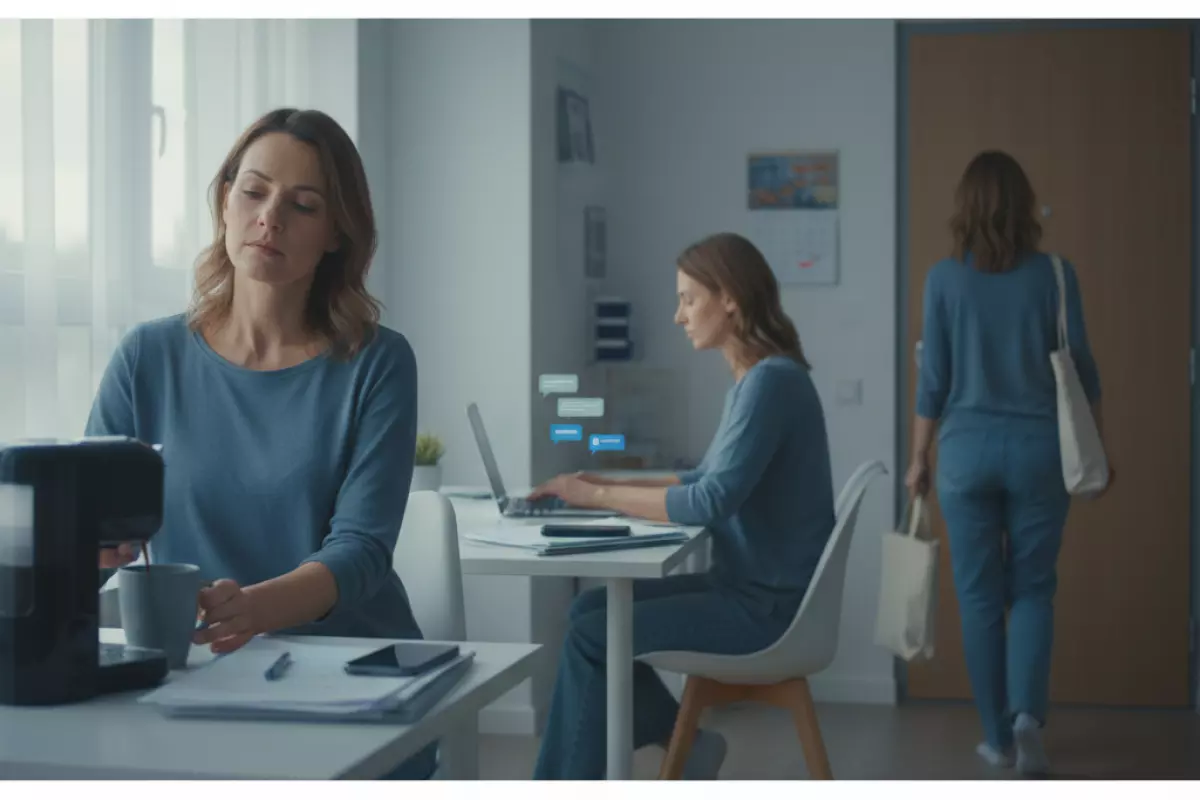
Daily life can keep moving even when feelings feel distant because habits and obligations run on well-practiced scripts. Once routines are learned, the brain can execute them with minimal conscious effort, especially when attention is limited or stress is high. This is why someone may still get up, work, answer messages, and handle errands while feeling flat or disconnected inside.
In many cases, numbness isn’t a lack of functioning but a shift in how the mind allocates energy. Emotional processing takes resources: noticing sensations, interpreting meaning, and responding socially. When those resources are strained, the system often defaults to what is predictable and efficient, such as checklists, schedules, and “just do the next thing” behavior.
- Habit memory stays available. Repeated actions (commuting, logging into work, cooking familiar meals) rely on procedural memory, which can operate even when motivation is low or emotions are muted.
- External structure carries the day. Deadlines, school drop-offs, bills, and social expectations provide prompts that don’t require strong internal desire to follow through.
- Avoidance can look like productivity. Staying busy can reduce contact with uncomfortable feelings; tasks become a way to postpone reflection, grief, or conflict.
- Emotional “volume” gets turned down under strain. With chronic stress, burnout, or prolonged uncertainty, the nervous system may dampen emotional intensity to prevent overload, while basic functioning continues.
- Attention narrows to the practical. When mental bandwidth is limited, people often prioritize what is measurable and immediate (emails, chores) over what is internal and harder to define (needs, values, connection).
- Social roles can override inner experience. Parenting, caregiving, and workplace roles come with scripts that encourage “showing up” even when someone feels detached.
| What keeps running | What tends to fade | How it shows up day to day |
|---|---|---|
| Automatic habits | Curiosity and spontaneity | Doing the same tasks in the same order; little interest in changing routines |
| Obligations and deadlines | Personal preference signals | Choosing what is required over what is wanted; “I don’t care” responses |
| Problem-solving mode | Emotional nuance | Focusing on fixes and logistics; difficulty naming feelings beyond “fine” or “tired” |
| Social scripts (politeness, role behavior) | Sense of connection | Smiling, nodding, and participating while feeling distant or “not really there” |
| Short-term coping strategies (busyness, scrolling, distractions) | Restorative downtime | Filling gaps with noise; discomfort when things get quiet |
This pattern can be confusing because outward behavior suggests everything is fine. Internally, though, life may feel like a sequence of steps rather than experiences. The mismatch often persists until something interrupts the script, such as a conflict, a loss, a major change, or a moment of stillness that makes the emotional distance more noticeable.
Functioning well without emotional engagement
It can look like everything is “fine” on the outside: work gets done, bills are paid, and routines stay intact. The difference is that actions are driven more by habit, obligation, or logic than by interest, enjoyment, or a felt sense of meaning. People may seem reliable and composed while privately experiencing little emotional pull toward what they’re doing.
This pattern often shows up as a strong ability to perform in structured settings and a weaker connection to experiences that usually create warmth or motivation. Instead of feeling engaged, a person may rely on checklists, schedules, and rules to decide what to do next, moving from task to task with minimal inner response.
- High task completion, low satisfaction: responsibilities are handled, but there’s little pride, excitement, or relief afterward.
- Preference for routine: predictable schedules feel easier because they reduce the need to “feel” what matters in the moment.
- Social participation without presence: conversations are polite and appropriate, yet feel scripted or distant, as if watching oneself interact.
- Decision-making becomes mechanical: choices are based on what is sensible or expected, not on desire or personal preference.
- Reduced spontaneity: invitations and new experiences may be declined, not from fear, but from a lack of emotional pull.
- Muted reactions to good or bad news: others may notice a flat response, even when the situation would typically bring joy, anger, or sadness.
- “Busy” as a default state: staying occupied can prevent noticing emptiness, boredom, or disconnection.
| Area of life | What it often looks like externally | What it can feel like internally | Common everyday workaround |
|---|---|---|---|
| Work or school | Consistent output, meets deadlines, dependable | Little interest, “just getting through it,” minimal reward | Relying on routines, productivity systems, strict structure |
| Relationships | Shows up, responds, keeps commitments | Detached, hard to feel closeness, empathy feels effortful | Using learned social scripts and focusing on being “appropriate” |
| Self-care | Basic hygiene and meals maintained | Care feels like maintenance, not nurturing | Turning self-care into a checklist rather than a restorative activity |
| Leisure and hobbies | Watches shows, scrolls, “relaxes” | Low pleasure, time passes without feeling refreshed | Choosing passive activities that require little emotional investment |
| Big life choices | Makes practical decisions, avoids obvious risks | Unclear preferences, difficulty imagining a wanted future | Defaulting to what is expected, safest, or easiest to justify |
Because performance remains intact, this kind of emotional disconnection can be missed by others and even by the person living it. The main clue is not dysfunction but a persistent sense of neutrality: days are organized and productive, yet they don’t register as personally meaningful.
Loss of spontaneity and emotional color
When life starts to feel muted, people often notice they’re doing the “right” things on paper but with less spark. Choices become more about efficiency and avoiding discomfort than curiosity or enjoyment. The day still moves forward, yet reactions feel flatter and moments that used to stand out blur together.
This shift usually shows up in ordinary routines. Instead of acting on small impulses—trying a new café, texting a friend first, taking a different route home—there’s a tendency to stick to the safest, most familiar option. It can look like being “low maintenance” or “easygoing,” but it’s often more like running on default settings.
- Fewer unplanned moments: Plans feel like obligations, and spontaneous invitations are declined because they seem tiring or pointless.
- Reduced emotional range: Positive feelings (excitement, pride, affection) and negative feelings (anger, sadness, disappointment) both register less clearly.
- Preference for predictable comfort: The same shows, same foods, same conversations—less because they’re loved, more because they require minimal effort.
- Delayed responses: Laughing a beat late, needing time to “figure out” what you feel, or reacting intellectually rather than emotionally.
- Less playful behavior: Joking, teasing, dancing, singing along, or being silly feels awkward or “not worth it.”
- Lower curiosity: New topics, hobbies, or experiences seem bland, even if they used to be interesting.
In social settings, this can come across as being present but not fully engaged. Someone might listen politely and say the expected things, yet avoid sharing strong opinions or personal stories. Compliments and criticism may both land with a similar, dulled impact, leading others to describe the person as “hard to read.”
Decision-making often becomes narrower, too. Instead of asking “What do I want?” the internal question shifts to “What’s easiest?” or “What prevents problems?” Over time, that can shrink a person’s sense of identity because preferences are expressed less often, and the small choices that add personality to daily life get filtered out.
| Everyday area | How it may show up | What it’s often mistaken for |
|---|---|---|
| Free time | Defaulting to scrolling or background TV instead of activities that require engagement | “Just relaxing” |
| Relationships | Responding warmly but rarely initiating, keeping conversations practical | Being busy or independent |
| Work and tasks | Doing what’s required with little satisfaction, avoiding creative risks | Professionalism or discipline |
| Food, music, entertainment | Choosing what’s familiar, skipping experimentation, feeling “meh” about favorites | Having simple tastes |
| Body signals | Not noticing tension, hunger, or fatigue until it’s intense | Being tough or “fine” |
A key detail is that the person may still function well externally. Bills get paid, messages get answered, responsibilities are handled. The change is more about the quality of experience—less vividness, less surprise, and fewer moments that feel personally meaningful.
Over time, this flattening can reinforce itself: when fewer things feel rewarding, it makes sense to do less, and when life becomes more repetitive, it offers fewer chances for emotion to naturally return. Recognizing these patterns in routine behavior is often the first clue that “going through the motions” has become the default.
How time can blur when living automatically

Days can start to feel like they’re running together when routines take over and attention stays on completing tasks rather than noticing experiences. When the mind is focused on “what’s next” (emails, errands, chores, deadlines), fewer moments are encoded as distinct memories. Later, looking back, it can seem like weeks disappeared, even though each day was full.
This often happens because memory is built from novelty and emotional engagement. Repeated activities require less conscious processing, so the brain stores them as a general pattern instead of a series of separate events. The result is a sense of time moving quickly in hindsight, paired with a “same day, different date” feeling while living it.
- Routine dominance: Waking, commuting, working, and scrolling follow the same sequence, so there are fewer “markers” that make one day stand out from another.
- Low emotional signal: When feelings are muted or kept at arm’s length, experiences can register as neutral, making them less memorable and easier to blend together.
- Constant partial attention: Multitasking and frequent checking (messages, news, notifications) can prevent full presence, so moments don’t consolidate into clear recall.
- Task-completion mindset: Life becomes a chain of obligations, and the brain prioritizes efficiency over detail, compressing the memory of what happened.
- Stress and fatigue effects: Ongoing stress can narrow attention to immediate demands, while tiredness reduces the ability to form strong, detailed memories.
| Everyday pattern | How it can distort time | What it may look like day to day |
|---|---|---|
| Repeating the same schedule | Fewer distinct memory “anchors,” so weeks feel compressed | Hard to recall what happened on which day |
| Operating on habit instead of choice | Less conscious attention, so experiences blur together | Doing tasks “without thinking,” then feeling surprised the day is over |
| Emotionally flat or detached state | Lower emotional tagging, which weakens recall | Remembering facts (meetings, chores) but not a sense of the day |
| High screen time and frequent switching | Fragmented attention, creating shallow memory traces | Lots of activity, little that feels meaningful or memorable |
| Chronic busyness or stress | Time feels urgent in the moment, then disappears in retrospect | Counting down to weekends, then wondering where they went |
In the moment, automatic living can feel oddly fast and slow at the same time: hours pass quickly because attention is narrowed to getting through the checklist, yet the day can feel heavy because nothing stands out as rewarding or absorbing. Over time, that combination can create a “missing time” impression, where life looks smaller in memory than it actually was.
Common signs include frequently losing track of the day of the week, struggling to describe what was enjoyable or meaningful about the past month, and feeling like life is on repeat. These patterns don’t necessarily mean nothing happened; they often indicate that experiences weren’t fully registered as separate, lived moments.
Why autopilot can feel safe but empty
Running on routine can bring a sense of control: the day is predictable, decisions are minimized, and there are fewer chances to feel overwhelmed. Many people slip into this mode during busy seasons, stress, grief, conflict, or long stretches of responsibility. On the surface, it looks like “functioning,” because tasks still get done and life keeps moving.
The trade-off is that this kind of emotional shutdown often narrows the range of experience. When the mind focuses on getting through the next obligation, it may dial down both discomfort and pleasure. That can create a steady, muted feeling where nothing is terribly wrong, but nothing feels deeply meaningful either.
- Predictability reduces anxiety. Repeating familiar patterns lowers uncertainty, which can feel calming when life feels unstable. The brain learns that “sticking to the script” prevents surprises.
- Fewer decisions means less strain. Habits and default choices conserve mental energy. Over time, though, automatic choices can replace intentional ones, making days blend together.
- Emotional numbing can be protective. When feelings are intense or complicated, distancing from them can help someone stay productive. The downside is that the same distancing can also blunt connection, curiosity, and joy.
- Performance can replace presence. People may focus on doing the “right” things—work, errands, caretaking—while feeling detached during conversations, meals, or downtime.
- Short-term relief can become a long-term pattern. What starts as a temporary coping strategy can turn into a default setting, especially if there is no pause to process stress or adjust priorities.
| What feels “safe” about it | What can feel “empty” over time | How it often shows up day to day |
|---|---|---|
| Clear structure and fewer surprises | Days feel repetitive and flat | Same schedule, same routes, same meals without noticing |
| Less emotional exposure | Reduced ability to feel excitement, warmth, or sadness fully | “I’m fine” becomes the default response, even when unsure |
| Efficiency and productivity | Accomplishments don’t feel satisfying | Checking boxes quickly, then wondering why it didn’t help |
| Avoiding conflict or disappointment | Relationships can feel distant or scripted | Polite conversations, low patience, little follow-up |
| Less risk of failure or rejection | Less experimentation and fewer moments of aliveness | Sticking to “safe” choices, postponing hobbies or plans |
This is why autopilot can be confusing: it can look stable from the outside while feeling hollow on the inside. The person may not feel actively distressed, but they also may not feel engaged. Over time, the absence of emotional feedback makes it harder to tell what matters, what needs to change, or what would actually restore a sense of connection.
Small disruptions that restore awareness
When life starts to feel automatic, the most useful changes are often the smallest ones: brief, intentional interruptions that bring attention back to what is happening right now. These are not meant to “fix” everything in one step. They work by creating a moment of contrast, so the brain notices sensations, choices, and emotions that were being skimmed over.
People often stay on autopilot because routines reduce effort. The downside is that the day can blur together, and emotional signals get muted. A tiny shift in timing, environment, or focus can be enough to re-engage awareness without requiring a full lifestyle overhaul.
- Change the first 60 seconds of a routine. Do one small action differently (stand by a window before checking the phone, drink water before coffee, put both feet on the floor and name the day’s first task). The goal is to interrupt the “same start, same day” feeling.
- Use sensory anchors. Pick one sense to check in with for 10–20 seconds: notice temperature on the skin, the pressure of a chair, or the loudest and quietest sounds in the room. Sensory details are often easier to access than feelings when numbness is present.
- Label the moment with simple words. Instead of searching for a perfect emotion, use basic categories: “tired,” “tense,” “flat,” “restless,” “okay.” Naming reduces vagueness and makes patterns easier to spot.
- Make one choice deliberately. Autopilot is reinforced by default decisions. Choose one small thing on purpose (what to eat, which route to take, which task to start). The content of the choice matters less than the act of choosing.
- Insert a short pause between tasks. Before switching activities, stop for one breath and ask, “What am I moving away from, and what am I moving toward?” This prevents the day from becoming a continuous blur of transitions.
- Change the environment slightly. Open a curtain, adjust lighting, sit in a different chair, step outside for two minutes, or tidy one surface. A small physical shift can cue mental presence.
- Do a micro body check. Scan three areas only (jaw, shoulders, stomach). If there’s tension, soften it by 10%. This keeps the check-in brief and reduces the tendency to “overanalyze.”
- Use “one-message” social contact. Send a short, low-pressure text (“Thinking of you,” “How’s your week?”). Emotional numbness often includes social disengagement; small contact can restore a sense of connection without demanding a long conversation.
| Everyday situation | Autopilot pattern | Small disruption | What it restores |
|---|---|---|---|
| Morning phone check | Scrolling before fully waking up | Delay by 2 minutes and notice 3 physical sensations | Body awareness and a clearer start |
| Commuting or walking | Arriving with little memory of the trip | Choose one “noticing target” (colors, sounds, footfalls) | Present-moment attention |
| Work task switching | Jumping from tab to tab automatically | One-breath pause, then name the next task out loud | Intentional focus |
| Eating | Finishing a meal without tasting it | Take the first three bites slowly and describe texture | Sensory engagement and satiety cues |
| Evening shutdown | Drifting into distraction until sleep | Set a 5-minute “day review” and note one feeling word | Emotional tracking and closure |
These interruptions work best when they are repeatable and low-friction. If a tactic feels like a big project, it is likely to be dropped, which can reinforce the sense of drifting. A small cue that happens consistently is more effective than an ambitious plan that rarely happens.
Over time, brief check-ins can make emotional signals easier to detect: tension shows up sooner, boredom becomes clearer, and moments of interest stand out. That growing contrast is often what helps people move from “going through the motions” to making choices with more awareness.
Shifting from autopilot to conscious presence
Moving out of “default mode” usually starts with noticing how the day gets completed without much awareness. People often realize they have been functioning efficiently but feeling detached: finishing tasks, responding to messages, and making routine choices while their attention stays elsewhere. The goal is not to eliminate routines, but to bring more moments of awareness into them so emotions, needs, and limits become easier to recognize.
A common pattern is that numbness and automatic behavior reinforce each other. When feelings are muted, it is easier to keep doing what is expected; when life becomes a checklist, there is less space to notice what is actually being felt. Building conscious presence tends to work best when it is small, frequent, and tied to real-life cues, rather than relying on motivation or a major life overhaul.
- Use “transition points” as reminders. Pick moments that already happen: waking up, starting the car, opening a laptop, walking into the kitchen. Pause for 10–20 seconds to notice breathing, posture, and the strongest sensation in the body.
- Name what is present without forcing it. A simple label such as “tense,” “flat,” “restless,” or “overloaded” can reduce the sense of being on autopilot. If no emotion is clear, “neutral” or “uncertain” still counts as awareness.
- Check for unmet needs behind the routine. Automatic functioning often covers basics like hunger, fatigue, loneliness, or overstimulation. Ask: “What would make the next hour easier?” rather than “What is wrong with me?”
- Slow one everyday action. Choose one activity (showering, making tea, brushing teeth) and do it slightly slower while noticing temperature, smell, sound, and muscle tension. This builds attention without requiring extra time.
- Interrupt “yes” responses. Many people agree automatically, then feel drained later. Add a brief delay: “Let me check and get back to you.” The pause creates room for preference and boundaries.
- Track patterns, not perfection. The point is to notice when you drift into automatic living: after meetings, late at night, during family interactions, or while scrolling. Patterns show where support and recovery time are most needed.
| Autopilot pattern | What it looks like day-to-day | Simple presence cue to try |
|---|---|---|
| Rushing through routines | Eating quickly, multitasking constantly, arriving mentally “late” to conversations | Before starting, take one slow breath and feel both feet on the floor |
| Emotional flattening | “I’m fine” becomes the default, reactions feel distant, joy and irritation both muted | Label the state (“flat,” “numb,” “tense”) and notice where it shows up in the body |
| Automatic people-pleasing | Saying yes quickly, overexplaining, feeling resentful later | Insert a pause phrase and check: “Do I have time and energy for this?” |
| Scrolling to avoid discomfort | Picking up the phone without deciding to, losing time, feeling foggy afterward | When unlocking the phone, ask: “What am I looking for right now?” |
| Working on “task-only” mode | Ignoring thirst, posture, or fatigue until a crash hits | Set a natural checkpoint (after sending an email) to relax shoulders and unclench jaw |
These steps are meant to be practical and repeatable. Over time, brief check-ins make it easier to catch early signs of shutdown, stress, or disconnection. That awareness creates more choice: taking a break sooner, speaking more honestly, or adjusting expectations before numbness becomes the only way to get through the day.