Sudden Mood Swings Without Clear Reasons or Triggers

 This article explores sudden mood swings that appear without a clear reason. It explains why emotions can shift abruptly, even when nothing obvious happens, and how internal factors like stress buildup, mental overload, fatigue, and overthinking influence emotional stability. The focus is on everyday experiences, not diagnoses.
What Are Sudden Mood Swings?
Sudden mood swings refer to rapid emotional shifts that occur unexpectedly and without obvious external causes. A person may feel calm or emotionally neutral and then experience a sudden change in emotional tone, such as irritation, tension, or emotional drop.
Unlike gradual emotional changes, these shifts feel abrupt and difficult to anticipate. They often appear as sharp emotional turns rather than smooth transitions, which makes them harder to understand and explain.
In many cases, the emotional shift itself is not intense, but the speed and lack of warning make it disruptive. The experience can feel confusing, as if emotional balance is suddenly lost without anything clearly triggering it.
How These Emotional Shifts Are Commonly Experienced
- Emotions change quickly within a short period of time
- The reaction feels stronger than the situation suggests
- No clear external event explains the shift
- The emotional state feels unfamiliar or detached
| Gradual Mood Changes | Sudden Mood Shifts |
|---|---|
| Develop slowly over time | Appear abruptly |
| Often linked to clear events | May occur without visible triggers |
| Feel emotionally predictable | Feel confusing or unexpected |
| Allow time to adapt | Disrupt emotional balance quickly |
Such emotional shifts are a common everyday experience and do not automatically point to a psychological condition. In many situations, they reflect internal strain, accumulated stress, mental fatigue, or emotional tension that has not been consciously noticed.
Recognizing these patterns helps make emotional changes feel less confusing and easier to place within everyday experience.
Why Sudden Mood Swings Happen
Emotional shifts that seem to appear out of nowhere are rarely random. In most cases, they are driven by internal processes rather than by external events.
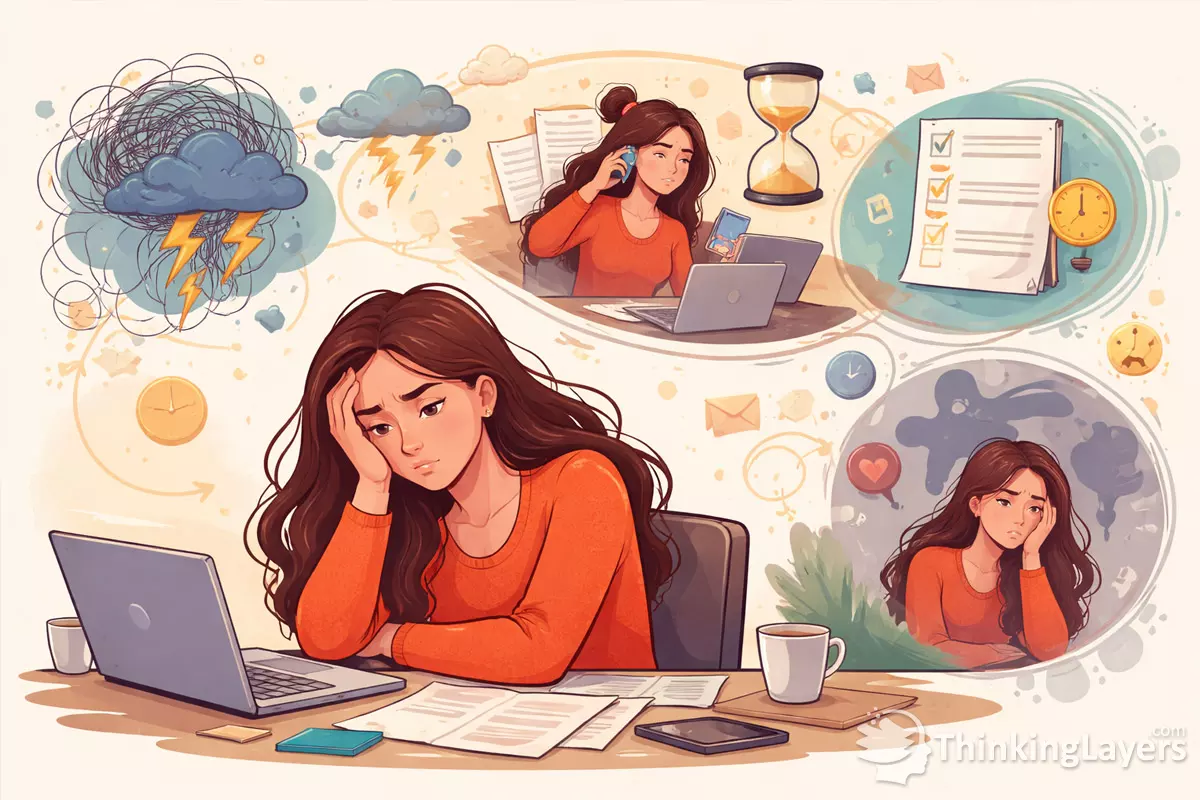
Emotional pressure can build gradually in the background while a person continues functioning normally. When this internal load reaches a certain point, even a small thought or sensation can trigger a noticeable emotional shift.
Common Internal Factors Behind Sudden Emotional Changes
- Accumulated emotional tension that was not expressed
- Mental overload caused by constant thinking or multitasking
- Ongoing stress without opportunities for release
- Unmet expectations or persistent internal pressure
Because these factors operate below conscious awareness, the emotional reaction often feels disproportionate to what is happening in the moment. The visible trigger is small, but the underlying pressure has been present for much longer.
| Internal Process | Effect on Emotional State |
|---|---|
| Emotional suppression | Unexpressed feelings surface abruptly |
| Mental fatigue | Reduced ability to regulate emotions |
| Chronic stress | Heightened emotional reactivity |
| Overthinking | Small thoughts trigger strong reactions |
This explains why emotional shifts can occur even when nothing obvious is happening externally. The cause is internal, delayed, and often unnoticed until the emotional response appears.
Understanding these internal mechanisms makes emotional reactions feel less unpredictable and easier to interpret in everyday life.
Mood Swings Without a Clear Reason
Sudden mood swings are often described as happening “for no reason,” especially when there are no visible events, conflicts, or stressors involved. This creates frustration, as the emotional reaction feels disconnected from what is actually happening.
In reality, the reason is usually not external but internal. Emotional shifts can be triggered by processes that are subtle, delayed, or not consciously recognized at the moment they occur.
Internal tension may accumulate gradually through everyday pressure, unresolved thoughts, or emotional restraint. When the system reaches a certain threshold, the emotional response appears suddenly, even though the buildup has been ongoing.
Why Emotional Shifts Can Feel Unexplained
- The trigger is internal rather than situational
- The buildup happened earlier and went unnoticed
- The emotional response is delayed
- The mind links the reaction to the present moment instead of the cause
| What It Feels Like | What Is Often Happening Internally |
|---|---|
| Emotions change out of nowhere | Stress or tension has accumulated over time |
| No clear external trigger | The trigger is mental or emotional, not situational |
| Reaction feels disproportionate | The response reflects earlier buildup, not the moment |
| Confusion about the cause | The cause is disconnected from awareness |
This is why emotional changes can feel random or unjustified. The mind searches for an immediate explanation, but the real cause is often delayed and internal rather than tied to the present situation.
Recognizing this pattern helps reduce self-blame and makes emotional reactions easier to interpret, even when they seem to appear without a clear reason.
Common Internal Triggers
This section is not medical advice and not a set of universal rules. These are everyday, low-pressure adjustments that can make emotional balance less fragile and mood shifts easier to understand. The goal is not to suppress emotions, but to reduce the background strain that makes reactions feel sudden.
When emotional shifts feel sudden, the underlying triggers are usually internal rather than external. These triggers develop gradually and influence emotional balance long before any noticeable reaction appears.
In many cases, sudden mood swings emerge when several internal factors overlap. Each factor alone may feel manageable, but together they increase emotional sensitivity and reduce stability.
Internal Factors That Often Contribute to Emotional Shifts
- Ongoing mental pressure without emotional release
- Persistent overthinking and internal dialogue
- Suppressed emotions that remain unprocessed
- Unmet expectations toward oneself or others
- Mental or physical fatigue affecting regulation
Because these processes unfold internally, they often remain unnoticed. A person may continue functioning normally while emotional load quietly accumulates in the background.
When this internal pressure reaches a certain point, even a small thought or sensation can trigger a noticeable emotional shift. The reaction feels sudden because the buildup was gradual and largely unconscious.
Understanding these internal triggers helps explain why emotional reactions may feel disproportionate to the present moment and why they often seem disconnected from what is actually happening.
Stress, Fatigue, and Mental Overload
Stress, fatigue, and mental overload are among the most common background factors that destabilize emotional balance. They often build up gradually and remain unnoticed until emotions begin to react more sharply than expected.

When mental resources are depleted, the ability to regulate emotions weakens. Reactions become quicker, less filtered, and harder to control, even in situations that would normally feel manageable.
How Mental Load Affects Emotional Stability
- Constant problem-solving without mental rest
- Multitasking that keeps attention fragmented
- Lack of recovery between demanding periods
- Pressure to stay focused while feeling exhausted
Fatigue plays a key role here. Emotional regulation requires energy, and when that energy is low, emotions tend to surface more abruptly. This does not mean emotions are stronger — it means the system regulating them is weaker.
Over time, accumulated stress and mental overload reduce tolerance for uncertainty, noise, and internal pressure. Emotional reactions may then appear suddenly, even if the external situation has not changed.
Recognizing the role of stress and fatigue helps explain why emotional shifts often coincide with periods of exhaustion rather than with specific events.
Overthinking and Inner Dialogue
Overthinking and constant inner dialogue can quietly destabilize emotional balance. Even when nothing stressful is happening externally, the mind may continue processing, analyzing, and replaying thoughts without pause.
This ongoing mental activity increases emotional sensitivity. Thoughts begin to carry more emotional weight, and small ideas or worries can trigger noticeable shifts in how a person feels.
How Internal Dialogue Influences Emotions
- Repeatedly analyzing the same situations or decisions
- Mentally replaying past events or conversations
- Anticipating future outcomes without resolution
- Self-critical or demanding internal narratives
When the mind remains in a constant loop, emotions respond not to the present moment but to imagined scenarios, interpretations, or expectations. This creates a gap between what is happening and how it feels emotionally.
Over time, persistent inner dialogue reduces emotional flexibility. Emotional reactions become quicker and less grounded, especially during periods of fatigue or stress.
Often the emotional shift happens after the mental loop has been running for a while, not during the thoughts themselves. Because the overthinking started earlier and felt “normal,” the mood change later can seem sudden and disconnected from any cause. In reality, the emotion is frequently a delayed response to accumulated mental pressure rather than to what is happening in the moment.
Becoming aware of these mental patterns helps explain why emotional shifts can feel sudden, even when they are rooted in ongoing thought processes rather than external events.
How Sudden Mood Swings Affect Daily Life
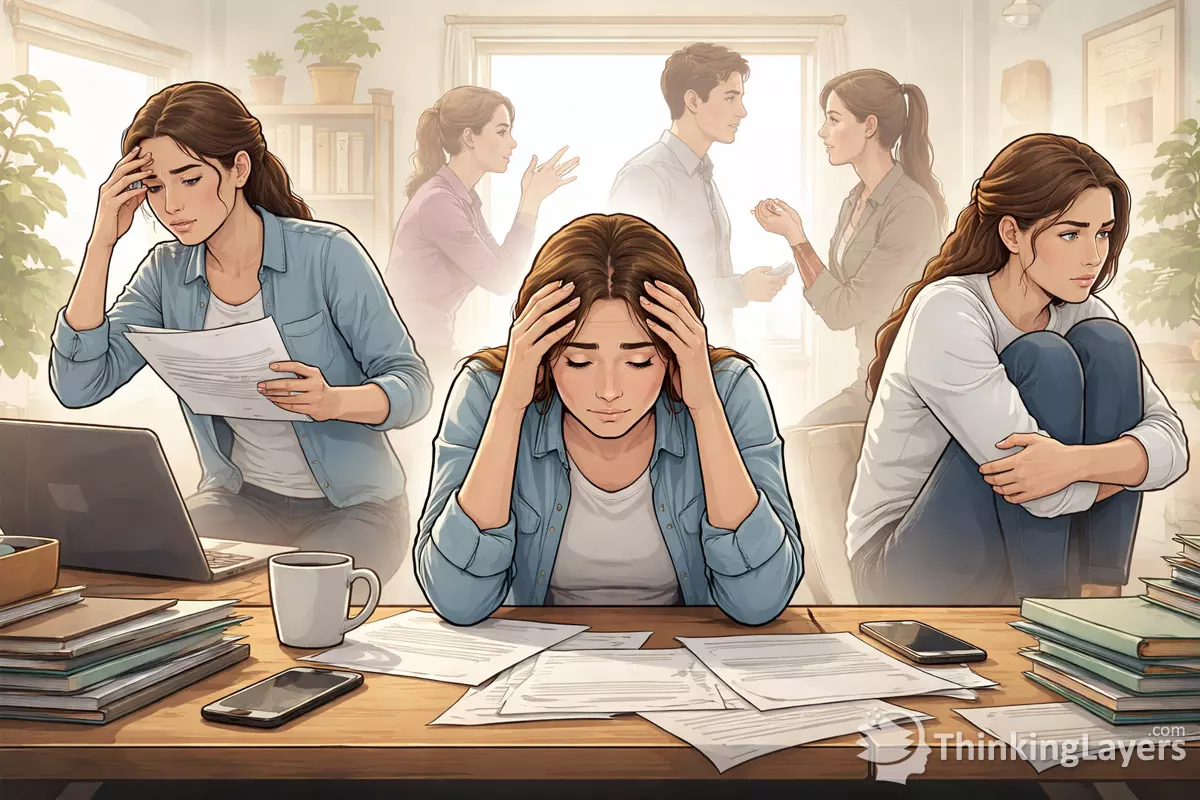
When emotional shifts happen abruptly, they can quietly influence everyday functioning. Even if the change is subtle, it may affect how a person thinks, reacts, and interacts with others throughout the day.
Sudden mood swings often disrupt internal rhythm. Tasks that usually feel manageable may suddenly require more effort, while decision-making and concentration become less stable.
Common Areas Affected by Emotional Shifts
- Reduced focus and mental clarity
- Lower motivation or difficulty starting tasks
- Increased irritability or emotional withdrawal
- Less patience in communication and relationships
Because these effects are internal, they are not always visible to others. A person may appear functional on the outside while experiencing emotional instability internally.
Over time, repeated emotional shifts can create uncertainty about one’s own reactions. This may lead to self-doubt, hesitation, or increased effort to control emotions during routine situations.
Understanding how emotional fluctuations influence daily life helps place these experiences in context and reduces the tendency to interpret them as personal failure or loss of control.
What Can Help in Everyday Life
When emotional shifts feel sudden, the goal is not to “force” a stable mood but to reduce the conditions that make emotional balance fragile. Small, consistent adjustments often work better than dramatic changes.
Practical Steps That Often Help
- Lower overall load. Reduce multitasking, limit unnecessary commitments, and avoid stacking demanding tasks without breaks.
- Build recovery into the day. Short pauses, quiet time, and simple routines help the nervous system reset.
- Track patterns instead of blaming yourself. Notice when shifts happen more often: after poor sleep, long focus, social overload, or intense thinking.
- Reduce mental noise. Create brief “no input” windows: fewer notifications, less scrolling, fewer information spikes.
- Name the state. Labeling the experience (“I’m overloaded,” “I’m mentally tired”) can reduce confusion and soften the reaction.
These steps do not eliminate emotions. They increase emotional stability by improving regulation, lowering internal pressure, and making emotional shifts easier to recognize before they become disruptive.
If emotional changes happen frequently, it helps to focus on consistency: sleep, basic structure, realistic expectations, and fewer internal “must” rules. Stability usually improves when the overall system becomes less strained.
When It Becomes a Repeating Pattern
Occasional emotional shifts are part of everyday experience. However, when they start repeating regularly, they can begin to feel like a stable pattern rather than isolated moments.
Sudden mood swings may become recurring when the underlying conditions stay the same. Ongoing stress, chronic fatigue, constant mental pressure, or unaddressed emotional tension can keep the emotional system in a reactive state.
Signs Emotional Shifts Are Becoming a Pattern
- Emotional changes occur under similar conditions
- Reactions feel familiar rather than surprising
- Recovery takes longer than before
- Emotional stability feels harder to maintain over time
When this happens, the issue is usually not the emotion itself but the environment in which emotions are forming. Without changes in load, expectations, or recovery, emotional reactions tend to repeat.
Recognizing patterns allows emotional shifts to be seen as signals rather than problems. They often point to limits being reached, energy being depleted, or internal pressure remaining unrelieved.
Even when mood shifts repeat, it does not automatically mean something is “wrong” with a person. More often, it means the same conditions keep stacking up — high load, low recovery, and constant internal pressure. When the overall strain drops and daily pacing becomes more realistic, emotional balance often becomes steadier and the shifts feel less intense and less frequent.