Heightened emotions after disappointment

 This article explains how disappointment disrupts emotional balance, why feelings linger, and how internal narratives and attachment sensitivity can intensify a letdown. It covers common reactions, ways to regain stability, how to spot repeat patterns, and FAQs on why it hits hard and how to recover.
- How disappointment affects emotional balance
- Why emotions linger after letdowns
- Internal narratives that deepen disappointment
- Attachment and disappointment sensitivity
- Behavioral reactions after emotional letdowns
- Recovering emotional stability after disappointment
- Learning from repeated disappointment patterns
- FAQ: Why disappointment feels stronger than expected
- FAQ: Emotional recovery after repeated letdowns
When a letdown hits, your feelings can suddenly seem bigger than the situation, catching you off guard. A small setback may trigger irritation, tears, or a sharp tone, especially after you worked hard to stay hopeful. This surge is not a character flaw; it is often your mind trying to process loss, effort, and unmet expectations while you reset and decide what comes next.
How disappointment affects emotional balance
When something doesn’t turn out as expected, the mind often treats it as both a loss and a surprise. That combination can temporarily tip your inner “steady state,” making feelings sharper, thoughts louder, and reactions more intense than the situation might seem to justify later. This is common because expectations help the brain predict what comes next; when the prediction fails, attention and emotion ramp up to figure out why.
Disappointment also tends to narrow focus. People often replay what happened, compare it to what they hoped for, and scan for what they “should have” done. This isn’t just overthinking for its own sake; it’s the brain trying to update its model of the world. The downside is that this mental loop can crowd out other emotions and needs, so irritability, sadness, or restlessness show up more easily in everyday interactions.
- Emotional swing: A quick shift from hopeful or motivated to flat, frustrated, or tense, especially right after the outcome becomes clear.
- Lower tolerance: Small hassles can feel bigger because the system is already “loaded,” leading to snapping, withdrawing, or feeling overwhelmed.
- Rumination: Replaying conversations, decisions, or missed signals, often with a harsh inner commentary that keeps the feeling active.
- Threat scanning: Looking for signs it could happen again, which can show up as worry, second-guessing, or needing extra reassurance.
- Social ripple effects: Pulling back, being less expressive, or acting guarded, even with people who weren’t involved in the letdown.
- Body signals: Tight shoulders, headaches, stomach flutter, fatigue, or trouble settling down at night, reflecting stress chemistry catching up.
| What changes after a letdown | How it often looks in daily life |
|---|---|
| Attention narrows to the “gap” between expectation and reality | Fixating on what went wrong; difficulty enjoying unrelated activities |
| Emotions become more reactive for a while | Overreacting to minor comments; feeling easily offended or discouraged |
| Self-evaluation becomes harsher | More self-criticism; interpreting the outcome as a personal failure |
| Motivation shifts from approach to avoidance | Procrastinating, canceling plans, or hesitating to try again |
| Sense of control feels reduced | Indecision, asking others to choose, or repeatedly checking and rechecking |
Over time, the emotional system usually re-stabilizes as the brain integrates the new information: expectations adjust, meaning gets assigned, and the intensity fades. Balance tends to return faster when people can name what they lost (time, recognition, connection, progress), separate the outcome from their overall worth, and take one concrete next step instead of trying to solve the entire situation at once.
Why emotions linger after letdowns

Disappointment often sticks around because the brain doesn’t treat it as a single moment that ends when the event is over. It reads the gap between what was expected and what happened as a problem to solve, so thoughts and feelings keep circling back, especially during quiet moments or when something reminds you of the situation.
Several everyday processes make these reactions feel “louder” and longer-lasting than people expect:
- Expectation whiplash: Building anticipation creates a mental picture of how things “should” go. When reality doesn’t match, the mind keeps comparing the two, which can prolong sadness, irritation, or embarrassment.
- Loss of control: Letdowns can signal that effort doesn’t reliably lead to outcomes. That uncertainty can trigger ongoing tension, because the nervous system stays alert for what might go wrong next.
- Rumination as a false fix: Replaying conversations, decisions, or “if only” scenarios can feel productive, but it often keeps emotions active instead of settling them. The goal is closure; the result is usually more activation.
- Threat to identity: A setback can land as “I’m not good at this” rather than “this didn’t work out.” When it hits self-image, the emotional response tends to be stronger and more persistent.
- Social meaning: If others witnessed the outcome, or if it affects relationships, the mind may keep scanning for judgment or rejection. That can extend embarrassment, anger, or hurt.
- Mixed feelings: Many letdowns come with competing emotions at once (relief plus guilt, anger plus sadness). When feelings conflict, it takes longer to sort them, so the reaction can linger.
| What keeps the feeling going | How it commonly shows up | Why it lasts |
|---|---|---|
| Unfinished mental “story” | Replaying what happened, searching for a better ending | The brain prefers a complete explanation; uncertainty keeps attention hooked |
| Triggered reminders | A place, message, date, or person brings the mood back | Associations reactivate the same emotional network even after time has passed |
| Self-criticism | Harsh inner commentary, shame, or feeling “behind” | Judgment adds a second layer of pain on top of the original disappointment |
| Overgeneralizing | “This always happens” or “Nothing works out” thinking | Broad conclusions make the event feel bigger, so the reaction stays intense |
| Body stress response | Tight chest, restless sleep, irritability, low appetite | Physiology can lag behind the event; the body needs time to downshift |
These patterns are common because disappointment isn’t only about the outcome; it’s also about meaning. When the mind interprets the letdown as evidence about safety, belonging, competence, or future chances, emotions tend to stay elevated until a new, believable interpretation replaces the old one.
Internal narratives that deepen disappointment
What often makes a letdown feel sharper is the story the mind builds around it. In everyday situations, people tend to fill in gaps with assumptions, turn a single outcome into a bigger meaning, or treat emotions as proof of facts. These mental scripts can intensify the initial sting and keep it active long after the event itself.
- “This always happens to me.” A single setback gets turned into a pattern. The disappointment grows because it’s no longer about today’s outcome; it becomes evidence that nothing changes.
- “I should have known better.” Hindsight turns into self-blame. Instead of processing the loss, attention shifts to punishing yourself for not predicting it.
- “If they cared, they wouldn’t have done that.” Intent is assumed without checking other explanations. This can convert a frustrating moment into a deeper sense of rejection or betrayal.
- “This ruins everything.” One result is treated as a total collapse. This all-or-nothing framing makes the emotional response feel urgent and overwhelming.
- “I’m not good enough.” The outcome is interpreted as a verdict on identity rather than a specific situation. Disappointment becomes shame, which is heavier and harder to shake.
- “They’re judging me.” Mind-reading adds social threat. Even when no one says anything, imagined criticism can amplify embarrassment and anger.
- “I can’t stand feeling this.” The emotion itself becomes the problem. When discomfort is treated as intolerable, people may spiral, withdraw, or act impulsively to escape it.
| Common inner script | Typical effect on emotions | More balanced reframe |
|---|---|---|
| Overgeneralizing: “It always goes wrong.” | Hopelessness; motivation drops | “This went poorly; other times have gone differently.” |
| Personalizing: “It’s my fault.” | Shame; rumination increases | “I influenced part of this, but other factors mattered too.” |
| Catastrophizing: “This is a disaster.” | Panic; urgency and irritability rise | “It’s serious and unpleasant, but not the end of everything.” |
| Mind-reading: “They think I’m incompetent.” | Social anxiety; defensiveness | “I don’t know what they think; I can ask or wait for evidence.” |
| Rigid rules: “I shouldn’t feel this way.” | Emotions intensify; self-criticism | “This feeling makes sense; I can choose how to respond to it.” |
These narratives often show up automatically, especially when expectations were high or the situation touches something personal like belonging, competence, or fairness. Noticing the wording of the self-talk matters because the brain reacts to the interpretation, not only the event. When the interpretation is absolute, moralizing, or identity-based, disappointment tends to escalate into anger, shame, or numbness.
Attachment and disappointment sensitivity
The way someone bonds with others often shapes how strongly a letdown lands. When closeness feels reliable, disappointment is more likely to register as “that didn’t work out” and then settle. When closeness feels uncertain, the same event can feel like proof of rejection, abandonment, or not being valued, which can intensify emotions and make them linger.
Attachment patterns are not labels for personality; they describe common expectations people carry into relationships. Those expectations influence how the brain interprets ambiguous situations, such as a delayed reply, a changed plan, or a less enthusiastic response than hoped for.
| Common attachment pattern | Typical interpretation of disappointment | Everyday reactions you might notice | What tends to help in the moment |
|---|---|---|---|
| Secure | “This is frustrating, but it’s not the whole relationship.” | Asks for clarification, expresses feelings without escalating, recovers relatively quickly. | Direct conversation, realistic reframing, allowing time for repair. |
| Anxious / preoccupied | “This means I’m not important” or “I might lose them.” | Rumination, repeated checking or reassurance-seeking, strong emotional swings, difficulty letting it go. | Clear reassurance plus specific plans, grounding before texting/calling, focusing on facts over assumptions. |
| Avoidant / dismissing | “Depending on people leads to problems; I should handle it alone.” | Pulling away, minimizing feelings, changing the subject, delaying responses, seeming “fine” but staying tense. | Low-pressure space, naming the issue without pushing, small steps toward sharing needs. |
| Fearful-avoidant / disorganized | “I want closeness, but it isn’t safe; I’ll get hurt.” | Hot-and-cold behavior, sudden shutdowns after closeness, intense anger or panic, mixed signals. | Predictability, slower pacing, validating feelings while setting boundaries, returning to calm before problem-solving. |
These patterns can make disappointment feel “bigger” because the mind fills in missing information. A short message can be read as coldness, a busy week can be read as avoidance, and a small critique can be read as a global judgment. The emotional spike is often less about the single event and more about what it seems to signal about safety, commitment, or worth.
- Trigger stacking: A minor letdown hits harder when it resembles earlier experiences, such as being ignored, criticized, or left out.
- Protest behaviors: Some people respond to hurt with actions aimed at restoring closeness quickly, like rapid-fire texting, testing the other person, or escalating the conflict.
- Deactivating strategies: Others cope by shutting down needs, convincing themselves they do not care, or focusing on flaws to create distance.
- Repair sensitivity: People vary in how much reassurance, follow-through, or apology they need before their nervous system relaxes again.
In everyday life, it can help to separate the event (what happened) from the story (what it means). When disappointment sensitivity is high, the story tends to arrive fast and feel certain. Slowing down to check assumptions, asking a simple clarifying question, and naming the specific need (time, reassurance, consistency, acknowledgment) often reduces emotional intensity and makes repair more likely.
Behavioral reactions after emotional letdowns
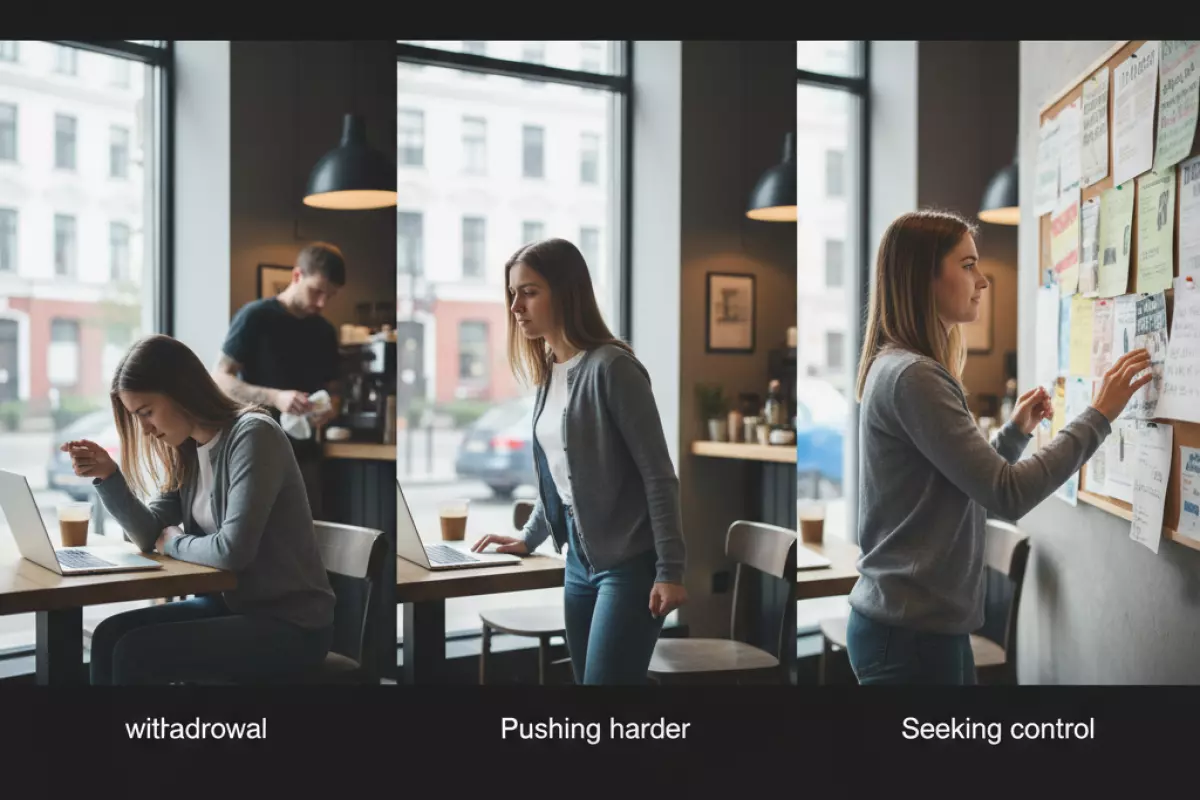
When expectations collapse, people often shift into “damage control” mode. The mind tries to reduce discomfort quickly, so behavior can swing between pulling away, pushing harder, or looking for something that restores a sense of control. These reactions are usually less about the actual event and more about the emotional whiplash of going from hopeful to disappointed.
Common patterns tend to cluster into a few recognizable responses, which can show up alone or in combination:
- Withdrawal and quieting down: canceling plans, replying less, spending more time alone, or avoiding the place or person connected to the letdown. This can be a way to prevent another hit of disappointment.
- Irritability and short fuse: snapping at small annoyances, being more blunt than usual, or reading neutral comments as criticism. The emotional “reserve” is lower, so minor stressors feel bigger.
- Overcompensation: working longer hours, over-planning, or doubling down on effort to “fix” the outcome. It can look productive, but it may also be driven by anxiety and urgency.
- Seeking reassurance: repeatedly asking for updates, checking messages more often, or looking for confirmation that things will be okay. This often follows uncertainty or mixed signals.
- Rumination loops: replaying conversations, re-reading texts, or mentally rewriting what “should have” happened. The behavior can be subtle, but it takes time and attention away from daily tasks.
- Impulsive relief-seeking: comfort eating, online shopping, scrolling, drinking more than usual, or making sudden decisions. The goal is quick emotional relief, even if it creates new problems later.
- Conflict or confrontation: picking a fight, demanding explanations, or forcing a decision. Some people prefer a clear “no” over ambiguity because it feels more controllable.
- Procrastination and avoidance: delaying emails, chores, or important decisions because the disappointment drains motivation and makes tasks feel pointless.
These behaviors often follow a short internal sequence: a letdown triggers a spike of emotion, the body shifts into stress mode, and actions become more reactive. In everyday life, that can mean saying “yes” to extra responsibilities to prove worth, going silent to avoid further hurt, or making quick changes to regain stability.
| Behavior pattern | What it often looks like day to day | What it’s trying to accomplish |
|---|---|---|
| Pulling back | Less social time, fewer messages, skipping routines connected to the event | Reduce exposure to reminders and prevent more emotional pain |
| Pushing harder | Overworking, over-explaining, insisting on a quick resolution | Restore control and undo the disappointment |
| Scanning for certainty | Checking notifications, asking for reassurance, seeking definitive answers | Lower anxiety by removing ambiguity |
| Quick comfort | Scrolling, snacking, shopping, distraction-heavy evenings | Get immediate relief from uncomfortable feelings |
| Spillover tension | Snappier tone, impatience in traffic or at home, sensitivity to minor stress | Release built-up arousal when the original situation feels unsolvable |
Context shapes which reaction shows up. Public disappointments (like a work setback) often lead to overcompensation or defensiveness, while private ones (like a relationship letdown) more often trigger withdrawal or reassurance-seeking. If the outcome feels unfair, confrontation is more likely; if it feels unpredictable, checking and rumination tend to increase.
Because heightened emotions can narrow attention, people may misjudge timing and tone: sending a long message too quickly, making a big decision late at night, or interpreting silence as rejection. Recognizing these patterns can help explain why behavior after a disappointment sometimes looks “out of character,” even when it is a common human response to an emotional drop.
Recovering emotional stability after disappointment
Emotional balance often returns in stages after a letdown. At first, feelings can stay “loud” because the brain is still comparing what happened with what was expected. As that comparison settles, reactions usually become less intense, and people regain their usual perspective, patience, and ability to focus.
A common pattern is a quick swing between trying to move on and getting pulled back into the moment. This back-and-forth can look like replaying conversations, checking for new information, or imagining alternate outcomes. These behaviors are normal attempts to make sense of the gap between hopes and reality, but they can keep emotions elevated if they go on for too long.
- Name the feeling in plain language. Labeling it as frustration, embarrassment, sadness, or anger can reduce the urge to act impulsively, because it turns a vague surge into something specific.
- Separate facts from interpretations. “The plan changed” is a fact; “I’m not valued” is an interpretation. This distinction helps prevent a single disappointment from becoming a broad conclusion.
- Give the body a chance to downshift. Sleep, food, hydration, and movement matter because heightened emotion is partly physical. When the body is depleted, small triggers can feel bigger.
- Limit replay loops. Setting a boundary like “I’ll think about this for 10 minutes, then do something else” can reduce rumination without forcing avoidance.
- Choose one next step. A small action (sending a message, making a new plan, asking for clarification) often restores a sense of control and reduces emotional intensity.
- Use a reality check from a trusted person. Briefly describing what happened and asking, “Am I missing something?” can correct distorted assumptions and calm the nervous system.
| Situation after a letdown | Typical emotional reaction | What tends to help in the moment | What helps longer-term |
|---|---|---|---|
| Plans fall through at the last minute | Agitation, resentment, feeling dismissed | Pause before responding; ask for the reason and a clear next plan | Set expectations earlier; build backup options |
| Not getting the outcome you worked for | Deflation, self-criticism, envy | Identify one thing you did well and one thing to adjust | Track progress over time; seek feedback instead of guessing |
| Feeling misunderstood in a conversation | Anger, shame, urge to withdraw | Restate your point calmly; check what the other person heard | Practice clearer requests; revisit the topic when calmer |
| Being let down by someone you trust | Hurt, suspicion, emotional whiplash | Delay big decisions; write down what you need to feel safe | Set boundaries; rebuild trust through consistent behavior, not promises |
Stability often improves when expectations are adjusted without giving up on goals. That can mean revising a timeline, changing the plan, or accepting that some outcomes are outside personal control. The point is not to minimize feelings, but to keep them proportional to the situation.
If the intensity stays high for days, disrupts sleep, or leads to repeated conflict, it can help to look for patterns: perfectionism, fear of rejection, or “all-or-nothing” thinking. Noticing these patterns makes it easier to respond with calmer choices the next time disappointment triggers heightened emotions.
Learning from repeated disappointment patterns
Recurring letdowns often feel more intense because the brain starts predicting the same outcome and prepares for it. That anticipation can create a quick spike in emotion: frustration, sadness, anger, or numbness. Over time, the pattern becomes easier to spot, which makes it possible to respond with more choice instead of reacting on autopilot.
A useful way to understand repeated discouragement is to separate what actually happened from what was expected. Many strong reactions come from a mismatch between the two, especially when expectations were unspoken, based on past experiences, or tied to self-worth. When the same mismatch keeps showing up, it usually points to a consistent trigger rather than a one-time bad day.
- Expectation gaps: assuming a person, plan, or situation will “finally” go differently without new evidence or agreements.
- Unclear agreements: relying on hints, implied promises, or vague timelines that leave room for conflicting interpretations.
- Over-investment: putting too much emotional weight on one outcome, so any setback feels like a personal failure.
- All-or-nothing meaning: interpreting one disappointment as proof that “nothing works” or “people always let me down.”
- Repeated exposure to the same setup: choosing similar situations (or roles in relationships) that reliably produce the same result.
Patterns become clearer when they are described in concrete terms: what the situation was, what was hoped for, what was said out loud, and what the outcome was. This reduces the sense that emotions are random and highlights the specific moment where things tend to go off track, such as waiting too long to ask a direct question or assuming shared priorities.
| Common repeating pattern | What it can look like | Why emotions can feel heightened | A practical adjustment to test |
|---|---|---|---|
| Vague plans and unclear timing | “We’ll see” turns into last-minute changes or cancellations | Uncertainty keeps the nervous system on alert, then drops into disappointment | Confirm details early: time, place, backup plan, and what “cancel” means |
| Seeking reassurance from inconsistent sources | Relying on someone who is warm one day and distant the next | Intermittent reinforcement increases hope, then makes the crash sharper | Shift support to steadier people or structures; limit emotional stakes in unstable connections |
| Unspoken expectations | Feeling hurt when others don’t “just know” what matters | Silence creates a hidden contract that others never agreed to | State needs plainly and early; ask the other person to reflect back what they heard |
| Over-promising to avoid conflict | Saying yes, then feeling resentful or exhausted | The disappointment turns inward as self-blame or anger at others | Use smaller commitments and clear limits; practice a neutral “I can’t” without over-explaining |
| Equating outcomes with self-worth | One rejection or failure feels like a verdict on competence | Threat to identity triggers stronger emotional and physical stress responses | Define success by controllable actions (effort, preparation, follow-through), not only results |
Learning from repeated setbacks does not mean eliminating disappointment; it means reducing avoidable surprises and building better predictions. When expectations are clarified, boundaries are more consistent, and meaning is kept proportionate to the event, emotional recovery tends to be faster and less overwhelming.
FAQ: Why disappointment feels stronger than expected
When something doesn’t work out, the emotional hit can feel out of proportion to what happened. That intensity is often a normal result of how the brain predicts outcomes, how quickly hopes become “assumed realities,” and how the body reacts to sudden change in plans.
- Expectations create a “future memory.” Once a plan feels likely, people start mentally living in the outcome: picturing the conversation, the relief, the celebration, or the payoff. When the result flips, it’s not just losing the event; it’s losing the imagined version of the near future.
- The bigger the build-up, the sharper the drop. Anticipation can raise mood and energy for days or weeks. A letdown then feels like a steep fall, even if the original goal was relatively small, because the emotional baseline was temporarily elevated.
- Surprise amplifies emotion. Disappointment tends to spike when the outcome is unexpected. A sudden “no,” a last-minute cancellation, or a result that contradicts strong signs of success can trigger a stronger stress response than a gradual, predictable setback.
- Loss aversion makes setbacks feel heavier than gains. People typically register losses more intensely than equivalent wins. Missing out on something can feel more urgent and painful than the pleasure that would have come from getting it.
- It can threaten identity, not just plans. If the outcome touches self-worth (being chosen, being valued, being competent), the reaction often includes shame, anger, or anxiety. The mind interprets the event as information about “what this says about me,” not only “what happened.”
- Uncertainty keeps the mind spinning. Disappointment often comes with unanswered questions: Why did it happen? Could it have been prevented? What now? That ambiguity can prolong the emotional surge because the brain keeps searching for a clear explanation.
- Social comparison adds fuel. Seeing others succeed, get invited, or move forward can intensify the sting. The disappointment becomes a contrast effect: “They have it, I don’t,” which can magnify frustration and sadness.
- The body treats it like a stressor. Even “minor” bad news can trigger physical responses like a tight chest, stomach drop, restlessness, or fatigue. Those sensations can make the emotional experience feel stronger and more immediate.
- Rumination repeats the impact. Replaying the moment, imagining alternate endings, or mentally arguing with what happened can keep the feeling active. Each replay acts like a small re-exposure, extending the intensity beyond the initial event.
| What tends to make it feel stronger | What’s usually happening underneath |
|---|---|
| “I was sure it would work out.” | The brain treated the expected outcome as settled, so the reversal feels like a shock. |
| “I can’t stop thinking about it.” | Rumination is trying to regain control by finding a reason, lesson, or redo. |
| “This ruins everything.” | All-or-nothing thinking turns a specific setback into a global conclusion. |
| “It feels personal.” | The event is being interpreted as a judgement about worth, belonging, or competence. |
| “I feel it in my body.” | Stress physiology (adrenaline, tension, nausea, fatigue) is intensifying the emotion. |
In everyday life, the strongest reactions often show up when expectations were high, the outcome was sudden, and the situation touches something meaningful like belonging, security, or pride. The intensity usually says more about the importance of the goal and the abruptness of the change than about “overreacting.”
FAQ: Emotional recovery after repeated letdowns
When disappointment happens more than once, emotions often feel louder and harder to shake. Many people notice quicker irritation, stronger sadness, or a “why bother” reaction because the brain starts treating similar situations as likely to end badly. The questions below cover common patterns and practical ways people steady themselves after repeated setbacks.
-
Why do my reactions feel bigger after the same letdown happens again?
Repetition trains expectation. After several negative outcomes, the mind tends to predict another one and prepares for it with stronger emotion and body stress (tight chest, racing thoughts, trouble sleeping). This can make a new disappointment feel like proof of a pattern rather than a single event. -
Is it normal to feel numb instead of sad?
Yes. Numbness can be a short-term protective response when feelings have been intense for a while. It often shows up as low motivation, “going through the motions,” or difficulty feeling excited even about good news. If numbness lasts, it can signal that rest, support, or a change in approach is needed. -
Why do I get angry at small things after being disappointed?
Anger commonly appears when someone feels powerless or repeatedly unheard. Small frustrations can become the “safe” outlet because the original situation feels too big, too uncertain, or too risky to confront directly. -
How can I tell the difference between healthy caution and pessimism?
Healthy caution stays specific and flexible: “Given what happened, I’ll ask for clearer plans.” Pessimism tends to be global and final: “It always goes wrong, so there’s no point.” A useful check is whether your conclusion leaves room for new information and different outcomes. -
What helps in the moment when the feelings spike?
Short, concrete actions usually work best:- Label the emotion plainly (disappointed, embarrassed, angry) to reduce mental spinning.
- Slow the pace: pause replies, postpone big decisions, and give yourself a set time to revisit.
- Use physical regulation: steady breathing, a short walk, water, food, or sleep if possible.
- Choose one next step that is small and controllable (send a clarifying message, reschedule, gather facts).
-
Why do I keep replaying what happened?
Rumination often tries to prevent future pain by “solving” the past. It can turn into a loop when there is no clear fix or when self-blame feels like control. Shifting from “Why did this happen to me?” to “What would I do differently next time?” can make the reflection more practical. -
How do I rebuild trust after multiple broken promises?
Trust typically returns through consistent evidence, not reassurance. People often do better when they set observable expectations (specific timelines, check-ins, written agreements) and watch for follow-through over time. If patterns don’t change, adjusting boundaries is a reasonable form of self-protection. -
What if I start avoiding opportunities because I expect another disappointment?
Avoidance reduces stress short term but can shrink life over time. A common middle ground is “graded re-entry”: take smaller risks first, limit exposure (time, money, emotional investment), and review outcomes. This builds confidence without forcing blind optimism. -
Does talking about it help, or does it make it worse?
It depends on the style of conversation. Repeating the story without new insight can intensify feelings. More helpful discussions include naming what you needed, what was missing, what you can control next, and what support would look like now (listening, advice, distraction, or practical help). -
When is it a sign I should get professional support?
Consider extra help if emotional recovery stalls for weeks, sleep and appetite stay disrupted, you feel persistently hopeless, you can’t function at work or home, or you notice frequent panic, heavy numbness, or thoughts of self-harm. These are common signs that the stress load has exceeded what self-care and time can resolve on their own.
| Common pattern after repeated setbacks | What it often looks like day to day | A steadier alternative to try |
|---|---|---|
| All-or-nothing thinking | “It never works out,” quitting early, assuming one outcome predicts all future ones | Use narrower language: “This situation didn’t work,” and test one small change next time |
| Overchecking for reassurance | Repeatedly asking for updates, rereading messages, constant monitoring | Set a check-in schedule and redirect attention between check-ins to a task you can finish |
| Emotional shutdown | Flat mood, low interest, avoiding plans, “I don’t care” responses | Reintroduce low-pressure positives (routine, movement, brief social contact) before big goals |
| Self-blame loops | Replaying mistakes, harsh self-talk, feeling responsible for others’ choices | Separate responsibility: what was yours to do, what was theirs, and what was simply unpredictable |
| Preemptive distancing | Pulling away to avoid getting hurt, canceling, not sharing needs | Keep boundaries while staying engaged: state needs clearly and watch actions over time |
Recovery tends to improve when expectations become clearer, boundaries become more consistent, and the next steps are sized to what feels manageable. Over time, repeated letdowns can still sting, but they don’t have to dictate every future choice.