Feeling emotionally reactive by nature

 Covers how emotional reactivity shows up day to day, how temperament and attachment shape your baseline responses, and how reactivity influences relationships and decisions. Helps you spot triggers, reduce reactions without numbing, accept your temperament, and answers key FAQs.
- What emotional reactivity looks like in daily life
- Temperament and emotional responsiveness
- Attachment and baseline emotional reactivity
- How reactivity affects relationships and decisions
- Recognizing personal emotional triggers
- Reducing reactivity without emotional numbing
- Accepting emotional temperament
- FAQ: Understanding emotional reactivity
- FAQ: Changing reactions without changing personality
If you often react to life with fast, intense feelings, it may seem like emotions take over before you can think. A small remark, a delayed reply, or a tense meeting can trigger anger, shame, or worry that lasts longer than the situation. This is not a character flaw; it can reflect temperament shaped by stress, learning, and sensitivity. With practice, you can spot the wave earlier and choose how to respond.
What emotional reactivity looks like in daily life
In everyday situations, emotional sensitivity often shows up as a fast, strong response to events that other people might brush off. The feeling can arrive quickly, take over attention, and make it harder to think through options in the moment. Later, the reaction may feel out of proportion, even if it made complete sense at the time.
These patterns can appear across work, relationships, and routine tasks. The key feature is less about which emotion shows up, and more about the speed and intensity of the shift, plus how long it takes to settle back to baseline.
- Rapid shifts in mood: A small change in tone, a short reply, or an unexpected plan change can trigger a sudden swing into worry, irritation, or sadness.
- Strong body signals: Tight chest, flushed face, stomach drop, shaky hands, or a racing heart can show up quickly, sometimes before the situation is fully understood.
- “All-or-nothing” interpretations: A minor mistake may feel like total failure, or a brief conflict may feel like the relationship is in danger.
- Difficulty letting go: The mind replays an interaction repeatedly, searching for what went wrong, what was meant, or what should have been said.
- Impulsive communication: Sending a long text, firing off an email, interrupting, or pushing for immediate reassurance can happen before there’s time to cool down.
- Heightened sensitivity to feedback: Neutral comments can land as criticism, and constructive notes can feel personal rather than task-focused.
- Overcorrecting to avoid discomfort: Apologizing repeatedly, people-pleasing, withdrawing, or trying to “fix” the mood of the room may become the default response.
- Delayed emotional crash: Holding it together during the day, then feeling overwhelmed later at home, is common when reactions are managed through sheer effort.
| Everyday situation | Common reactive response | What it can look like outwardly |
|---|---|---|
| A friend replies hours later | Worry, rejection, urgency to resolve | Multiple follow-up messages, checking “last seen,” seeking reassurance |
| Feedback at work | Shame, defensiveness, fear of being judged | Overexplaining, shutting down in meetings, redoing work excessively |
| Partner sounds distracted | Assuming something is wrong, feeling blamed | Pressing for answers, withdrawing, escalating a small disagreement |
| Plans change unexpectedly | Frustration, anxiety, feeling out of control | Snapping, needing detailed reassurance, struggling to switch tasks |
| Social media comparison | Envy, inadequacy, self-criticism | Doomscrolling, deleting posts, making sudden “life overhaul” decisions |
| Noise, clutter, or too many demands | Overwhelm, irritability, mental fog | Short temper, retreating to be alone, difficulty prioritizing |
Emotional reactivity can also be inconsistent: a person may handle major stress calmly but react strongly to smaller interpersonal cues. This often happens when the trigger touches something meaningful, such as belonging, fairness, competence, or safety.
Over time, frequent intense reactions can create secondary stress. People may start anticipating the next emotional spike, avoiding certain conversations, or scanning for signs of conflict, which can keep the nervous system on high alert even during ordinary days.
Temperament and emotional responsiveness
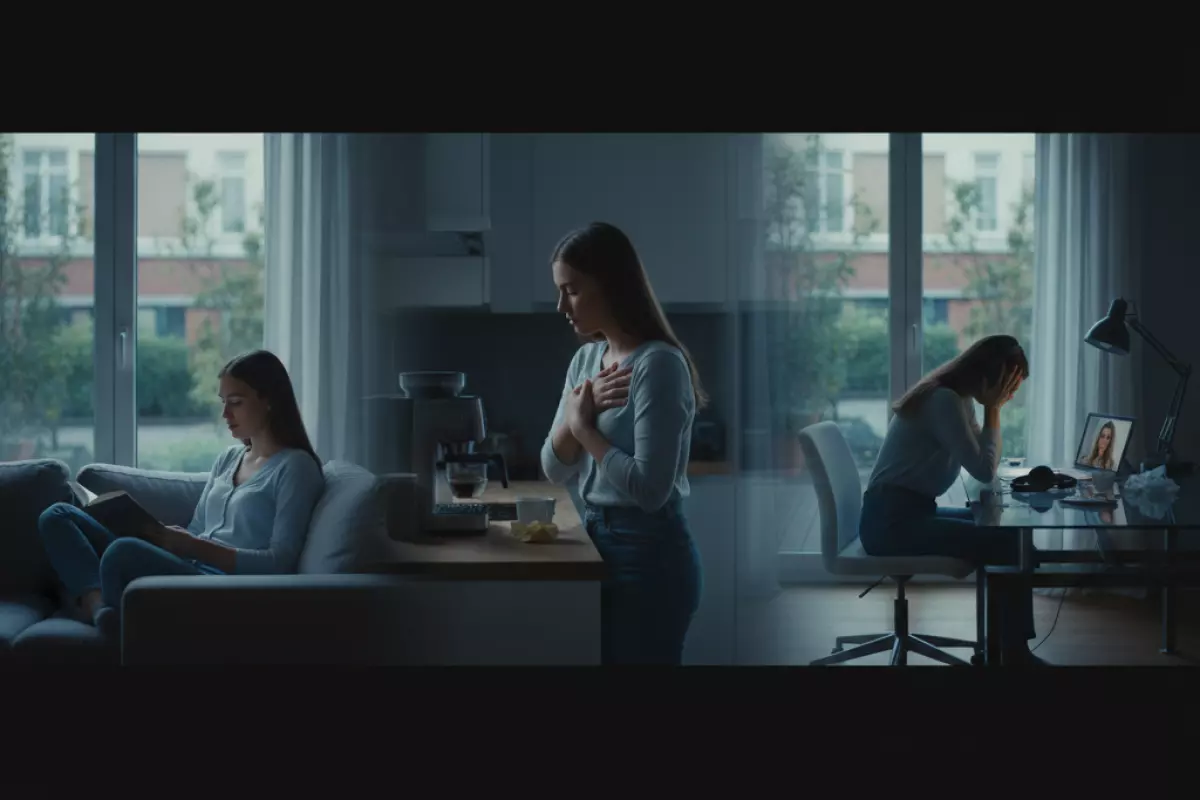
Some people are born with a nervous system that reacts quickly and strongly to what’s happening around them. This doesn’t mean something is “wrong”; it often shows up as faster shifts in mood, stronger physical feelings (like a tight chest or a rush of energy), and a bigger impact from everyday events such as feedback, conflict, noise, or sudden changes in plans.
In daily life, this kind of emotional reactivity tends to look consistent over time. A person might feel calm most days but still have intense spikes when a trigger appears, or they may bounce between states more often than others. The key idea is that the starting intensity of the feeling can be higher, even when the situation seems minor to someone else.
- Lower threshold for activation: Small stressors (a curt text, a messy room, a delayed reply) can set off a noticeable emotional response.
- Stronger body signals: Emotions may come with clear physical sensations, such as heat in the face, stomach fluttering, shaky hands, or a sudden urge to move.
- Rapid escalation: Feelings can go from mild to intense quickly, especially when surprised, criticized, or overstimulated.
- Slower return to baseline: Even after the situation ends, the body may stay “revved up,” making it harder to settle right away.
- High sensitivity to context: Sleep, hunger, caffeine, hormonal shifts, and crowded environments can noticeably change how big emotions feel.
- Deep processing: People may replay conversations, anticipate outcomes, or notice subtle cues, which can amplify reactions.
It can help to separate intensity from control. Intense feelings are about how strongly the emotion arrives; regulation is about what happens next. Someone can be highly sensitive and still behave thoughtfully, while another person may have milder feelings but act impulsively. Reactivity describes the volume of the emotional signal, not a person’s character.
| What tends to happen | How it may show up day to day | Common misunderstandings |
|---|---|---|
| Emotions rise quickly | Immediate tears, anger, or anxiety before there’s time to think it through | “They’re being dramatic on purpose.” |
| Emotions feel physically strong | Heart racing, nausea, tension, restlessness during stress or conflict | “They should just calm down.” |
| More time needed to recover | Still feeling keyed up after an argument, busy day, or social event | “They’re holding a grudge.” |
| Greater sensitivity to environment | More irritable with noise, clutter, multitasking, or sudden changes | “They’re too picky.” |
| Stronger response to social cues | Reading tone closely, worrying after ambiguous feedback, feeling rejected easily | “They’re overthinking everything.” |
These patterns often become clearer under stress. When demands pile up, a reactive temperament may lead to sharper emotional swings, more frequent overwhelm, or a stronger urge to withdraw. In supportive conditions, the same sensitivity can also mean quick empathy, strong appreciation, and a vivid sense of connection.
Understanding this as a built-in style of responding can make behavior easier to interpret: the feeling may be intense and fast, but it usually follows a predictable pathway. Noticing personal triggers and early body cues is often the first step to responding with more choice, even when the emotional signal is loud.
Attachment and baseline emotional reactivity
Early relationship patterns often shape how “loud” emotions feel in daily life. When someone expects support to be available, stress tends to register as manageable. When support feels uncertain or unsafe, the nervous system may stay on higher alert, so small cues—tone of voice, delayed replies, a change in routine—can land with extra intensity.
Attachment style is not a fixed label, but it’s a useful way to describe common expectations about closeness, trust, and responsiveness. Those expectations influence baseline emotional reactivity: how quickly feelings rise, how long they last, and what it takes to settle back down.
| Common attachment pattern | Typical emotional “set point” and triggers | How it often shows up day to day | What usually helps regulate |
|---|---|---|---|
| Secure | Lower baseline arousal; spikes happen, but recovery is steadier. Triggers are usually clear, present-day stressors. | Can ask for reassurance without panic; disagreements feel uncomfortable but not catastrophic; can hold mixed feelings. | Direct communication, realistic self-talk, taking breaks and returning to the issue, supportive routines. |
| Anxious (preoccupied) | Higher sensitivity to signs of distance or ambiguity. Triggers include silence, delayed responses, vague feedback, changes in closeness. | Checks messages repeatedly; reads between the lines; seeks quick reassurance; may escalate emotions to get clarity. | Clear timelines and expectations, consistent reassurance, grounding skills, naming the fear under the reaction, slowing down before contacting. |
| Avoidant (dismissive) | Reactivity may be muted at first, then surge when feeling pressured or controlled. Triggers include demands for intimacy, criticism, “we need to talk.” | Pulls back, goes quiet, changes the subject; prefers solving alone; may feel irritated rather than “sad” or “scared.” | More autonomy and choice, low-pressure check-ins, time to process, focusing on specific behaviors instead of global judgments. |
| Fearful-avoidant (disorganized) | Rapid swings between craving closeness and fearing it. Triggers include perceived rejection, sudden intimacy, unpredictability, conflict. | Hot-and-cold contact; intense closeness followed by withdrawal; strong shame after emotional moments; difficulty trusting calm periods. | Predictable boundaries, slower pacing in relationships, repair after conflict, emotion-labeling, professional support when patterns feel stuck. |
These patterns can also affect what feels “normal” inside the body. Someone with a steadier baseline may experience stress as a temporary wave. Someone with a more vigilant baseline may experience stress as proof that something is wrong, which can amplify the reaction and make it harder to return to calm.
- Intensity: how strong the feeling gets once triggered.
- Speed: how quickly the emotion ramps up.
- Duration: how long it takes to settle, even after the situation improves.
- Interpretation: whether the mind reads discomfort as “this is hard” or “this is dangerous.”
Because attachment expectations are learned in relationships, they’re also influenced by current relationships. Consistency, repair after conflict, and clear communication can gradually lower baseline emotional reactivity, while chronic unpredictability, criticism, or emotional unavailability can keep it elevated.
How reactivity affects relationships and decisions
Strong, fast emotional responses can shape daily interactions in ways that feel automatic. When feelings surge quickly, the mind often treats the moment as urgent, which can narrow attention to what feels threatening, unfair, or exciting right now. That urgency can be helpful in real danger, but in ordinary situations it can lead to misunderstandings, rushed choices, or difficulty returning to calm.
In relationships, emotional intensity often shows up less as “too much emotion” and more as speed: reacting before there’s time to check assumptions, ask questions, or notice context. A partner, friend, or coworker may experience this as unpredictability, even when the underlying needs are reasonable.
- Conversations escalate faster. A small comment can land as criticism, triggering defensiveness, sharp tone, or a quick counterattack.
- Reassurance becomes a frequent need. When uncertainty feels unbearable, there may be repeated checking, seeking confirmation, or reading into delays in texting.
- Conflict turns into “winning” or “losing.” In the heat of the moment, the goal can shift from solving the issue to stopping the discomfort.
- Repair gets delayed. After a blow-up, shame or exhaustion can make it hard to revisit the topic, even if the relationship matters.
- Boundaries can swing. Some people over-share or over-commit when feeling close, then pull back abruptly when overwhelmed.
Decision-making can also become more mood-driven. When emotions are intense, the brain tends to prioritize short-term relief, certainty, or validation. That can lead to impulsive actions (sending a message, quitting, buying something) or avoidance (ghosting, procrastinating, canceling plans) because both reduce discomfort quickly.
| Situation | Common reactive pattern | Typical outcome | What often helps in the moment |
|---|---|---|---|
| Texting and response delays | Assuming rejection or anger; sending multiple follow-ups | Tension, mixed signals, or regret about tone | Pause before replying; draft a message and wait; ask a neutral clarifying question |
| Feedback at work or school | Hearing “you failed” instead of “here’s a change” | Defensiveness, over-explaining, or shutting down | Repeat back the concrete point; request one example; take notes to slow the pace |
| Disagreements with a partner | Raising volume, interrupting, or bringing up old issues | Escalation and less problem-solving | Use a time-out; name the feeling; return with one specific request |
| Big choices (spending, quitting, moving) | Choosing the option that stops discomfort fastest | Impulsive commitments or later second-guessing | Delay the decision; set a 24-hour rule; list pros/cons when calm |
| Social plans and obligations | Overcommitting when excited, canceling when overwhelmed | Strained friendships and self-criticism | Commit to smaller plans; build in exits; confirm closer to the date |
Over time, these patterns can affect trust. Others may start to “walk on eggshells,” avoid raising issues, or stop sharing honest feedback because they expect a strong reaction. On the other side, the emotionally reactive person may feel misunderstood, judged, or chronically on edge, which can reinforce the cycle.
Not every rapid response is harmful. Reactivity can bring passion, protectiveness, and quick recognition of problems. The difference is often whether the reaction is followed by reflection: checking what was assumed, what was actually said, and what outcome is wanted before taking the next step.
Recognizing personal emotional triggers

Emotional reactivity often feels sudden, but it usually follows a recognizable pattern: a specific situation (or cue) sparks a fast internal reaction, which then drives words and actions before there’s time to reflect. Learning your common cues makes the reaction feel less mysterious and gives you more options in the moment.
A helpful way to spot your patterns is to separate what happened from what it meant to you. Two people can experience the same event and react differently because their brains attach different meanings based on past experiences, expectations, and current stress levels.
- Notice the “too fast” moments. Pay attention to times when your response feels bigger or quicker than the situation seems to call for, such as snapping at a small comment or feeling suddenly rejected by a neutral message.
- Track repeat scenarios. Common examples include being corrected, feeling ignored, last-minute changes, conflict in front of others, or someone’s tone sounding dismissive.
- Watch for body signals that come first. A tight chest, clenched jaw, heat in the face, shallow breathing, or restlessness often shows up before you can name the emotion.
- Listen for “hot thoughts.” These are quick interpretations like “They don’t respect me,” “I’m failing,” or “I’m not safe,” which can intensify feelings even when facts are unclear.
- Identify the vulnerability factors. Hunger, poor sleep, overstimulation, hormonal shifts, alcohol, or ongoing stress can lower your tolerance and make a minor trigger hit harder.
- Look for the coping reflex. People often default to one: arguing, withdrawing, people-pleasing, overexplaining, shutting down, or trying to control details.
| Common cue | Typical interpretation | How it often shows up | Clue it’s a trigger (not just the situation) |
|---|---|---|---|
| Criticism or correction | “I’m not good enough.” | Defensiveness, explaining, anger, shame | Strong urge to prove yourself right immediately |
| Being interrupted or talked over | “My voice doesn’t matter.” | Snapping, going silent, escalating volume | Reaction continues even after the conversation moves on |
| Unclear texts or delayed replies | “They’re upset with me.” | Rumination, checking phone, anxious messages | Mind fills in worst-case explanations without evidence |
| Sudden changes to plans | “I’m losing control.” | Irritability, rigid thinking, urgency | Disproportionate stress compared to the practical impact |
| Conflict or raised voices | “This will get unsafe.” | Freeze response, leaving, panic, anger | Body alarm activates before you know what you feel |
To pinpoint your own emotional triggers, it can help to do a quick replay after you’ve calmed down: What was the exact cue (words, tone, facial expression, setting)? What story did your mind attach to it? What did you feel in your body? What did you do next? Over time, these replays reveal a small set of familiar themes, which is often the first step toward responding with more choice.
Reducing reactivity without emotional numbing
Calming big emotional swings usually works best when the goal is steadiness, not shutting feelings down. The difference shows up in everyday moments: you still notice hurt, excitement, or irritation, but you’re less likely to snap, spiral, or feel “hijacked” by the first wave of emotion.
A useful way to think about it is separating emotion intensity from behavior urgency. Strong feelings can be real and valid, while the impulse to act immediately (send the text, raise your voice, quit on the spot) is what often creates regret. Building a small pause between feeling and reacting is what reduces volatility without flattening your inner life.
- Name what’s happening in plain language. Simple labels like “I’m feeling rejected” or “I’m getting defensive” tend to lower the pressure to prove a point right away. It also makes it easier to choose a response instead of defaulting to a reflex.
- Slow the body down first. Reactivity often rides on physical activation: tight chest, fast speech, restless hands. A few slower breaths, unclenching the jaw, or planting both feet can reduce the urge to escalate without forcing yourself to “be fine.”
- Use a short delay before responding. Waiting 10 minutes before replying, rereading a message once, or taking a lap around the room can keep the emotion present while preventing a quick, high-cost reaction.
- Check the story your mind is building. Emotional sensitivity can trigger instant interpretations (“They don’t respect me,” “I’m being ignored”). Asking “What else could be true?” doesn’t deny your feeling; it widens the options so you’re not locked into one conclusion.
- Choose the smallest effective action. Instead of going straight to confrontation or withdrawal, try a lower-intensity move: ask one clarifying question, state one boundary, or request a short break. This keeps you engaged without overcorrecting.
- Separate venting from problem-solving. Sometimes the need is to be heard; other times it’s to fix something. Mixing them can increase emotional whiplash, because advice can feel invalidating when comfort was the real need.
| What it can look like | More regulated alternative (still emotionally present) | Why it helps |
|---|---|---|
| Replying immediately when you feel criticized | Pause, then ask one clarifying question before defending yourself | Creates space for accuracy and reduces escalation |
| Ruminating for hours after a small conflict | Set a time-limited “worry window,” then shift to a concrete task | Contains the emotion without letting it take over the day |
| Going numb to avoid feeling overwhelmed | Notice the feeling in the body and rate intensity from 1–10 | Keeps connection to emotion while making it manageable |
| Exploding after “holding it in” | Share earlier with a simple statement: “I’m getting stressed; I need a minute” | Prevents pressure from building to a breaking point |
| Assuming silence means rejection | State the need directly: “Can you confirm you saw this?” | Replaces mind-reading with clear communication |
It also helps to watch for patterns that commonly increase emotional volatility: hunger, poor sleep, alcohol, too much screen time, or stacked commitments with no recovery time. These don’t “cause” feelings, but they lower the threshold where normal stress starts to feel unbearable.
Over time, the aim is a steadier baseline: emotions still arrive, but they move through more cleanly. You can feel deeply and stay responsive rather than reactive, which tends to protect relationships and self-respect at the same time.
Accepting emotional temperament
Some people feel things fast and strongly, and that intensity shows up in ordinary moments: a sharp tone can sting, a kind gesture can linger all day, and a small change in plans can feel unexpectedly big. Seeing this as a built-in emotional style, rather than a character flaw, makes it easier to respond with clarity instead of self-criticism.
This kind of sensitivity often comes with patterns that are consistent over time. Emotions may rise quickly, the body may react first (tight chest, shaky hands, heat in the face), and the mind may rush to interpret what the feeling means. None of that automatically indicates poor judgment; it usually means the nervous system is quick to register significance, especially around conflict, rejection, or uncertainty.
- Separating temperament from behavior: A strong reaction is not the same as acting on it. The feeling can be valid while the next step still needs choice and timing.
- Normalizing the “fast start”: For reactive people, the first wave can be intense and short-lived. Waiting before replying, texting back, or deciding can prevent the first surge from steering the outcome.
- Expecting spillover: Stress, hunger, poor sleep, and overstimulation can amplify emotions. Noticing these amplifiers reduces confusion about why a response feels “too much.”
- Making room for recovery time: A highly responsive system may need quiet, movement, or solitude to return to baseline after social events, disagreements, or busy days.
- Using accurate labels: Naming the emotion precisely (irritated vs. furious, disappointed vs. betrayed) often lowers intensity and improves communication.
| Common pattern | How it can look day-to-day | More balanced interpretation | Helpful adjustment |
|---|---|---|---|
| Rapid emotional escalation | Feeling flooded during feedback or conflict | The system is detecting threat quickly, not proving the situation is dangerous | Pause before responding; ask for a short break to regroup |
| Strong sensitivity to tone and cues | Reading meaning into silence, facial expressions, or short replies | Cues can be ambiguous; the first interpretation may be incomplete | Check assumptions with a neutral question instead of guessing |
| High empathy and emotional contagion | Absorbing others’ stress and carrying it afterward | Empathy is a strength, but it needs boundaries | Limit exposure when drained; use brief grounding after intense conversations |
| Longer “cool-down” period | Replaying events for hours after an argument | The mind is trying to regain safety and predictability | Do a closure routine: write the key points, decide one next step, then shift activities |
| Big positive responsiveness | Feeling energized by praise, connection, or beauty | Intensity isn’t only about distress; it also supports joy and meaning | Intentionally schedule uplifting inputs to balance harder moments |
Practical acceptance also means planning around predictable triggers instead of being surprised by them. If certain settings reliably spike emotion, it helps to decide in advance what “good enough” coping looks like: stepping outside for air, lowering the stakes of a conversation, or postponing a decision until the body settles.
Over time, treating reactivity as a temperament supports steadier self-trust. The goal is not to become unemotional; it is to recognize the early signs, allow the feeling to exist without escalation, and choose responses that fit the situation rather than the intensity of the moment.
FAQ: Understanding emotional reactivity
Emotional reactivity describes how quickly and strongly feelings show up in response to what’s happening around you. For some people, the emotional “volume” turns up fast, and it can take longer to settle back to baseline. This is common in everyday life and often shows up most in close relationships, busy environments, or high-pressure moments.
-
What does it mean to be emotionally reactive?
It means your feelings can surge quickly in response to triggers like criticism, conflict, feeling ignored, sudden changes, or sensory overload. The reaction may feel immediate in your body (tight chest, heat in the face, racing thoughts) and can lead to quick words or actions before you’ve had time to reflect. -
Is emotional reactivity the same as being “too sensitive”?
Not exactly. “Sensitive” is a broad label that can include empathy, awareness, and responsiveness. Reactivity is more specific: it focuses on the speed and intensity of emotional responses and how hard it is to pause. Someone can be sensitive without reacting strongly, and someone can react strongly without being generally sensitive in other areas. -
How can you tell reactivity from normal emotion?
Normal emotion fits the situation and stays flexible. A reactive pattern often looks like a rapid spike, a narrow focus on the upsetting detail, and difficulty shifting attention. A helpful clue is whether you often think, “I know this is bigger than the situation, but I can’t turn it down.” -
What are common signs in day-to-day behavior?
- Replying quickly with a sharper tone than intended, then regretting it
- Feeling flooded during disagreements and wanting to escape or end the conversation
- Ruminating after a small comment and replaying it for hours
- Switching from calm to upset with little warning, especially when tired or stressed
- Needing more time than others to “come down” after an argument or surprise
-
Why do some people react more strongly than others?
Several factors can stack together: temperament, stress load, sleep quality, past experiences, current relationship dynamics, and how safe or in-control you feel. When your nervous system is already taxed, even minor frustrations can feel like major threats. -
Does being emotionally reactive mean you’re immature or dramatic?
No. A strong response is not the same as seeking attention or lacking character. Reactivity is often a nervous-system pattern: your body detects “danger” quickly, even when the situation is only uncomfortable or uncertain. Learning skills to slow the response is possible, but the initial surge may still happen. -
Can emotional reactivity be a strength?
It can be. People who feel things intensely may also notice subtle shifts in mood, care deeply about fairness, and respond quickly to others’ needs. The challenge is keeping that responsiveness from turning into impulsive reactions that strain relationships or decision-making.
| Situation | Typical reactive pattern | What helps in the moment |
|---|---|---|
| Receiving feedback | Hearing it as rejection; urge to defend or shut down | Ask one clarifying question; pause before responding; summarize what you heard |
| Conflict with a partner or friend | Escalation, rapid texting, interrupting, or going silent | Slow breathing; agree on a short break; return with one specific point |
| Feeling ignored or left out | Assuming negative intent; sudden sadness or anger | Name the feeling; check for alternative explanations; request reassurance directly |
| Overstimulation (noise, crowds, multitasking) | Irritability, snapping, or wanting to escape | Reduce input; take a brief walk; drink water; lower demands for 10 minutes |
| Unexpected change or uncertainty | Catastrophizing; urgency to “fix it now” | Write the next two concrete steps; delay big decisions until calmer |
-
How long does it take to calm down after a strong reaction?
It varies. Some people settle in minutes; others need hours. The more intense the trigger and the more stressed you already are, the longer the recovery tends to be. A useful goal is not “never react,” but “recover faster and repair sooner.” -
What’s the difference between reacting and expressing emotions?
Expressing emotions involves noticing what you feel, choosing words, and staying connected to your values. Reacting is more automatic: it can come out as blaming, withdrawing, or impulsive decisions. The key difference is the presence of a pause and a sense of choice. -
When is emotional reactivity a sign to seek extra support?
Consider support if reactions frequently damage relationships, interfere with work or parenting, lead to self-harm thoughts, or feel impossible to control despite trying. Also pay attention if intense mood swings are new, sudden, or tied to sleep changes, substance use, or major life stressors.
FAQ: Changing reactions without changing personality
It’s possible to adjust how you respond in the moment without erasing what makes you you. Personality is the broader pattern: how you tend to think, feel, and relate over time. Reactions are the short, fast “first draft” responses your nervous system produces under stress, surprise, or strong emotion.
-
Does changing my reactions mean I’m being fake?
Not necessarily. Choosing a calmer response is often a sign of self-control, not dishonesty. A reaction can be automatic, while a response can be intentional. Many people still feel things intensely but learn to express them in ways that match their values and goals. -
What’s the difference between temperament and emotional reactivity?
Temperament is your baseline sensitivity and energy level. Emotional reactivity is how quickly and strongly your body and mind spike when something hits a nerve. You can keep a sensitive temperament while reducing the “spike” through practice, sleep, stress reduction, and better coping habits. -
If I’m “just wired this way,” can I really change?
Wiring influences your starting point, not your full range. Habits, environment, and repeated experiences shape what happens after the initial surge. Over time, many people shift from instant escalation to a slower, more measured response even if they remain naturally passionate or perceptive. -
Why do I overreact to small things but stay calm in big crises?
Small triggers often connect to personal themes like feeling dismissed, criticized, or out of control. Big crises can push people into problem-solving mode with clearer roles and priorities. The “size” of the reaction is usually about meaning, not the objective event. -
How do I know if my reactions are a problem or just normal emotion?
It’s usually worth addressing if reactions regularly cause regret, damage relationships, disrupt work, or leave you feeling ashamed or exhausted. Another sign is when the intensity lasts longer than the situation calls for, or when you feel unable to choose a different response.
| Common situation | Typical reactive pattern | What helps without changing personality |
|---|---|---|
| Feeling criticized | Defending quickly, raising voice, interrupting | Pause for one breath, ask one clarifying question, respond to the specific point instead of the tone |
| Feeling ignored or left out | Assuming rejection, sending multiple texts, withdrawing | Name the need plainly, set a check-in time, avoid “mind-reading” stories until you have facts |
| Conflict at home | All-or-nothing statements, bringing up old issues | Stick to one topic, use shorter sentences, take a timed break and return as agreed |
| Stress at work | Snapping, rushing, perfectionism, catastrophizing | Do a quick priority reset, reduce stakes with a “good enough” draft, schedule recovery time after intense tasks |
-
What can I do in the moment when I feel the surge?
Use a simple sequence: notice the body cue (tight chest, heat, racing thoughts), slow the exhale, and buy time with a neutral line like “Let me think for a second.” The goal is not to feel nothing; it’s to prevent the first impulse from driving the outcome. -
Will I lose my passion or intensity if I get less reactive?
Usually the opposite happens: passion becomes easier to direct. Intensity can show up as persistence, creativity, or strong advocacy rather than sudden anger, panic, or tears that derail the message. -
When is it time to get professional help?
Consider support if reactions include threats, self-harm thoughts, frequent panic, substance use to cope, or repeated relationship blowups. Help can also be useful when you understand the pattern but can’t interrupt it consistently.