Emotional intensity affecting decision-making

 Learn how emotions shape decisions under pressure, why intense feelings narrow your perspective, and how attachment patterns show up. Compare impulsive vs delayed responses, spot emotion-driven choices, and create space between feeling and action. FAQs cover regret and clarity.
- How emotions shape decisions under pressure
- Why intense feelings narrow perspective
- Attachment-driven decision patterns
- Impulsive versus delayed decision responses
- Recognizing emotionally driven choices
- Creating space between feeling and action
- Making decisions with emotional awareness
- FAQ: Regret after emotionally driven decisions
- FAQ: Improving clarity in emotional moments
Strong emotions can quietly steer your choices, even when you think you are being rational. A tense email, a burst of hope, or a flash of irritation can narrow attention, speed up judgments, and make a risky option seem reasonable. If you learn to notice that surge and pause for a moment, you create space to choose with more balance, clearer priorities, and less regret later.
How emotions shape decisions under pressure
In stressful moments, feelings often take the driver’s seat while reasoning moves to the back. The brain prioritizes speed and safety, so attention narrows, details drop out, and choices tend to follow whatever emotion feels most urgent. This is why people can act quickly and confidently, yet later struggle to explain the decision in a calm, step-by-step way.
Emotional intensity changes what seems important. Under time pressure, people rely more on shortcuts: familiar routines, first impressions, and “good enough” options. That can be helpful in genuine emergencies, but it also increases the chance of misreading a situation, overreacting to a single cue, or sticking with a plan even when new information suggests a change.
- Attention narrows: Stress pulls focus toward the loudest signal (a threat, a deadline, a critical message), which can hide quieter but relevant facts.
- Risk perception shifts: Fear tends to make risks feel larger and pushes toward avoidance; anger often makes risks feel smaller and pushes toward confrontation.
- Memory becomes selective: People recall emotionally charged details more easily than neutral ones, which can distort how the situation is interpreted.
- Impulse control weakens: When arousal is high, it is harder to pause, compare options, or wait for more data, so snap judgments become more common.
- Social signals carry extra weight: Tone of voice, facial expressions, and perceived criticism can steer decisions as much as the actual content of what is said.
| Emotion state | Common decision pattern under stress | Typical everyday example | Likely trade-off |
|---|---|---|---|
| Fear or anxiety | Choose the safest-looking option; avoid uncertainty | Declining a new task because it might go wrong | Fewer mistakes, but missed opportunities |
| Anger or frustration | Act quickly; prioritize “fixing” or “winning” | Sending a blunt reply during an argument | Fast action, but higher conflict and regret |
| Excitement | Overestimate benefits; commit early | Agreeing to plans without checking time or cost | Momentum, but overlooked constraints |
| Shame or embarrassment | Hide errors; delay asking for help | Staying quiet in a meeting after a mistake | Short-term comfort, but problems linger |
| Relief | Stop evaluating; settle for the first acceptable choice | Ending a search once one option seems “fine” | Saves effort, but may miss better alternatives |
These patterns are not “good” or “bad” on their own; they are predictable responses to high arousal. The key point is that strong feelings change the decision frame: what counts as a threat, what counts as success, and how much uncertainty feels tolerable. Recognizing the shift helps explain why people can make choices that feel completely reasonable in the moment but look inconsistent once the pressure fades.
Why intense feelings narrow perspective

When emotions run high, attention tends to lock onto whatever feels most urgent right now. The mind prioritizes immediate signals—tone of voice, a perceived threat, a tempting reward—while background details fade. This is why a single comment can feel like the whole story, or why a short-term payoff can outweigh longer-term consequences in the moment.
This narrowing happens because strong feelings push the brain into a fast, protective mode. Instead of weighing options broadly, people often rely on shortcuts: familiar habits, first impressions, and simple “good vs. bad” judgments. In everyday situations, that can look like replying too quickly to a text, making a purchase to relieve stress, or doubling down in an argument to avoid feeling embarrassed.
- Attention becomes selective. You notice evidence that matches the feeling (danger, rejection, excitement) and miss neutral or reassuring cues.
- Time horizons shrink. Decisions tilt toward what reduces discomfort or boosts relief immediately, even if it creates problems later.
- Thinking becomes more rigid. Nuance is harder to hold, so situations get framed as all-or-nothing: “They don’t care,” “I have to fix this now,” “This is my only chance.”
- Risk perception shifts. Anxiety can inflate the chance of bad outcomes, while anger can make consequences feel less important and increase impulsive choices.
- Social interpretation gets distorted. Facial expressions, silence, or short replies are more likely to be read as hostile or rejecting when feelings are intense.
| Emotional state | What the mind tends to focus on | Common decision pattern |
|---|---|---|
| Anxiety | Potential threats, worst-case scenarios, uncertainty | Avoiding, over-checking, delaying choices until “sure” |
| Anger | Fairness, blame, signs of disrespect | Confronting quickly, escalating, choosing “principle” over outcome |
| Sadness | Loss, personal shortcomings, low expectations | Withdrawing, settling for less, postponing helpful actions |
| Excitement | Rewards, possibilities, best-case outcomes | Overcommitting, spending more, underestimating effort and risk |
| Shame | How one appears to others, fear of judgment | Hiding, appeasing, making choices to avoid exposure rather than solve the issue |
Because the spotlight is so tight, people often feel unusually certain while actually using less information. The result is not “bad thinking” so much as thinking optimized for speed and emotional relief. Once the intensity drops, the broader context returns—other goals matter again, alternative explanations become plausible, and trade-offs are easier to evaluate.
Attachment-driven decision patterns
When emotions run high, people often make choices based on how safe, valued, or connected they feel rather than on the facts in front of them. These habits tend to show up most clearly in relationships, but they also influence work decisions, spending, conflict, and how someone responds to uncertainty.
In everyday terms, attachment style shapes what feels “urgent” under stress: getting closer, pulling away, smoothing things over, or staying self-reliant. The stronger the emotional intensity, the more likely a person is to default to familiar strategies, even if they don’t fit the situation.
| Common attachment tendency under stress | What it can look like in decisions | Typical emotional driver | Everyday example |
|---|---|---|---|
| Secure leaning | Pauses, checks assumptions, seeks input without outsourcing responsibility | Confidence that connection can handle discomfort | After an argument, waits to cool down, then suggests a time to talk and agrees on next steps |
| Anxious leaning | Decides quickly to reduce uncertainty; prioritizes reassurance over long-term fit | Fear of abandonment or being “too much” | Sends multiple messages, agrees to plans they don’t want, or makes a purchase to feel better immediately |
| Avoidant leaning | Delays or minimizes decisions that require vulnerability; chooses independence even when costly | Fear of dependence or losing autonomy | Doesn’t respond to a partner’s concern, changes the subject, or decides to “handle it alone” instead of asking for help |
| Fearful-avoidant (push-pull) | Swings between closeness and distance; reverses decisions after emotional spikes | Wanting connection while expecting hurt or rejection | Commits enthusiastically, then cancels or withdraws when it starts to feel real |
These patterns can create predictable decision loops. For example, a reassurance-seeking response can lead to overexplaining, repeated checking, or saying yes too fast, which may bring short-term relief but increase regret later. A distancing response can reduce immediate discomfort, yet it may also postpone necessary conversations and make problems harder to solve.
- High intensity narrows options: choices feel like “connect now” or “escape now,” leaving less room for compromise or timing.
- Ambiguity gets treated as threat: silence, delayed replies, or unclear feedback can trigger fast conclusions and reactive decisions.
- Safety behaviors become “logic”: people may justify an emotional protection move with practical reasons, even when the real motive is fear or shame.
- Repair attempts can backfire: apologizing too quickly, over-giving, or going cold can be attempts to stabilize feelings, but they may confuse others and intensify conflict.
Noticing the pattern is often the first step toward better choices. A useful checkpoint is to separate the decision itself from the attachment alarm: “What outcome am I trying to secure right now: closeness, certainty, control, or distance?” That question can slow the emotional surge enough to consider more balanced options, such as asking for clarification, setting a time to revisit the issue, or choosing a smaller next step instead of a final verdict.
Impulsive versus delayed decision responses
When feelings run high, decisions often shift toward either quick action or prolonged hesitation. Intense emotion can narrow attention to what feels urgent right now, while calmer states make it easier to weigh trade-offs, predict outcomes, and stick to longer-term goals.
Fast choices tend to show up when the emotion is activating (like excitement, anger, or panic). Slower choices are more common when the emotion is heavy or uncertain (like sadness, worry, or mixed feelings), or when the stakes feel unclear. Neither pattern is automatically “good” or “bad”; each has typical strengths and common mistakes.
| What changes with emotional intensity | More impulsive response | More delayed response |
|---|---|---|
| Attention and focus | Locks onto the most vivid detail (the insult, the deal, the threat) and ignores context. | Spreads across many possibilities, sometimes to the point of overthinking. |
| Time horizon | Prioritizes immediate relief or reward, even if it creates later costs. | Prioritizes avoiding mistakes, sometimes at the cost of missing timely opportunities. |
| Risk perception | Underestimates downside when energized (or overreacts defensively when angry). | Overestimates downside, imagining worst-case outcomes as more likely than they are. |
| Information use | Uses “good enough” evidence and relies on gut feelings or a single strong cue. | Keeps searching for more data, waiting for certainty that may not arrive. |
| Social impact | Speaks or commits quickly, which can escalate conflict or create promises that are hard to keep. | Holds back or goes quiet, which can look like avoidance and leave others without clarity. |
| Afterward feelings | More likely to feel regret or confusion about “why did I do that?” once intensity drops. | More likely to feel frustration or self-criticism about “why can’t I decide?” |
Everyday examples make the contrast easier to spot. A heated text exchange can lead to a quick reply that feels satisfying in the moment but harms the relationship later. On the other side, a job offer can trigger days of rumination, where the person keeps revisiting the same pros and cons because the emotional weight makes any commitment feel risky.
- Impulsive choices often follow a “do something now” signal: raised voice, racing thoughts, or a strong urge to fix the discomfort immediately.
- Delayed choices often follow a “wait until it feels safe” signal: mental replaying, constant checking, or needing one more reassurance before acting.
- Mixed states can cause switching between the two: a snap decision followed by second-guessing, or long hesitation followed by a sudden leap.
A practical way to tell which mode is driving a decision is to notice the goal underneath it. If the goal is to reduce emotional pressure quickly, the choice is more likely to be impulsive. If the goal is to prevent regret at all costs, the choice is more likely to be delayed. Recognizing the pattern helps people match the response to the situation, rather than letting intensity decide for them.
Recognizing emotionally driven choices
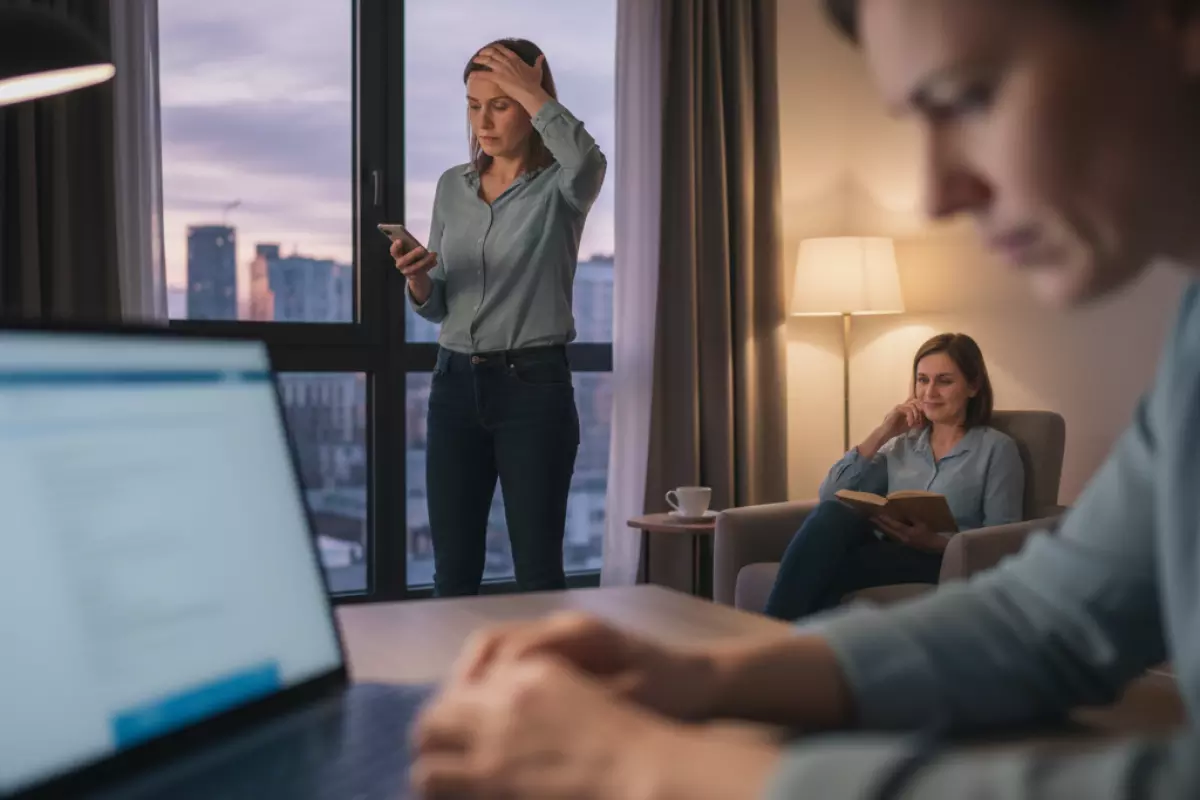
Emotion-led decisions often show up as a strong urge to act before you’ve fully considered options. The choice can feel obvious or urgent in the moment, then confusing later when the intensity fades. A useful clue is the mismatch between how “certain” a decision feels and how little evidence you’ve actually weighed.
These patterns are common because high arousal narrows attention. When feelings run hot, people tend to focus on the most emotionally charged detail (an insult, a tempting reward, a scary headline) and ignore quieter information like long-term costs, probability, or alternative explanations.
- Speed and pressure: deciding quickly, skipping steps you normally take, or feeling like you “have to” respond right now.
- All-or-nothing thinking: treating the situation as a win/lose moment, with little room for compromise or gradual action.
- Selective evidence: noticing only information that matches the feeling (anger finds disrespect; anxiety finds danger; excitement finds upside).
- Body-first cues: tight chest, clenched jaw, racing thoughts, or restless energy that pushes toward immediate action.
- Identity defense: choosing what protects pride, status, or being “right,” even if it conflicts with practical goals.
- Short-term relief seeking: picking what reduces discomfort fastest (sending the text, buying the item, quitting the task) rather than what helps most over time.
- Aftertaste effect: feeling regret, embarrassment, or “Why did I do that?” once the emotional wave passes.
It also helps to notice the situations that reliably amplify your reactions. Common triggers include being tired or hungry, feeling cornered in a conversation, social comparison, time pressure, alcohol, or repeated notifications that keep the nervous system activated. In those conditions, choices are more likely to be guided by mood than by priorities.
| Emotion-driven signal | How it typically shows up | What it can lead to | Quick reality-check question |
|---|---|---|---|
| Urgency | “If I don’t act now, it’s over.” | Impulsive replies, rushed purchases, premature commitments | What changes if I wait 20 minutes or sleep on it? |
| Anger | Focus on blame and fairness | Escalation, harsh messages, burned bridges | What outcome do I want tomorrow, not just right now? |
| Anxiety | Scanning for worst-case scenarios | Avoidance, overchecking, overly cautious choices | What is the most likely outcome, and what evidence supports it? |
| Excitement | Overweighting potential gains | Overpromising, overspending, ignoring constraints | What are the costs, limits, and “boring” details I’m skipping? |
| Shame | Desire to hide or fix image fast | People-pleasing, unnecessary apologies, silence when clarity is needed | Am I choosing to protect my image or to solve the problem? |
| Sadness | Low energy, reduced sense of options | Giving up early, postponing important tasks | If a friend felt this way, what small next step would I suggest? |
When several signals appear together, the decision is more likely to be mood-shaped. Noticing the pattern doesn’t mean the feeling is “wrong”; it means the feeling may be steering the wheel. A brief pause to name the emotion, identify the trigger, and restate the goal often reveals whether the next step is a deliberate choice or a reaction.
Creating space between feeling and action
Strong emotions can shrink the time between an impulse and a choice. When anger, excitement, fear, or shame spikes, the brain tends to prioritize quick relief and simple stories over careful weighing of options. A small pause helps decisions reflect both the feeling and the facts, rather than letting intensity drive the outcome.
This gap does not require “calming down completely.” It is more like inserting a speed bump: enough time to notice what is happening, name it, and choose a response that fits the situation. In everyday life, this is the difference between sending a heated message versus drafting it and waiting, or buying something on a rush versus checking whether it still makes sense tomorrow.
- Notice the cue. Common signals include a racing heart, clenched jaw, tunnel vision, or an urge to act immediately. These are often signs that emotional intensity is steering decision-making.
- Name the emotion and the urge. Labeling “I’m anxious and I want to escape” or “I’m excited and I want to commit right now” separates the feeling from the action it is pushing.
- Switch from verdicts to questions. Replace “This is a disaster” with “What exactly is the problem, and what is one workable next step?” Questions slow down snap judgments.
- Use a short delay on purpose. Even 30–90 seconds of breathing, a quick walk, or getting a glass of water can reduce urgency. For bigger choices, a longer delay (sleep on it, revisit after a meal) is often more realistic.
- Reduce the stakes of the moment. If possible, avoid making permanent decisions in temporary states. Choose a reversible step first, like gathering information or setting a reminder to decide later.
- Check for “emotion logic.” Intense feelings can create rules like “If I feel rejected, it means I am rejected.” Treat these as hypotheses to test, not conclusions to obey.
- Pick a response that matches your goal. Ask, “What do I want the situation to look like in an hour, a week, a month?” This shifts attention from immediate relief to longer-term outcomes.
| High-intensity moment | Common automatic move | Simple way to create a pause | Decision benefit |
|---|---|---|---|
| Anger during a conflict | Interrupting, sending a sharp text, escalating | Say “I need 10 minutes,” step away, then return with one clear point | Less regret, more accurate communication |
| Anxiety about an outcome | Avoiding, overchecking, rushing to “fix” | Write the next smallest action and do only that | Prevents panic-driven choices and reduces overwhelm |
| Excitement about an opportunity | Overcommitting, ignoring downsides | Wait 24 hours and list 3 costs (time, money, energy) | More balanced risk assessment |
| Shame after a mistake | Hiding, apologizing repeatedly, quitting | Name one repair step and one learning step | Shifts from self-judgment to constructive action |
| Feeling pressured to decide | Agreeing to avoid discomfort | Use a default phrase: “Let me check and get back to you” | Protects boundaries and improves follow-through |
Over time, this practice builds a predictable pattern: emotion shows up, a pause is inserted, and a deliberate choice follows. That pattern matters because emotional intensity affecting decision-making is usually not about “bad choices,” but about choices made too quickly for the full picture to be considered.
Making decisions with emotional awareness
Better choices often start with noticing what you are feeling before you act. Strong emotions can narrow attention, speed up judgments, and make the most vivid option feel like the “right” one, even when it conflicts with longer-term goals. Simply labeling the state (angry, excited, anxious, disappointed) helps separate the feeling from the decision that follows.
Emotional intensity tends to change what people prioritize. When feelings run high, immediate relief or reward can outweigh accuracy, fairness, or future consequences. This is why someone might send a heated message, agree too quickly to avoid discomfort, or make an impulsive purchase to shift their mood.
- Pause for a beat. A short delay (even 30–90 seconds) reduces snap reactions and gives the brain time to re-check assumptions.
- Name the emotion and its “push.” Anger often pushes toward confrontation, anxiety toward avoidance, excitement toward risk, and sadness toward withdrawal. Recognizing the push makes it easier to choose a different response.
- Identify the real decision. People often react to a trigger, not the actual choice (for example, “prove I’m right” instead of “solve the problem”). Restating the decision in plain terms clarifies what is being decided.
- Separate facts from interpretations. Facts are observable; interpretations are meanings added in the moment. High arousal increases mind-reading and worst-case thinking.
- Check the time horizon. Ask what matters in an hour, a week, and a month. This counters the tendency for intense feelings to overweight the present moment.
- Use a “minimum effective action.” When emotions are strong, choose the smallest step that keeps options open (draft the message but don’t send; add items to a cart but wait; ask for time to respond).
| Emotional state (common pattern) | Typical decision bias | What helps in the moment |
|---|---|---|
| Anger (feeling wronged) | Overconfidence, blame focus, “win the argument” mindset | Delay replies; write what outcome you want, not what you want to say |
| Anxiety (uncertainty feels threatening) | Avoidance, over-checking, choosing the safest-looking option by default | Define the smallest next step; set a time limit for research |
| Excitement (high energy, optimism) | Underestimating risks, skipping details, impulsive commitments | Add a “sleep on it” rule for big choices; ask what could derail the plan |
| Sadness (low energy, loss focus) | Discounting positives, postponing decisions, settling for less | Reduce the decision size; get a second perspective on options |
| Shame (self-criticism, fear of judgment) | Hiding information, people-pleasing, avoiding needed conversations | Focus on repair actions; script one honest sentence to start the talk |
For higher-stakes decisions, it helps to set simple rules ahead of time, when emotions are calmer. Examples include: no major purchases after a stressful day, no sending conflict messages after 9 p.m., and no agreeing to new commitments without checking the calendar. Pre-commitments reduce the chance that emotional intensity becomes the main driver.
When feelings remain strong, a useful test is whether the choice still makes sense if the emotion drops by half. If the answer changes, the decision may be more about mood management than problem-solving. In those moments, shifting to regulation first (breathing, a walk, food, sleep, or a brief reset) often leads to clearer judgment and fewer regrets.
FAQ: Regret after emotionally driven decisions
Regret often shows up when a choice made in the heat of the moment collides with your calmer values later. Strong feelings can narrow attention to what matters right now (relief, revenge, excitement, belonging), while long-term costs (money, trust, time, health) fade into the background.
- Why do I feel regret so quickly after an emotional choice?
Intense emotion can create “tunnel vision.” Once the feeling drops, your brain re-evaluates the same decision with more information and a wider time horizon. The contrast between “then” and “now” can feel like a mistake, even if the choice made sense under pressure. - Is regret a sign the decision was wrong?
Not always. Regret can be a normal after-effect of switching from emotion-led thinking to reflective thinking. It may signal a mismatch with your priorities, or it may simply reflect that you can now imagine better options that weren’t mentally available at the time. - Why do I keep replaying the moment in my head?
Rumination is the mind’s attempt to prevent a repeat. It runs “what if” scenarios to regain a sense of control. This is common after impulsive actions, arguments, sudden spending, or abrupt relationship moves, especially when consequences are uncertain. - What’s the difference between healthy regret and shame?
Healthy regret focuses on behavior: “That choice didn’t fit what I want.” Shame targets identity: “I am bad.” Behavior-focused regret is more likely to lead to repair and learning; shame tends to lead to hiding, defensiveness, or repeating the pattern to escape the feeling. - Why does regret feel stronger when other people were involved?
Social consequences add weight: fear of judgment, loss of trust, or hurting someone. Emotional intensity also rises in social settings, so the original choice may have been more reactive, and the later evaluation more self-critical. - How can I tell if I should undo the decision or ride it out?
Look for what is reversible. If the action can be safely paused, clarified, returned, or renegotiated, small repairs often help. If reversing would create bigger harm, it may be better to stabilize first, then plan a gradual correction rather than a second impulsive swing.
| Common regret trigger | What’s usually happening | Practical next step |
|---|---|---|
| Impulse purchase or financial promise | Short-term relief or excitement outweighed long-term budget reality | Pause new spending, review the numbers, and set a simple rule for future “cool-off” time |
| Text sent in anger | Threat response drove speed; tone and impact weren’t fully considered | Send a brief repair message, then wait before continuing the conversation |
| Sudden breakup or ultimatum | Emotion pushed for immediate certainty; needs were expressed as demands | Clarify what you actually need, then propose a calmer discussion or a defined pause |
| Agreeing to something to avoid conflict | Fear of disapproval overrode boundaries | Renegotiate early with a clear limit; keep it specific and non-accusatory |
| Oversharing or revealing something private | Desire for closeness or validation outpaced trust and context | Set a “two-step” share rule: check the relationship and the setting before disclosing more |
What helps in the moment when regret spikes? First, separate the feeling from the fix: regret is information, not a verdict. Next, name the driver (anger, fear, loneliness, excitement) and the need underneath it (respect, safety, connection, relief). This reduces the urge to “solve” the discomfort with another rushed decision.
How do I reduce repeats of the same pattern? Build a short delay between feeling and action. Common tools include a 10-minute pause, sleeping on major choices, drafting a message and not sending it, or asking one neutral question: “Will I still like this choice next week?” Over time, these small brakes make emotionally charged decisions less likely to produce lasting regret.
FAQ: Improving clarity in emotional moments
Clear thinking tends to drop when feelings run hot because attention narrows, the body shifts into threat or reward mode, and the brain leans on quick shortcuts. The goal is usually not to remove emotion, but to slow the process enough to notice what is driving the choice and to separate facts from urgency.
-
Why do I make different choices when I’m upset or excited?
Intense feelings change what seems important. Anger can push toward certainty and blame, anxiety can magnify risk, and excitement can make downsides feel distant. In these states, people often prioritize immediate relief or payoff over long-term outcomes. -
How can I tell if emotion is steering my decision?
Common signs include “now-or-never” thinking, feeling personally attacked by neutral feedback, replaying worst-case scenarios, or wanting to send a message (prove a point, get even, win approval). Another clue is a strong urge to act before checking details. -
What is the fastest way to regain composure in the moment?
Use a short pause that interrupts momentum: take 3 to 5 slow breaths, relax your jaw and shoulders, and name the feeling in plain words (for example, “I’m frustrated” or “I’m nervous”). Labeling reduces intensity for many people and makes it easier to choose a next step. -
What should I do if I need to decide quickly?
Shrink the decision to the smallest safe step. Ask: “What is the next reversible action?” and “What information would change my mind?” If the choice is irreversible, it is usually worth adding even a brief delay to reduce impulsive errors. -
How do I stop overthinking when emotions are high?
Overthinking often looks like repeating the same loop without new information. Set a limit: write down the top 2 options, 2 risks, and 2 benefits for each, then stop. If you cannot add anything new after a few minutes, shift to a calming activity and revisit later. -
Is it better to “sleep on it”?
For many everyday decisions, yes. Time lowers physiological arousal and helps the brain integrate context. A simple rule is to delay when you feel rushed, insulted, or euphoric, especially for messages, purchases, or relationship decisions.
| Situation | What typically happens | Quick clarity move |
|---|---|---|
| Anger during a conflict | Focus narrows to “who’s wrong,” and tone escalates | Pause before responding; restate the other person’s point in neutral words |
| Anxiety before a choice | Risk feels larger than it is; reassurance-seeking increases | List what is known vs. assumed; pick one small test action |
| Excitement about an opportunity | Downsides get minimized; urgency feels justified | Add a “cooling” checkpoint: costs, time, and worst-case impact |
| Shame after a mistake | Self-criticism grows; avoidance feels safer than repair | Separate behavior from identity; choose one concrete repair step |
-
What questions improve clarity when I’m emotionally charged?
Try: “What outcome do I want in a week?” “What would I advise a friend to do?” “Am I trying to reduce discomfort or solve the problem?” and “What evidence supports my conclusion?” These prompts widen perspective without dismissing feelings. -
How do I communicate when I’m not thinking clearly?
Use a simple delay statement: “I want to respond thoughtfully. I’m going to take a break and come back at [time].” This prevents reactive messages and reduces misunderstandings that happen when emotion sets the pace. -
When is it a sign I should not decide at all?
Avoid deciding when you are sleep-deprived, hungry, intoxicated, or already flooded with stress, or when you feel unable to consider any downside. If safety is involved, prioritize immediate protection and get support rather than debating the perfect choice.