Emotional Numbness and Loss of Creative Drive or Inspiration

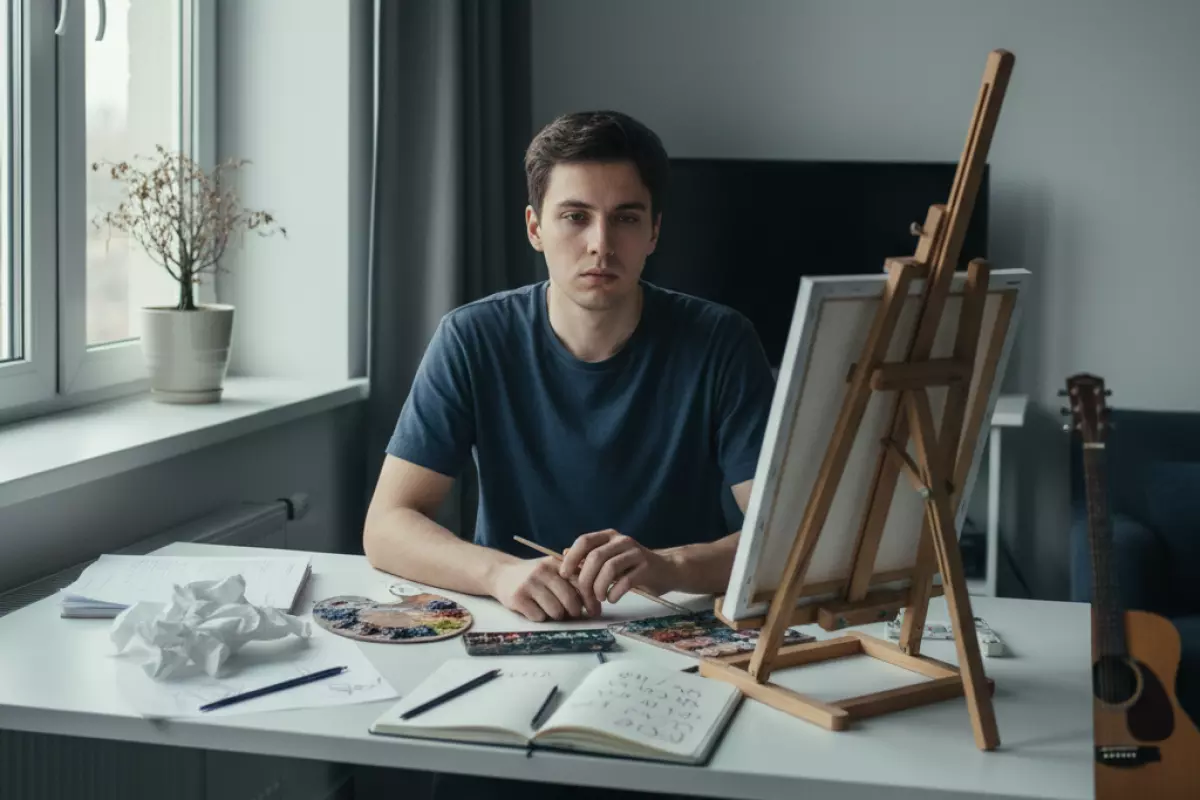 The article explains how creativity relies on emotional input, why numbness makes ideas feel flat or forced, and how curiosity and imagination can fade. It compares creative blocks to emotional shutdown, covers productivity without inspiration, and offers low-risk ways to explore again, ease off pressure, and notice subtle inspiration.
- How creativity depends on emotional input
- Why ideas feel flat or forced during numbness
- Loss of curiosity and imaginative spark
- Productivity without inspiration
- Comparing creative blocks to emotional shutdown
- Low-risk ways to explore creativity again
- Letting creativity return without pressure
- Recognizing inspiration in subtle forms
When your feelings go flat and your imagination stops sparking, it can be unsettling in a quiet, hard-to-name way. You may still function at work, answer messages, and keep routines, yet everything feels muted, as if the color has drained from the day. This piece looks at how that shut-down state can dull curiosity and play, and how small shifts in attention, rest, and connection can start to reopen your inner channel.
How creativity depends on emotional input
Creative work usually starts with a felt signal: curiosity, irritation, longing, delight, or even boredom that pushes someone to change what they see. Emotions act like a prioritizing system, telling the brain what matters enough to explore, shape, or express. When those signals are muted, it can become harder to choose a direction, care about the outcome, or sense when an idea is “working.”
Most people don’t create from emotion alone. They also rely on skills, habits, and problem-solving. Still, feelings often provide the spark and the steering: they help generate ideas, select which ones are worth pursuing, and supply the energy to keep going through uncertainty and revision.
- Emotions create prompts. A strong reaction to a conversation, a memory, or a scene often becomes the starting point for a story, design, melody, or solution.
- They guide attention. Interest and concern narrow focus toward details that feel meaningful, which makes patterns easier to notice and develop.
- They support risk-taking. Excitement, hope, or determination can make experimentation feel worthwhile even when the result is unclear.
- They help with decision-making. A “this feels right” sense is often what helps people choose a theme, a color palette, a punchline, or the final edit among many acceptable options.
- They add nuance and originality. Subtle feelings can shape tone, pacing, and emphasis, turning a technically correct piece into something that feels alive.
- They sustain effort. Pride, relief, or connection to a purpose can carry someone through repetitive practice and the less glamorous parts of finishing.
| Emotional signal | What it often does for creativity | What it can look like when the signal is dulled |
|---|---|---|
| Curiosity | Prompts questions, exploration, and playful trials | Ideas feel flat; starting feels pointless |
| Joy or delight | Reinforces practice and makes iteration rewarding | Finishing gives little satisfaction; progress feels empty |
| Anger or frustration | Drives change, critique, and bold statements | No urgency to improve; problems seem distant |
| Sadness or longing | Adds depth, meaning, and reflective storytelling | Work feels emotionally “thin,” hard to personalize |
| Anxiety or concern | Highlights stakes and details that need attention | Care drops; deadlines and consequences feel unreal |
Emotional numbness can interrupt this loop in a few predictable ways. Without a clear inner response, brainstorming may produce options but not preferences, so choosing becomes exhausting. Feedback may register intellectually but not emotionally, making it harder to learn what resonates. Motivation can also shift from “I want to make this” to “I should do this,” which often reduces spontaneity and the sense of inspiration.
Even then, creative ability doesn’t disappear. Many people can still produce work by leaning more on structure: routines, constraints, references, and step-by-step processes. The difference is that the work may feel less self-propelled until emotional signals begin to return or until new sources of meaning are built into the process.
Why ideas feel flat or forced during numbness

When emotions feel muted, creative thinking often loses its usual “spark.” Ideas may still show up, but they can seem dull, distant, or oddly hard to care about. People commonly describe needing to push themselves to start, then feeling like they’re copying a version of their usual style rather than genuinely generating something new.
This isn’t just a motivation issue. Emotional signals help the brain decide what matters, what feels rewarding, and what’s worth exploring. When those signals are turned down, the mind may default to safe, familiar patterns, and even good concepts can feel like they have no weight behind them.
- Reward feels blunted. Creative work normally comes with small hits of satisfaction: curiosity, surprise, pride, amusement. During numbness, those internal “yes” signals are quieter, so the process can feel like effort without payoff.
- Fewer emotional cues to guide choices. Feelings often act like a compass: this line is funny, that color feels right, this scene has tension. Without that feedback, decisions can feel arbitrary, leading to second-guessing and over-editing.
- Lower curiosity and play. Inspiration often depends on wandering, experimenting, and following odd connections. Numbness can narrow attention to what is practical or “correct,” making experimentation feel pointless or risky.
- More reliance on “should” thinking. People may switch from creating to performing: trying to produce what they think they’re supposed to make. That can make output feel forced, as if it’s built from rules rather than genuine interest.
- Reduced access to vivid memory and imagery. Emotional engagement helps memories and mental images feel alive. When that vividness drops, brainstorming can turn abstract and thin, with fewer sensory details and fewer surprising associations.
- Energy and attention get rationed. If someone is emotionally shut down due to stress, burnout, or low mood, the brain may conserve resources. Creative tasks that require sustained focus can then feel unusually draining.
- Self-protection can dampen expression. Numbness sometimes functions like a buffer against overwhelm. Because creativity can stir feelings, the mind may unconsciously avoid depth, intensity, or vulnerability, resulting in safer, flatter ideas.
| What it can look like day to day | What’s often happening underneath |
|---|---|
| Starting takes forever, even for small tasks | Reduced reward anticipation makes initiation feel like pure effort |
| Everything seems “fine” but nothing feels exciting | Emotional flattening lowers the sense of novelty and meaning |
| Endless tweaking without feeling satisfied | Weaker internal feedback leads to uncertainty about when it’s “right” |
| Copying old approaches instead of exploring new ones | The brain chooses familiar patterns when curiosity and play are low |
| Ideas appear, but they don’t “stick” long enough to develop | Attention and working memory are strained, so concepts fade quickly |
| Avoiding personal themes and sticking to neutral content | Self-protection reduces emotional exposure and intensity |
Because of these shifts, the person may interpret the experience as “losing talent” or “running out of ideas,” even when the underlying ability is still there. What changes most is the inner fuel: the sensations that make an idea feel worth chasing and the emotional guidance that helps shape it into something satisfying.
Loss of curiosity and imaginative spark
When emotional numbness sets in, everyday interest can flatten out. People may notice they stop wondering about things, asking follow-up questions, or getting pulled into small discoveries the way they used to. Activities that once felt naturally engaging can start to feel like chores, even when there is no obvious reason to avoid them.
This shift often shows up as a change in how the mind explores. Instead of spontaneously connecting ideas or daydreaming, thoughts may become more literal and task-focused. The person might still function and complete responsibilities, but the inner “pull” toward experimenting, learning, or imagining alternatives is weaker.
- Less spontaneous exploration: skipping articles, videos, hobbies, or conversations that used to spark “I want to know more.”
- Reduced playful thinking: fewer jokes, fewer “what if” scenarios, and less enjoyment in brainstorming or improvising.
- Difficulty starting creative tasks: staring at a blank page or project and feeling no clear entry point, even with time available.
- Preference for the familiar: rewatching the same shows, eating the same meals, or sticking to routines because novelty feels tiring rather than energizing.
- Lower tolerance for ambiguity: wanting clear instructions and predictable outcomes, and feeling irritated by open-ended tasks.
- Muted emotional feedback: not getting the usual sense of excitement, surprise, or satisfaction that helps ideas “click.”
In daily life, this can look like doing only what is necessary: working, managing errands, and keeping up appearances while avoiding optional interests. Conversations may become more practical and less curious, with fewer personal stories, questions, or creative tangents. Over time, the person may also stop initiating plans that involve novelty, such as trying a new class, visiting new places, or meeting new people.
| How it can show up | What it often looks like day to day | Common “inner” experience |
|---|---|---|
| Idea generation slows | Fewer new concepts for work, art, or problem-solving | “Nothing comes to mind” or “everything feels already done” |
| Novelty avoidance | Choosing predictable options and declining new invitations | New things feel draining, not exciting |
| Play and experimentation drop | Less tinkering, doodling, testing, or iterating | Fear of wasting effort, or no sense of reward |
| Learning feels “flat” | Starting courses/books and not continuing | Information doesn’t feel meaningful or personally relevant |
| Creative confidence shrinks | Over-editing, procrastinating, or abandoning drafts early | Self-doubt without the usual counterbalance of excitement |
It can help to recognize that this pattern is not always about laziness or lack of talent. Often it reflects a system in “low feeling” mode, where motivation and imagination have fewer emotional signals to work with. Noticing the behavioral signs early can make it easier to distinguish a temporary dip in inspiration from a broader numbness that affects curiosity across many parts of life.
Productivity without inspiration
It can look like things are getting done on the outside while the inner “spark” feels absent. People often keep meeting deadlines, answering messages, and completing routine tasks, but the work feels mechanical rather than meaningful. Instead of being pulled forward by curiosity or excitement, they rely on habit, pressure, or fear of falling behind.
This pattern is common with emotional numbness because the brain can still run on structure and learned routines even when motivation and pleasure are muted. The result is a day that appears functional, yet feels flat: little satisfaction after finishing tasks, little anticipation before starting them, and limited sense of personal connection to the outcome.
- Doing what’s required, not what’s interesting: People gravitate toward assignments with clear instructions and avoid open-ended work that normally benefits from imagination.
- Checking boxes to reduce discomfort: Productivity becomes a way to quiet anxiety, guilt, or restlessness, rather than a reflection of genuine engagement.
- Reduced experimentation: There is less willingness to try new approaches, take creative risks, or explore “unnecessary” options.
- Short-term focus: Attention narrows to immediate tasks and quick wins, while long-term projects feel hard to access or emotionally distant.
- Increased reliance on external structure: Calendars, reminders, and strict routines carry more of the load because internal drive is unreliable.
- Finishing without reward: Completing work brings relief rather than pride, and the relief fades quickly.
| What it looks like day-to-day | What it often feels like inside | Common effect on creative work |
|---|---|---|
| Sticking to routine tasks and familiar methods | Neutral, detached, “on autopilot” | Fewer novel ideas; repetition of safe patterns |
| Working steadily but avoiding brainstorming | Blankness or mental fog when asked to invent | Difficulty generating options; slow starts |
| Over-planning, over-checking, or perfectionistic edits | Need for control to compensate for low inner momentum | Polishing replaces creating; projects stall in refinement |
| Meeting obligations while feeling disconnected from goals | Little meaning, low reward, minimal satisfaction | Harder to sustain long projects; reduced originality |
| Procrastinating only on ambiguous tasks | Subtle dread or emptiness around “creative” demands | Delayed output; reliance on last-minute pressure |
Because output can remain high, this state is easy to miss or dismiss. A useful clue is the mismatch between performance and experience: the schedule stays full, yet the person feels emotionally absent from their own work. Over time, that gap can lead to burnout, cynicism, or a sense that creativity has “disappeared,” even though the underlying skills are still there.
Comparing creative blocks to emotional shutdown
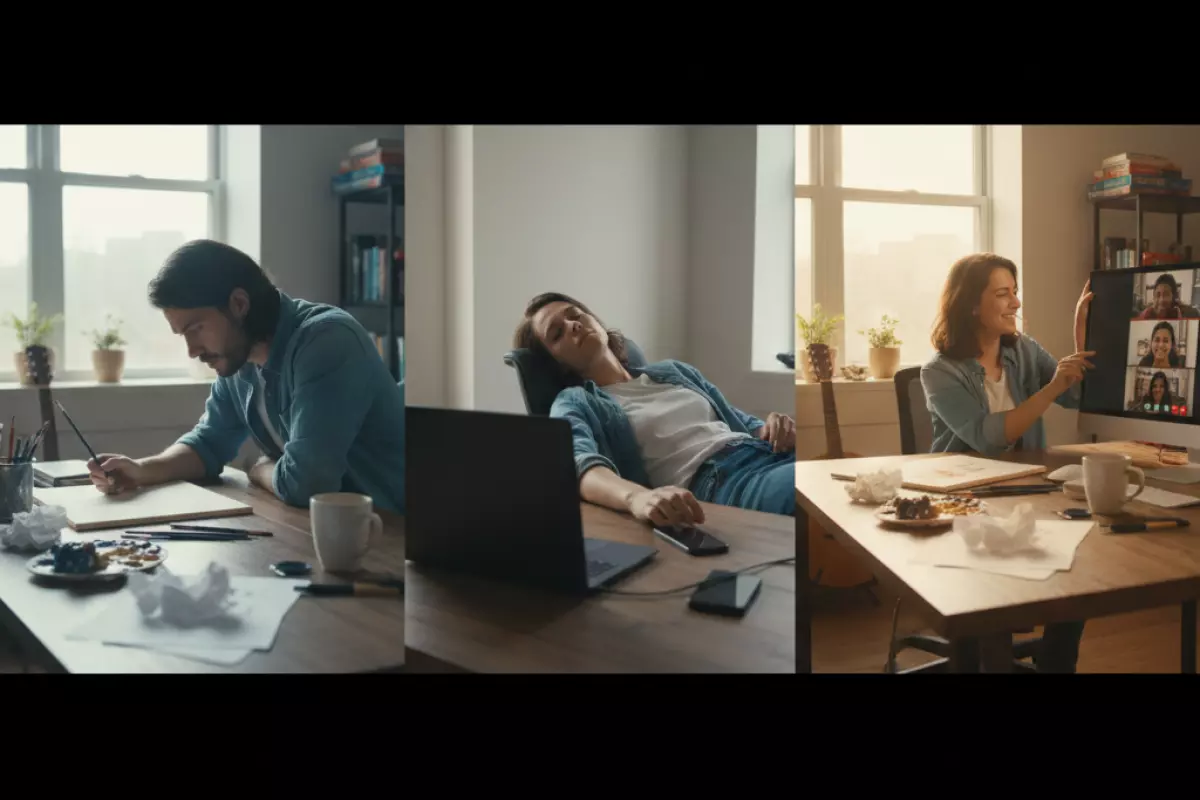
A slump in inspiration and an emotional “freeze” can look similar on the surface: less output, more avoidance, and a sense of being stuck. The difference is often in what’s driving the stall. A creative block is usually tied to the work itself (skills, direction, pressure, time), while emotional shutdown is more about reduced access to feelings and motivation across many areas of life.
In everyday behavior, a creative slowdown tends to be selective: someone may still enjoy friends, music, humor, or routine tasks, but can’t get traction on a specific project. Emotional shutdown is broader: the person may describe feeling flat, detached, or “on autopilot,” and even activities that normally feel rewarding don’t register much.
| What you notice | More typical of a creative block | More typical of emotional shutdown |
|---|---|---|
| Scope of the problem | Mostly limited to a specific craft, project, or type of task | Spills into many areas: relationships, hobbies, self-care, work |
| Emotional tone | Frustration, self-criticism, restlessness, performance anxiety | Numbness, emptiness, detachment, muted reactions |
| Energy and drive | Energy may be present but misdirected into overthinking or perfectionism | Low drive overall; starting anything can feel unusually hard |
| Response to a break | A short reset (walk, sleep, switching tasks) can bring ideas back | Rest helps fatigue, but the “flat” feeling often persists |
| Triggers | Deadlines, fear of judgment, unclear goals, skill gaps, comparison | Chronic stress, burnout, grief, prolonged conflict, feeling unsafe |
| Inner dialogue | “This isn’t good enough” or “I don’t know what comes next” | “I don’t feel much” or “Nothing matters” |
| What still feels rewarding | Non-creative pleasures may still land (food, shows, social time) | Even enjoyable things can feel dull or distant |
| Typical work pattern | Lots of starting and stopping, tinkering, researching, reworking | Avoidance and withdrawal; fewer attempts to engage at all |
It’s also common for the two to overlap. Ongoing stress can narrow emotional range and, as a result, make imagination feel less accessible. Likewise, repeated creative frustration can lead to avoidance and a “shut down” response, especially when the work is tied to identity or livelihood.
A practical way to tell them apart is to check for selectivity and recovery. If motivation returns in other parts of life and the stuck feeling changes when you adjust the task (smaller steps, looser standards, clearer constraints), it leans toward a creative obstacle. If the flatness is widespread and persistent, and it comes with disconnection from people or pleasure, it may reflect emotional numbing rather than a problem with ideas alone.
Low-risk ways to explore creativity again
When emotions feel muted, creative work can start to feel pointless, effortful, or strangely distant. A gentler approach usually works better than “pushing through,” because it lowers the stakes and makes it easier to notice small sparks of interest without demanding a big result.
The goal is to create conditions where curiosity can show up in short, manageable moments. That often means choosing activities that are private, time-limited, and easy to stop, so the brain doesn’t treat them as a performance test.
- Use tiny time boxes. Set a 3–10 minute timer and stop when it ends. Short sessions reduce the pressure to feel inspired and make it more likely you’ll begin.
- Make “bad on purpose” drafts. Try a deliberately messy sketch, a clumsy melody, or a rough paragraph. This sidesteps perfectionism and helps rebuild tolerance for experimentation.
- Switch from “create” to “collect.” Save colors, phrases, photos, textures, or song snippets that catch your attention. Collecting is a low-effort way to reconnect with preference and taste when motivation is low.
- Change the medium, keep the idea small. If writing feels heavy, try collage, voice notes, simple shapes, or a single photo with a caption. Different tools can bypass the “stuck” feeling tied to one format.
- Limit the audience to zero. Keep it offline, in a private folder, or in a notebook. Removing the possibility of judgment often reduces numbness-related avoidance.
- Start with prompts that require no emotion. Describe an object in the room, list five sounds you hear, or draw the outline of your hand. Neutral prompts can restart creative motion without forcing feeling.
- Borrow structure. Use templates, coloring pages, songwriting chord loops, or “fill in the blank” stories. Structure reduces decision fatigue, which is common when energy and drive are low.
- Pair it with a steadying routine. Do a small creative action after a predictable cue (after coffee, after a shower, before bed). Consistency can matter more than intensity when inspiration is absent.
- Try body-first creativity. Gentle movement, humming, drumming on a table, or arranging objects on a desk can reconnect sensation and rhythm, which sometimes returns before strong emotion does.
| Low-pressure approach | Why it helps when you feel numb | Simple example |
|---|---|---|
| Time-limited sessions | Reduces overwhelm and makes starting easier | Write anything for 5 minutes, then stop |
| Private practice | Removes performance pressure and fear of judgment | Sketch in a notebook no one will see |
| “Collecting” instead of producing | Rebuilds a sense of preference and curiosity with minimal effort | Save 10 images that feel visually interesting |
| Structured prompts | Lowers decision fatigue and gives the brain a clear next step | Fill in a short template: “Today I noticed…” |
If a creative attempt triggers irritation, emptiness, or self-criticism, that usually signals the task is too big or too exposed. Scaling down the time, making it more private, or switching to a simpler format often restores a sense of safety and makes it more likely you’ll return to it later.
Over time, these small, low-stakes repetitions can help creativity feel less like a test and more like a basic human behavior again: noticing, trying, adjusting, and stopping when you’ve had enough.
Letting creativity return without pressure
Creative energy often comes back more reliably when it is treated like a signal, not a test. When emotional numbness is present, the brain may be conserving resources, so trying to force inspiration can create more tension and self-monitoring. A lower-stakes approach focuses on making it easier to begin, easier to stop, and safer to be “unfinished” for a while.
Pressure usually shows up in everyday patterns: setting big goals to “make up for lost time,” comparing current output to past peak periods, or only allowing yourself to create if the result is impressive. These habits can turn creative work into a performance, which tends to shut down curiosity. Shifting attention from outcomes to small, repeatable actions helps rebuild momentum without demanding a certain mood.
- Lower the entry cost. Choose a version of the activity that takes 2–10 minutes: a rough sketch, a single paragraph, a quick chord progression, a color palette, a photo walk around the block.
- Separate “making” from “judging.” Do one pass where you only generate, then a later pass where you edit. Mixing the two often triggers shutdown, especially when you already feel emotionally flat.
- Use prompts to bypass blank-page stress. Constraints (one tool, one theme, one time limit) reduce decision fatigue and make starting feel less loaded.
- Keep a “parking lot” list. Write down ideas, images, titles, or scenes without committing to them. This keeps creativity present without requiring immediate follow-through.
- Plan for an easy exit. Stop mid-sentence or mid-sketch on purpose so returning feels like continuing, not restarting.
- Track effort, not inspiration. A simple check mark for “showed up” reinforces consistency without turning it into a productivity contest.
| Common pressure pattern | How it tends to affect creativity | Lower-pressure alternative |
|---|---|---|
| Waiting to feel inspired before starting | Long gaps; starting feels risky and heavy | Start with a tiny “warm-up” that can stand alone |
| All-or-nothing sessions (“If I can’t do an hour, it’s pointless”) | More avoidance; fewer chances to reconnect | Short, frequent sessions with a clear stopping point |
| Comparing to past work or other people | Self-criticism replaces curiosity | Compare only to yesterday’s effort or keep comparisons out of the process |
| Making every project “important” | Perfectionism; fear of wasting time | Create “practice pieces” meant to be disposable or private |
| Editing while generating | Stops flow; increases frustration | Time-boxed drafting first, editing later |
It also helps to treat numbness as information about capacity. On days when feelings are muted, creative work may need to be more sensory and concrete: reorganizing materials, collecting references, copying a favorite passage by hand, or experimenting with textures and sounds. These activities keep you connected to the craft without demanding strong emotion on demand.
Over time, consistent low-pressure contact tends to rebuild trust: you learn that you can create even when you do not feel much, and that the act itself can gradually bring back interest. The goal is not to “fix” your mood in one session, but to make creative behavior easy enough that it can return in small, sustainable steps.
Recognizing inspiration in subtle forms
When emotional numbness is present, creative energy often doesn’t arrive as a sudden “spark.” It tends to show up as small shifts in attention, mild curiosity, or a brief sense of “that’s interesting” before the mind quickly moves on. Noticing these quieter cues matters because they can be the earliest signs that motivation is returning, even if the feeling is muted.
Subtle inspiration is easy to miss because it rarely feels urgent. It may appear as a preference, a tiny pull toward a topic, or a moment of mental clarity rather than excitement. People commonly dismiss it as random or “not enough,” especially if they expect the same intensity they had before feeling emotionally flat.
- Micro-curiosity: pausing on a headline, image, melody, or idea for a few seconds longer than usual.
- Low-effort engagement: saving a quote, taking a screenshot, bookmarking a tutorial, or re-reading a passage without a clear plan.
- Quiet pattern-seeking: noticing connections between unrelated things (a color palette in a café, a phrase in a conversation, a rhythm in traffic).
- “I could…” thoughts: brief, practical ideas like “I could sketch that,” “I could rewrite this sentence,” or “I could try a different chord,” even if the follow-through feels hard.
- Selective responsiveness: feeling slightly more awake during certain activities (organizing photos, watching behind-the-scenes content, browsing a museum site) compared to everything else.
- Body-level signals: subtle easing of tension, a deeper breath, or a small sense of steadiness when encountering a theme that resonates.
- Return of preferences: realizing you like a particular style, genre, or tool again after a period of indifference.
Because numbness can blunt emotional feedback, it helps to treat these signs as data rather than proof you “should” feel inspired. A workable approach is to notice the cue, name it in plain language (for example, “that image held my attention”), and take a small next step that doesn’t require high motivation, such as collecting references or writing one rough line.
| Subtle cue | How it typically shows up | Common misread | Low-pressure response |
|---|---|---|---|
| Brief interest | You linger on something for a moment, then move on | “If it mattered, I’d feel more.” | Save it to a notes app or folder with a one-line label |
| Small preference | You choose one song, color, or topic over others | “That’s just habit.” | Make a short list of what you’re drawn to and look for a theme |
| Quiet mental image | A scene, phrase, or design pops up without emotion attached | “It’s meaningless because it’s flat.” | Write it down verbatim; don’t evaluate it yet |
| Momentary relief | You feel slightly calmer or more present during one activity | “That’s not creativity.” | Repeat the activity for 5–10 minutes and observe what ideas appear |
| Impulse to adjust | You want to tweak a sentence, tidy a layout, change a chord | “That’s just perfectionism.” | Do one small revision, then stop; treat it as a warm-up |
Over time, these small signals often cluster: a few saved items start to share a mood, a repeated topic shows up in what you watch or read, or certain environments reliably make you a bit more alert. Tracking those patterns can rebuild a sense of direction without requiring intense feelings. The goal is not to force a surge of inspiration, but to recognize the early, quieter forms of creative pull and give them a simple place to land.